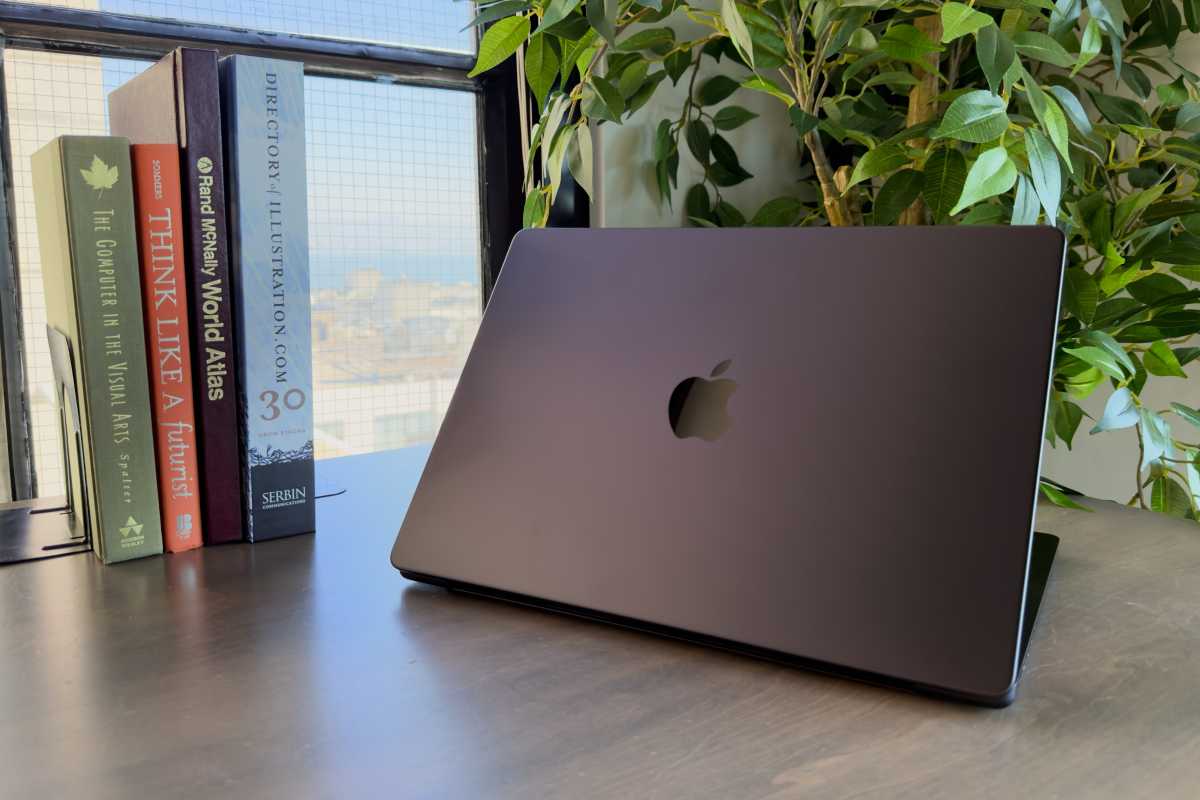
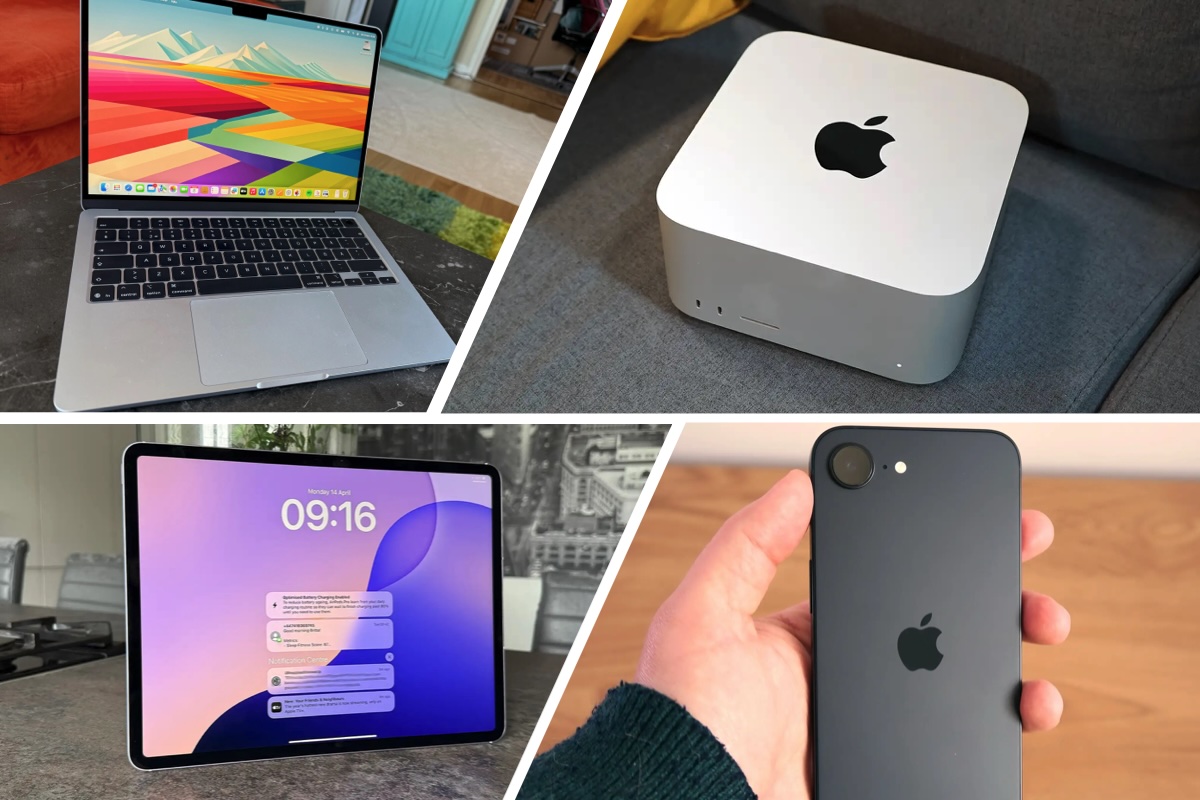
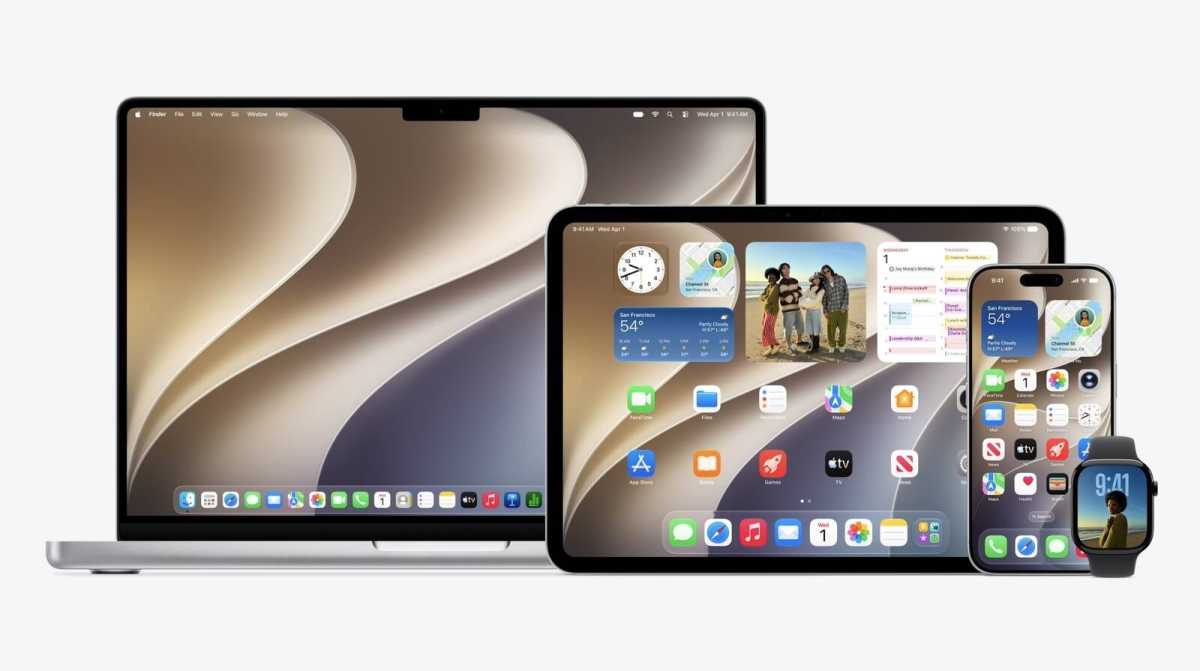
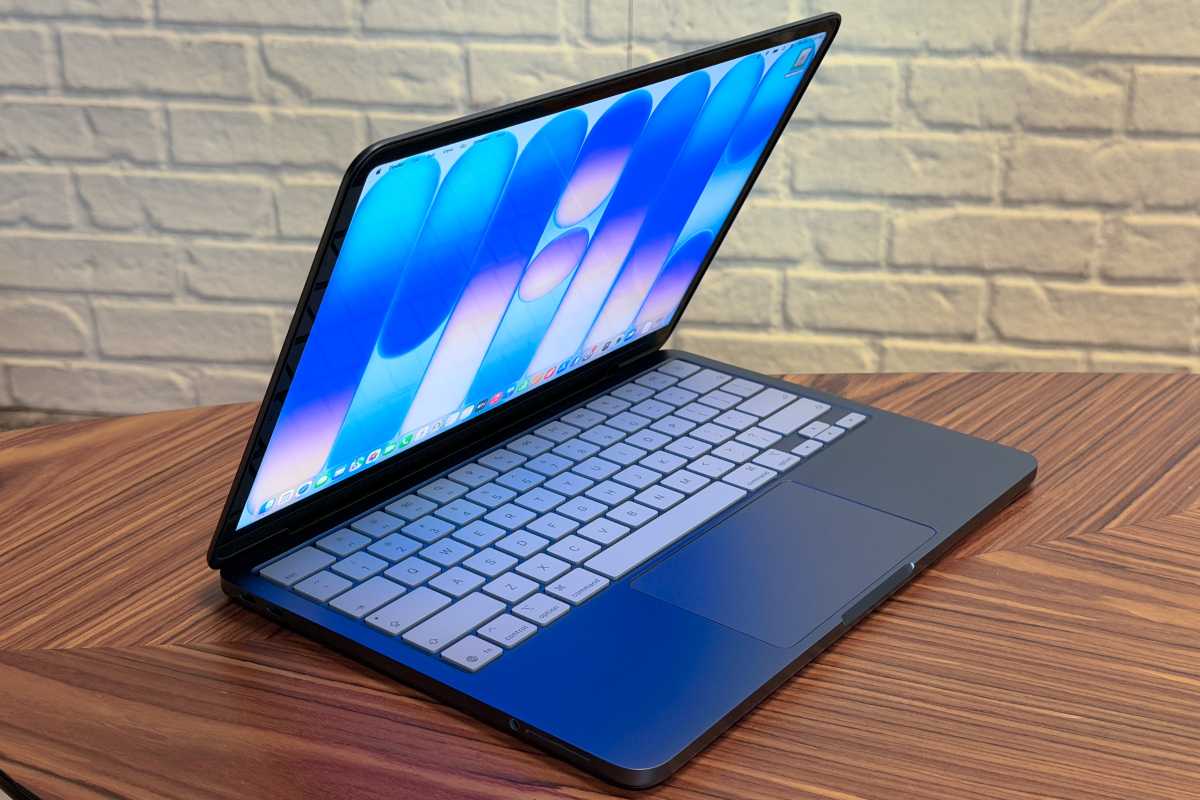
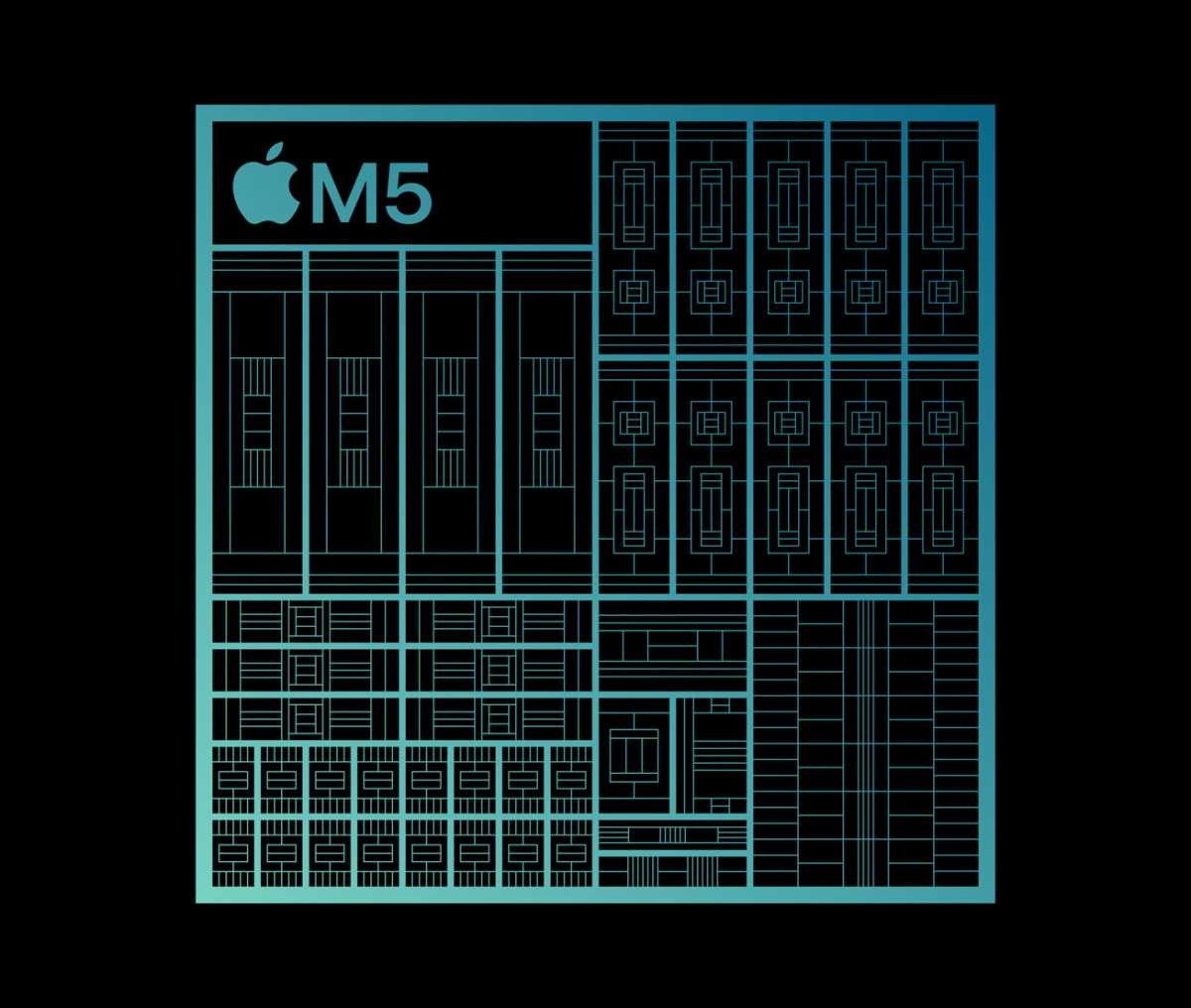
Apple’s 14-inch MacBook Pro with the M5 Pro chip is down to $2,299 from its $2,599 MSRP at B&H, a $300 cut on a high-end configuration that’s genuinely built for demanding work.
The real value here lies in the memory and storage. This model comes with 48GB of unified memory and a sizable 1TB SSD, which is enough to ensure your machine will perform at a high level for years to come. There’s not much you can’t do with this laptop, from editing video, juggling large photo libraries, compiling code, or running several heavy apps at once, that much memory keeps everything moving smoothly. The 1TB drive gives plenty of room for big project files without leaning on external storage right away.
The M5 Pro is a chip that’s powerful enough to handle all types of work without breaking a sweat. This is a chip meant for people who actually do more than open a browser on their laptop. The 14-inch Liquid Retina XDR display is gorgeous, as well, bringing bright, sharp, and color-accurate images to the mix, which is something that matters when you’re editing videos or pics, for instance.
Just keep in mind that this is still a very powerful and expensive laptop, even at $300 off. If your days are mostly web work, office tasks, or light editing, you’ll never come close to needing 48GB of memory, so you could step down the lineup or downgrade to a MacBook Air and pay a lot less.
But if you want tons of power at a great price, at $2,299, this M5 Pro MacBook Pro is a fantastic deal, so don’t miss out.
Apple spent an unusually long time during its WWDC Keynote this year talking about how it was going to fix all the busted crap in its operating systems. I’m paraphrasing, of course. What Apple actually said was, “Our teams doubled down on our relentless dedication to make the experience feel more polished and intuitive.”
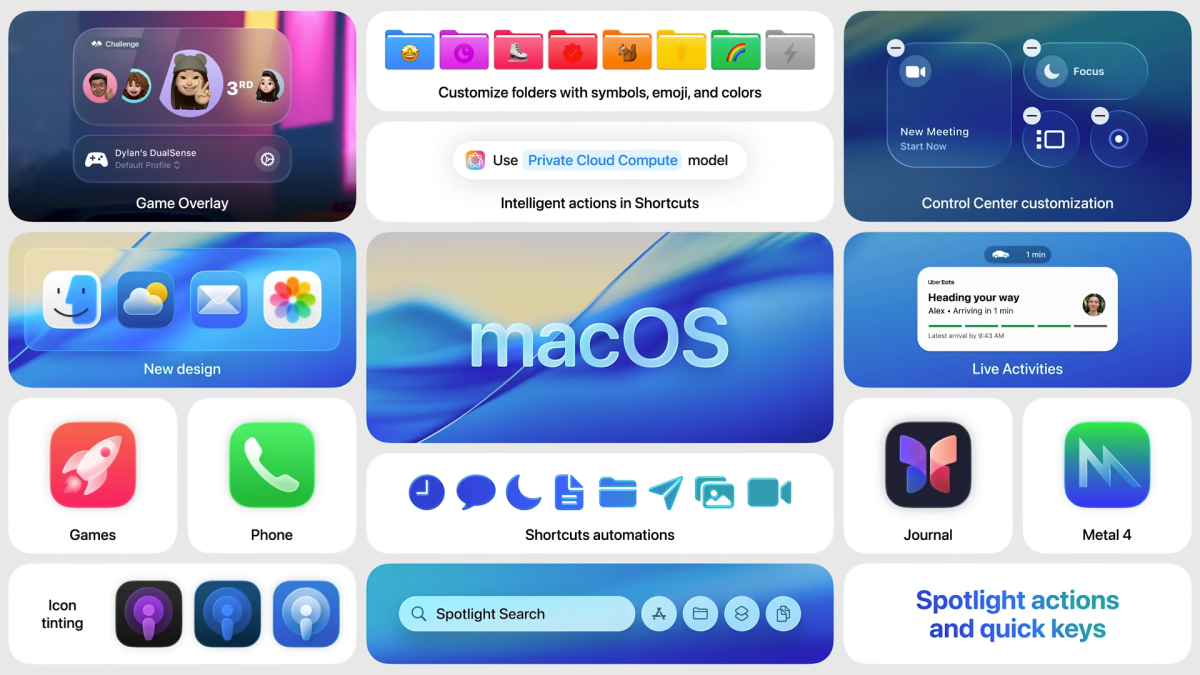
Then, Apple presented the most obnoxious eye-chart slide I’ve ever seen in over 25 years of tech journalism, while saying, “We scoured every part of the OS for opportunities to refine our systems, from the UI to the foundations. Nothing was off limits, no enhancement too small.” The impossible-to-read slide had over 40 lines of tiny text and was gone in a flash.
Of course, that’s the point. It’s just there to make you say, “Look at all that stuff!” Well, that’s not good enough for us here at Macworld—we want to know what it says. Now we do, and so will you. All these fixes are all separate from the big Apple Intelligence, Siri, and Parental Controls improvements coming to our devices this fall.
10 key improvements
Much of what is listed here is repetitive. There are no exact duplicates, but there are quite a few items that could very well be combined into one. There are four small items related to perimenopause and menopause tracking, for example, and multiple entries about smoother scrolling in this app or that menu.
Still, there’s a lot of good stuff in there. Here are some of the improvements that stand out, in no particular order.
AirPods Custom EQ
Save a video frame as a photo
iPhone app resizing in iPadOS
Improved wireless CarPlay reliability
Faster to start uploading to iCloud Photos
Audio scrubbing in CarPlay Now Playing
More accurate step tracking on Apple Watch
Improved Messages syncing across devices
Failed messages automatically retry sending
Independent alarm volume
The entire list of OS 27 fixes and improvements
The entire list of improvements and enhancements is 263 items long! Some are minor, some are major, all are welcome.
New UI language for English (Canada) and English (Philippines)
Faster AirPlay connections to Apple TV and HomePod
More relevant Spotlight search suggestions
Web audio no longer interrupts system audio
Undo and Redo Home Screen edits in iPadOS
Faster PDF saving
Improved Top Results in Mail
Filter photos and videos in Shared Albums
More document formats in Preview
Drawing in Notes in macOS
New keyboard layout for Slovenian and Estonian
Control Center access in iPhone Mirroring
Audio scrubbing in CarPlay Now Playing
Add keywords to photos and videos in Photos
Extra-large widgets in Today view in iPadOS
Live Activity for Precision Finding with Friends
Better battery efficiency on Apple Watch
Smart downloads on Apple TV
Else if support in Shortcuts
Faster board previews in Freeform
More accurate step tracking on Apple Watch
Sort by completed Fitness+ workouts
Faster message loading in Mail
Improved connectivity for Thread home accessories
Automatic punctuation when typing on multilingual keyboards
Faster smart home accessory updates
Option-click to secondary sort
More efficient emergency alert monitoring
AppleCare coverage details in Settings in tvOS
More intuitive journaling streaks
More consistent positioning persistence across external displays
Updated video podcasts experience in macOS
Natural language time formats for Chinese and Hindi
Enhanced power efficiency for Safari in iOS and macOS
Drawing app in Messages
Faster data updates in the Health app
Call Recording transcriptions support for Traditional Chinese, Japanese, and Brazilian Portuguese
Improved game controller settings
Easier reading and editing of PDFs using VoiceOver
Improved battery insights
Smoother scrolling in App Library
Improved navigation in Game Overlay
Smoother unlocking on iPhone
Use your panoramas for Environments in visionOS
Faster window closing in iPadOS
Improved performance in News App
Edge-to-edge sidebars
More reliable right-to-left text editing in Freeform
Find offloaded media in Messages
All options displayed in Camera settings
Password help accessible from the Lock Screen
Group conversation support in Shortcuts
New keyboards for languages including Afrikaans, Basque, Baybayin, English (Philippines), Galician, Guaraní, Luxembourgish, Xhosa, and Zulu
Smoother Freeform board performance
Improved PlayStation Access controller support
Improved reliability of Apple Music streaming
New AutoMix transitions
Camera uses less power in Low Power Mode
Extra-solid widget option in visionOS
Refreshed album pages in Apple Music
iCloud sync status for Journal entries
More responsive Control Center in tvOS
Faster network file browsing
Ethernet status in menu bar in macOS
Perimenopause and menopause symptom logging in the Health app
Improved Wi-Fi connectivity in watchOS
Faster multilingual text processing for handwriting in multiple languages
Guest key in watchOS
Expanded Get What’s On Screen capabilities in Shortcuts
Faster HomeKit accessory pairing
Faster Now Playing view loading in Music
Faster start page content loading in Safari
Increased attachment limits in Journal
More accurate route maps in the Fitness app after workouts
New keyboards for Indigenous languages, including Blackfoot, Comanche, Cree, Kiowa, and Tsuut’ina
Switch between two iPhone devices with the same phone number
Content-based recipient suggestions for sharing photos and links
Album organization improvements in Photos
Perimenopause and menopause education in the Health app
Improved RDMA over Thunderbolt
Customize Liquid Glass
Support for 4K camera recordings in the Home app
Faster Camera launch in Low Power Mode
Colorful sidebar icons
Faster Voice Control response in iOS
More accurate Visited Places in Maps
Improved Messages syncing across devices
Dual camera in FaceTime
Faster browsing and transfers in Files in iPadOS
Full-resolution photos and videos in iCloud Shared Albums
Faster Lock Screen switching
Store data in Shortcuts
Additional participant permissions in Shared Albums
Guides in Maps available in more places
New windows with curvature in visionOS
Enhanced Flyover in Maps
Customize slideshows in Photos
Section links in Notes
More power-efficient Personal Hotspot on N1 devices
Stylized notes from third-party Calendar accounts
Improved Control Center in visionOS
Perimenopause and menopause support in the Health app
Optional persistent menu bar on iPad
Lock Screen consistently stays awake while scrolling notifications
Faster AirDrop transfers
Dark Mode adaptive canvas in Freeform
More flexible sharing options in Find My
Captured by Me collection in Photos
Extra-large widgets in iOS
Failed messages automatically retry sending
Save any slideshow as a video in Photos
Faster web application performance in Safari
Expire your Shared Albums
Faster loading of emoji and sticker keyboards
GymKit on iPhone and AirPods Pro 3
Redesigned Podcasts app for tvOS
Consolidated Find My app in watchOS
Improved distance accuracy during treadmill workouts
Find My UI enhancements
Chāizi typing
Richer iCloud collaboration link previews
Improved Bluetooth power management
Access requests for items shared via iCloud
Expanded touch support in Sidecar
Faster Text Recognition in photos and documents
Support for Mac mirroring in 5K resolution
Smoother Calendar scrolling
Smoother animations and graphics in Safari
Refreshed artist pages in Apple Music
Search within shows in Podcasts
Look and Tap to view and respond to notifications in visionOS
Improved navigation heading and GPS accuracy in CarPlay
Smart language and keyboard configuration suggestions
Faster workout start in the Workout app
Updated Liquid Glass
Independent alarm volume
Smoother camera switching when zooming in video
Faster app extension launch in watchOS
Recent activity in Shared Albums
Offline Maps update improvements
Improved FaceTime quality on poor connections
Tap gesture on Apple Watch
Synced step count in the Health and Fitness apps
AirPods Custom EQ
Faster media playback in watchOS
Faster workloads and actions indexing in Spotlight
Multilingual grammar checking
Faster loading of new captures in Photos
Copy and paste as Markdown in Notes
Redesigned Shortcuts editor
Continuous sending of photos, videos, and texts in Messages
Save a video frame as a photo
Faster handling of JavaScript in Safari
Choose a specific pet in Photo Shuffle
Modify multiple Calendar events
Holiday-aware alarms in China
More reliable search indexing in Mail
iPhone app resizing in iPadOS
React with any emoji in Shared Albums
QuickPath and typing suggestions for Vietnamese VNI keyboard
Updated menu bar icons
Punctuation suggestions as you type in Chinese
Consolidated notifications for multiple Tapbacks in Messages
Updated app icons
Swipe down to refresh in macOS
Larger text sizes in tvOS
Spatial scene support for panoramas in visionOS
View streams from compatible cameras simultaneously in the Home app
Dynamic app grid in watchOS
App names in iPad status bar
Participate in iCloud Shared Albums from Android and Windows
Alternate calendars for India support current time zone while traveling
Smoother scrolling in Safari in macOS
Faster boot and connect to Wi-Fi in visionOS
Uniform toolbars
Thumbnails displayed for offloaded media in Messages
App resizing in iPhone Mirroring
Search for conversations in Messages by phone number or a contact’s nickname
Easier to invite others in Shared Albums
Collaborative folders in Freeform
Improved list formatting in Mail
Star ratings in Photos
Consistent corner radii
Easier card selection and payment management with Apple Pay
Screenshot and notification automations in Shortcuts
More efficient water detection on Apple Watch
Maps Parked Car widget in Smart Stack
Faster audio fingerprint discovery
Optimized CPU scheduler
Autosize and reset columns
Search for photos and videos using additional metadata
Improved wireless CarPlay reliability
Grocery List in Reminders language expansion
Smoother paging between Home Screen pages
Search returns more pleasing photos of people and pets in Photos
Improved conversion from phonetic scripts like Pinyin and Kana when typing in Simplified Chinese and Japanese
Smoother resolving in Control Center and Control Gallery
Drawing in Freeform in macOS
Faster app launches
More high-resolution and high-refresh-rate display modes for external displays
Easier-to-reach Camera experience
Option to prioritize syncing to iCloud Photos
Easier to save photos from Shared Albums
Faster menu bar access in iPadOS
Redesigned settings in the Apple Watch app
Support for time changes in Sleep
More accurate photo orientation
Streamlined Assistive Access setup
Faster and more reliable NFC reading
Easier to open full-screen view from Photos widget
Smoother animations and app launches in tvOS
Time stamps for Journal entries
DRM video support in iPhone Mirroring
Divider lines in Notes
Faster Apple Music playback start
Smoother scrolling in the widget gallery
Easier to recovery codes for Apple Accounts
Faster access to shared content on iCloud.com
Quick Start with a recovery contact
News+ audio support in iPadOS
Option to include photos of yourself in Photo Shuffle
Smoother animations in News and Stocks articles
Live Voicemail translation for English (Singapore) and Japanese
Smoother animations in Mission Control and Spaces
Visited Places available in more markets
Faster rendering of Collections tab in Photos
Smoother start page resizing in Safari
Selection view in Photos
View card balance in Wallet in watchOS
Faster Rapid Return to Service
Updated hourly and 10-day views in Weather
Live Activities in Dynamic Island in landscape
Transit cards and IDs in Smart Stack in watchOS
More easily accessible share link for iCloud collaboration
Faster window switching in iPadOS
More distinct active windows
Show Borders for macOS accessibility
Widget for Mac Virtual Display in visionOS
Streamlined setup for Touch Accommodations in iOS and iPadOS
Pairing and handoff improvements for MFi hearing devices
Multiple tab views in Safari in visionOS
Scribble support for Hindi and Marathi with Apple Pencil
More seamless transitions between Wi-Fi and cellular networks
Fitness+ workouts for perimenopause and menopause
Audio MiniPlayer in CarPlay
HDR for macOS system UI
Identity Documents collection in Photos
Improved unread badge accuracy in Mail
Proactive car key setup
Natural language search for routing in Maps
More reliable HomeKit camera storage
Onscreen context for more relevant typing suggestions for Chinese and Japanese
Faster to add recent camera captures in Messages
Real-time updates for widgets when app is open
Wallet Order Tracking support in Australia and Canada
Faster entry and exit from Assistive Access and Guided Access modes
Support for media sharing from third-party apps
Expanded language support for autocategorization in Reminders
It’s already shaping up to be a huge year for Apple, with a wave of new products arriving in the first half of 2026, including the MacBook Neo and iPhone 17e.
But there’s plenty more to come. Rumors suggest Apple is developing lots of new devices, from refreshed iPhones, iPads, and Macs to smart home products and the long-awaited foldable iPhone.
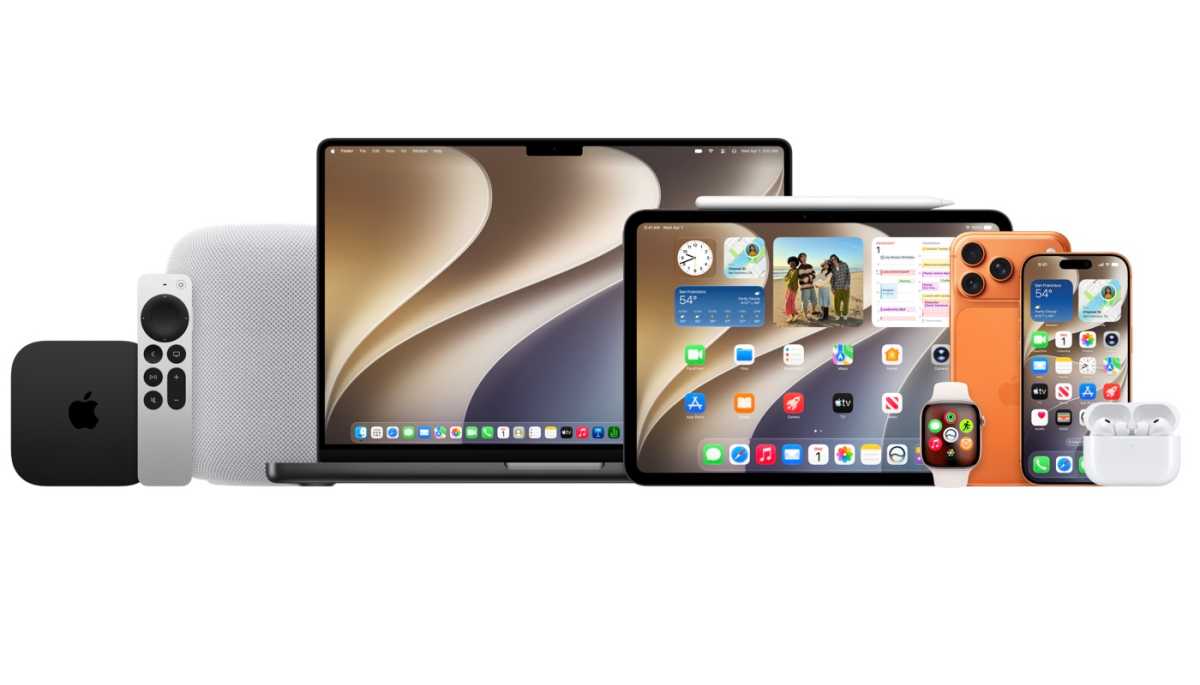
Alongside new hardware, Apple will introduce the next generation of its software platforms before the end of 2026. At WWDC 2026 in June, the company revealed the software foundation that will power its next generation of devices, including the transformation of Siri into Siri AI, deeper AI integration across apps and services, and enhanced cross-device experiences. These developments are expected to play a key role in shaping Apple’s upcoming products.
In this article, we take a look at the Apple devices most likely to launch next. Drawing on the latest reports, supply-chain leaks, and industry analysis, we examine what’s on the horizon – and what it could mean for Apple users.
What to expect from Apple in 2026
Biggest launches: iPhone Fold, iPhone 18 Pro redesign
Most meaningful upgrades: Under-display Face ID, OLED iPad mini
Big leadership shift: It has been confirmed that John Ternus will replace Tim Cook as CEO in September 2026
Apple’s roadmap for 2026: At a glance
In the fall of 2026, Apple’s roadmap will come under the direction of incoming CEO John Ternus. Current CEO Tim Cook will remain as executive chairman, but the shift from an operations-focused leader to one with deep hardware engineering roots could signal a more product-driven approach – and a renewed emphasis on standout hardware. Ternus will take over as CEO just as Apple is reportedly preparing a major Siri overhaul, alongside potential launches including its first touchscreen MacBook and the iPhone 18 Pro.
Product
Expected release
Key rumours
Should you wait?
iPad mini
Fall 2026
Larger OLED screen
Yes
iPad
Fall 2026
Apple Intelligence support
Yes
Mac mini
Fall 2026
M5 & M5 Pro chip
Yes
Mac Studio
Fall 2026
M5 Pro & Max chip
Yes
iPhone 18 Pro & Max
September 2026
No notch, under-display Face ID
Maybe
iPhone Fold
September 2026
The first foldable iPhone
Maybe
Apple Watch Series 12
September 2026
Blood pressure monitoring unlikely
No
MacBook Pro M6
Late 2026-2027
Touch screen
No
Apple Smart Glasses
Preview in late 2026
Heads-up display
Yes
iPhone 18
Spring 2027
To launch with iPhone 18e
No
Every New Apple Product Launched in 2026… so far
Here is what Apple has already announced in 2026:
AirPods Max 2: Improved audio and the H2 chip. Find out more here: AirPods Max 2 guide.
MacBook Neo: Apple’s brand new, low-cost Mac laptop. Find out more here: MacBook Neo guide.
MacBook Air M5: Now with the M5 chip. Read about the 2026 MacBook Air here: MacBook Air M5 guide.
Studio Display: Finally gets Thunderbolt 5 and a better webcam.
Studio Display XDR: With mini-LED technology and ProMotion up to 120Hz.
iPhone 17e: The new, entry-level, iPhone replaces the iPhone 16e. Read more here: iPhone 17e guide.
iPad Air M4: The iPad Air now has an M4 chip. Read more here: iPad Air M4 guide.
AirTag 2: Four years on Apple updated the AirTag, read our review here: AirTag 2nd gen review.
And… RIP Mac Pro: Apple has confirmed that it is discontinuing its tower workstation.
Read on to find out what new products to expect at Apple’s next event and throughout 2026.
Every New Apple Product Launching in 2026
In the sections below we’ve split the upcoming new products into categories including Mac, iPad, iPhone, Apple Watch, Home, AirPods, and some new product categories.
Apple Intelligence, Siri and AI
iOS 27 and macOS 27 Golden Gate, which introduce a massive overhaul to Siri and expanded Apple Intelligence capabilities.
The All-New Siri AI
The most significant update is the transformation of Siri into Siri AI, a conversational assistant powered by Apple Intelligence.
Key Siri AI features coming later this year include:
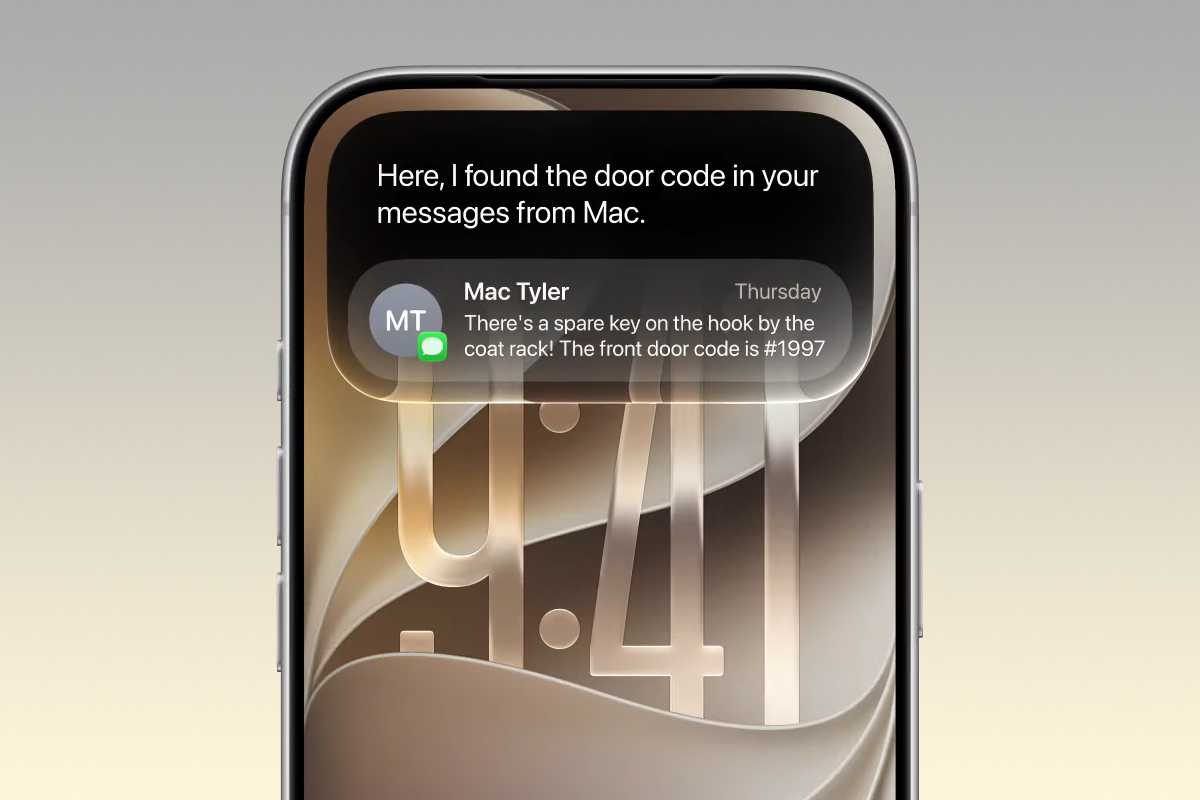
Onscreen Awareness: Siri will understand and interact with what is displayed on your screen. For example, if a friend texts you an address, you can ask Siri to save it to a contact without leaving the app.
Dedicated Siri App: A new standalone app will allow you to revisit previous conversations, pin important chats, and sync history across all Apple devices via iCloud.
App Actions: Siri will be able to perform tasks within apps using natural language, such as editing a recently sent message or adding a song to a specific playlist.
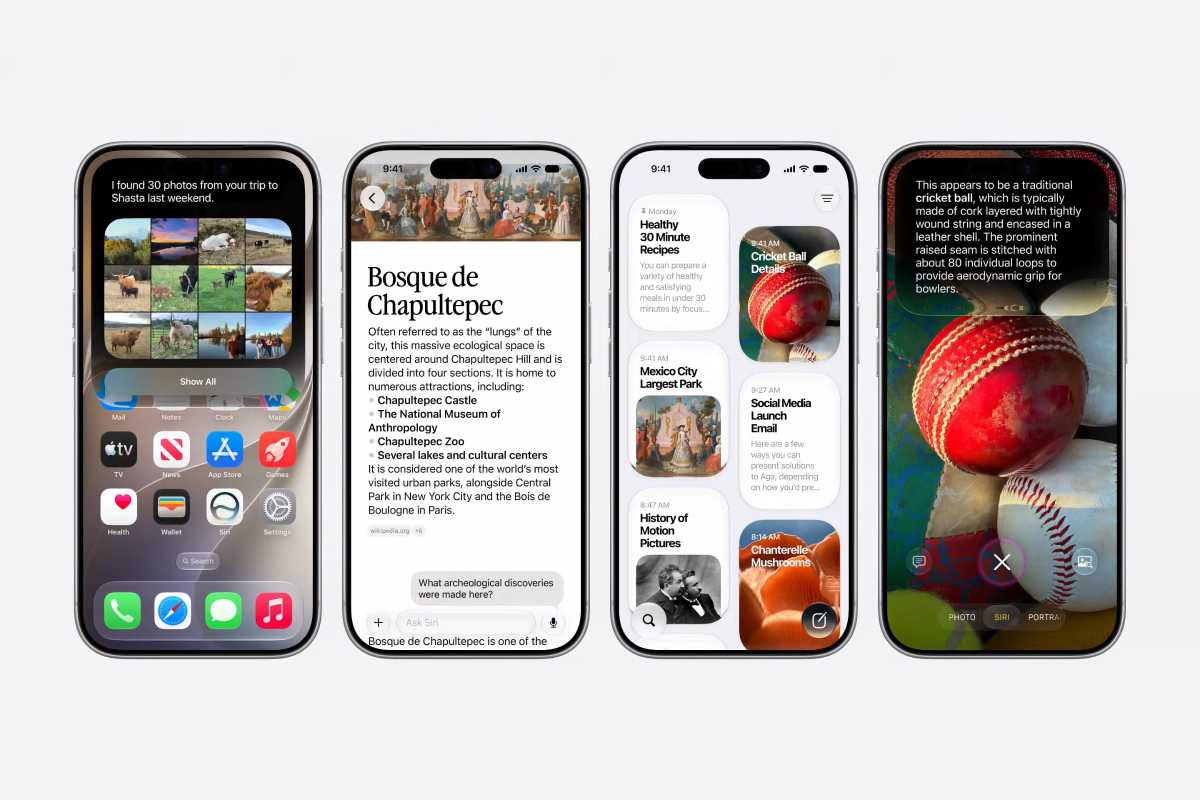
Visual Intelligence: On iPhone, a new Siri mode in the Camera app will allow users to point their phone at objects to ask questions or perform actions based on what they see. On Mac, users can select onscreen content to ask Siri questions about images or documents.
Voice Customization: Users can personalize Siri with more natural voices and adjust the pace and expressiveness of the speech. This feature requires a M3 Mac with 12GB RAM or newer, or iPhone 17 Pro or iPhone Air and newer.
Apple Intelligence Across Apps
Beyond Siri, Apple Intelligence is being integrated system-wide to automate tasks and enhance productivity. Apple Intelligence will play a larger role across the iPhone, iPad, Mac, smart home devices, and future product categories.
Major updates include:
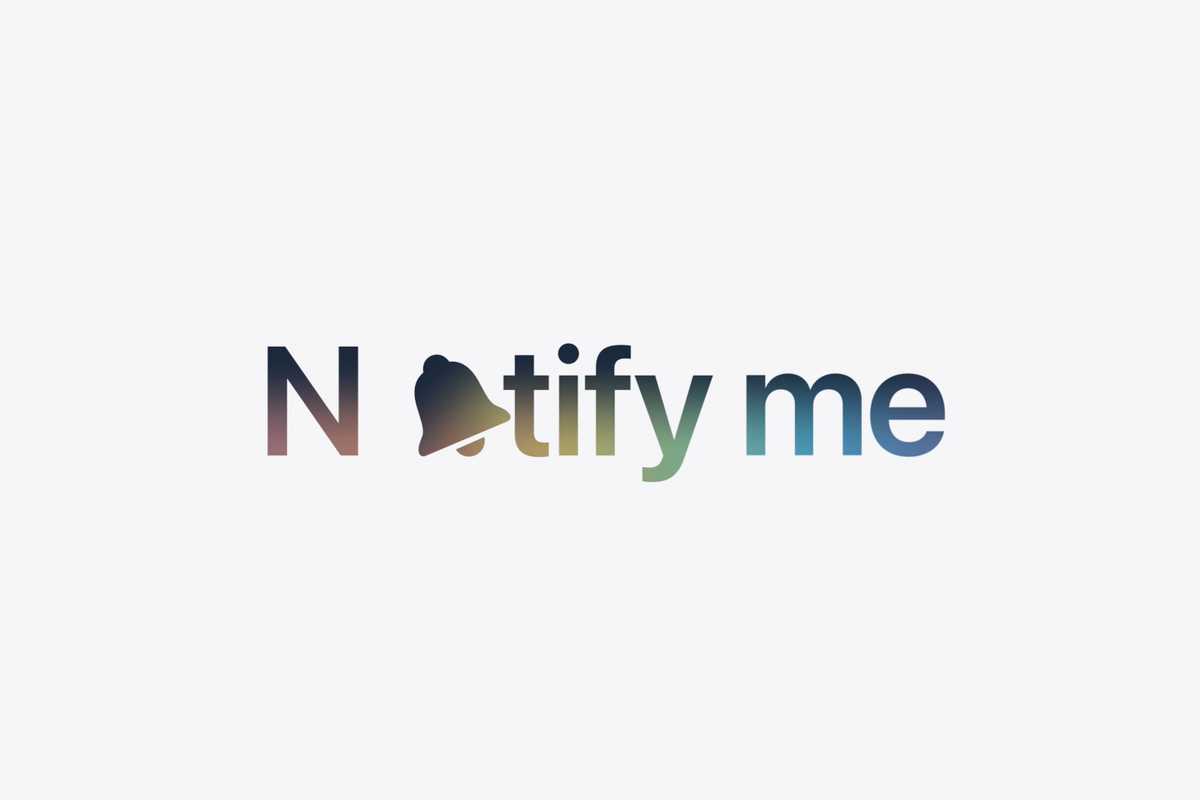
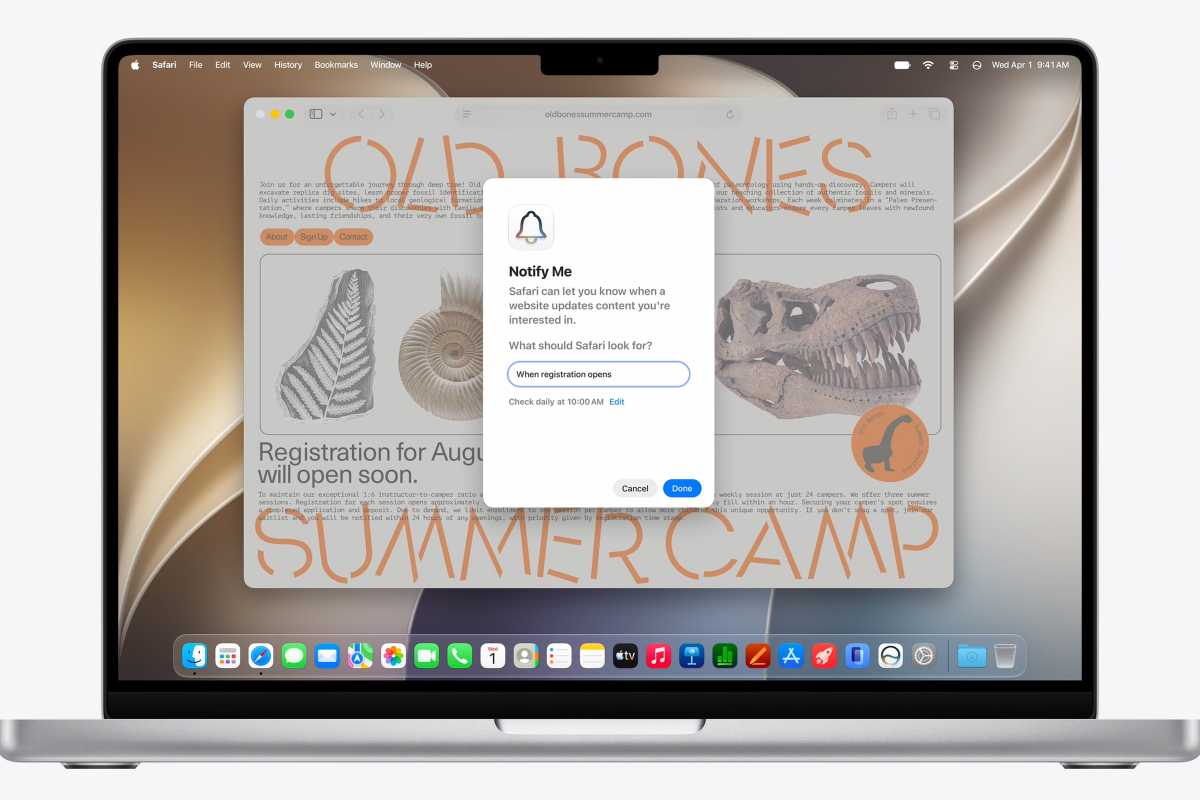
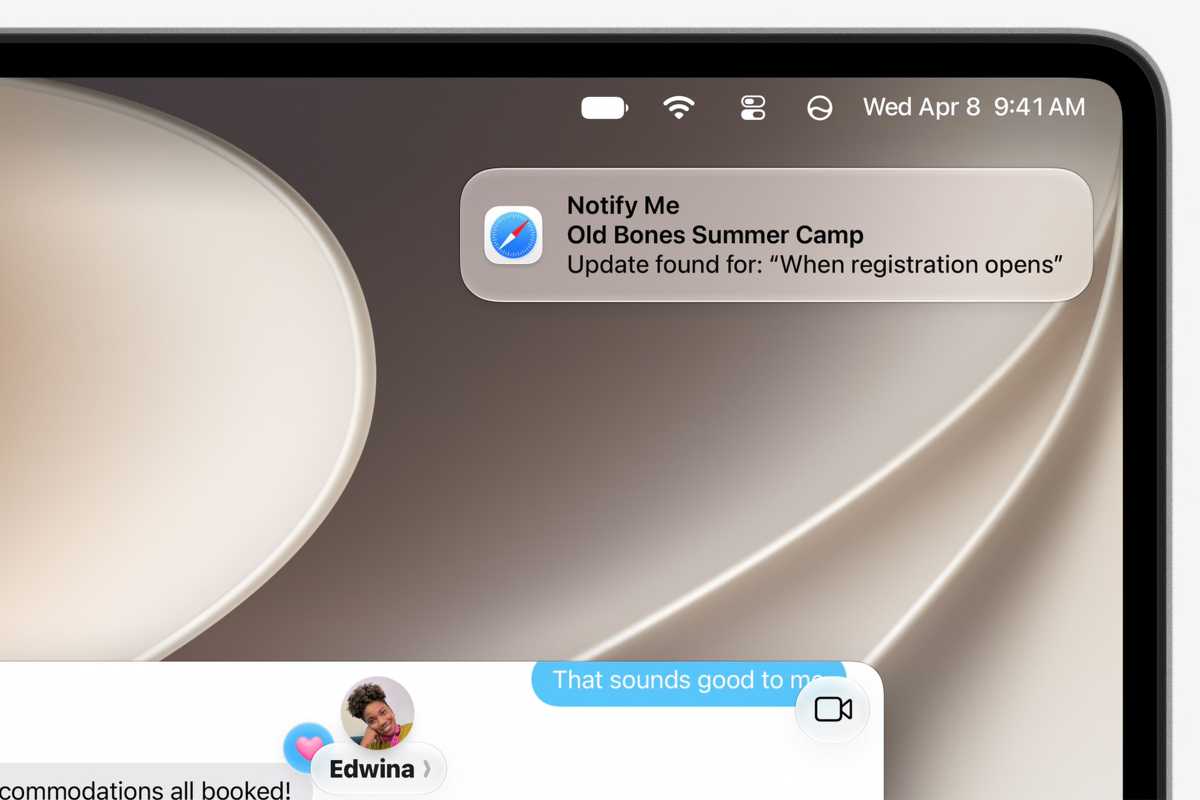
Safari Productivity: The browser will automatically group tabs into topics, monitor pages for changes (like price drops) with a “Notify Me” feature, and even build custom extensions based on natural-language descriptions.
Smarter Photo Editing: New tools include Spatial Reframing to improve composition after a photo is taken, an Extend tool to fill in missing areas when straightening horizons, and an upgraded Clean Up tool for removing distractions.
Writing Tools and Communication: Mail and Messages will gain smarter replies that mimic a user’s writing style . System-wide Writing Tools will generate text from scratch, rewrite drafts, and adapt tone to match specific contacts.
Image Playground: This tool has been revamped with better language models to create more natural-looking photorealistic images. It also allows users to create custom wallpapers on iOS 27.
Intelligent Automation: The Shortcuts app will feature a “Describe a Shortcut” ability, allowing users to create complex automations simply by explaining what they want in plain English.
What new iPhones are coming in 2026 (and should you wait)?
There’s new iPhones coming.
Foundry
Based on current industry analysis and supply chain information, Apple has some significant changes planned for the iPhone in 2026, with updates centered around the iPhone 18 series, the introduction of a foldable iPhone, and the release of iOS 27.
iPhone 18 Pro & Pro Max
September 2026 update expected
The iPhone 18 Pro is expected to launch in September 2026. The iPhone 18 Pro is rumored to be the first to use Apple’s own C1 modem instead of Qualcomm’s. The base model may see a RAM increase to 12GB to better support on-device AI functions. A major redesign is expected, which could include under-display Face ID, a completely hidden notch and the front camera could move to the upper-left corner of the display. Read about the iPhone 18 Pro here: iPhone 18 Pro rumors.
Foldable iPhone
September 2026 introduction possible
This is a wild card! After years of rumors, Apple’s first foldable phone, potentially named the iPhone Fold, is projected to debut in September 2026 alongside the iPhone 18 Pro models. It is expected to be a book-style foldable with a 7.8-inch inner display. Read more here: Apple’s folding iPhone rumors.
iPhone 18
Spring 2027 launch possible
Apple could delay the iPhone 18 and release that handset alongside the iPhone 18e in the spring of 2027, according to some reports.
What new iPads are coming in 2026 (and should you wait)?
The iPad Air could get a update soon.
Britta O’Boyle
Don’t expect major redesigns this year. Instead, Apple is likely to focus on faster chips and other internal upgrades. That said, both the iPad and iPad mini are due for an update – particularly the entry-level iPad, which currently lacks support for Apple Intelligence. Here’s what we expect Apple to announce:
iPad mini
Late 2026 update possible
The current iPad mini (A17 Pro) was released in October 2024, and Apple’s update cycle for this model is generally infrequent. Based on current reports and analysis, the next significant update to the iPad mini is not expected until mid-to-late 2026 at the earliest, with some speculation pointing toward 2027.
One rumored upgrade for the 2026 iPad mini is the transition to an OLED display, which could reduce manufacturing costs and improve battery life. There is also the possibility of a slightly larger screen, with a move from the current 8.3- to 8.7-inches suggested. There is also speculation that a future foldable Apple device could potentially replace the iPad mini line entirely, though this remains uncertain.
Internal code leaks suggest the future iPad mini could be upgraded to an A19 Pro chip, which would provide a significant performance boost over the current A17 Pro. A A18 Pro chip upgrade is also possible. Read our round up of iPad mini rumors.
iPad
Late 2026 update possible
When the standard iPad was updated in March 11, 2025, the biggest disappointment was that it featured a A16 chip and therefore didn’t support Apple Intelligence. Apple looks set to rectify that in 2026 with an upgrade to the A18 or A19 chip, with the latter offering 50% better performance. The release timeline for an iPad with an A18 or A19 chip is anticipated for sometime in 2026, in fact, Apple code suggest the company may be planning an update sooner-rather-than-later.
Read more about the 2026 iPad in our rumor round up.
Which Macs are worth waiting for in 2026?
2026 is expected to be a significant year for the Mac, with Apple’s first touchscreen Mac rumored as part of a MacBook Pro redesign. March 3 saw the launch of the M5 MacBook Air and M5 Pro/M5 Max MacBook Pro and March 4 saw Apple introduce the a new entry-level laptop – the $599 MacBook Neo.
Updates to the Mac Studio and Mac mini are expected in 2026. These Macs have become popular for running AI models locally; however, global RAM shortages – driven by AI companies purchasing large amounts of memory for data centres – are having a knock-on effect on availability. Current models are constrained and, in some cases, unavailable, while the release of new models may also be delayed due to ongoing DRAM supply shortages.
The next Mac mini is expected to feature Apple’s M5 and M5 Pro chips. While the update was originally anticipated earlier in 2026, current reports suggest the launch has been delayed, potentially due to ongoing global RAM shortages.
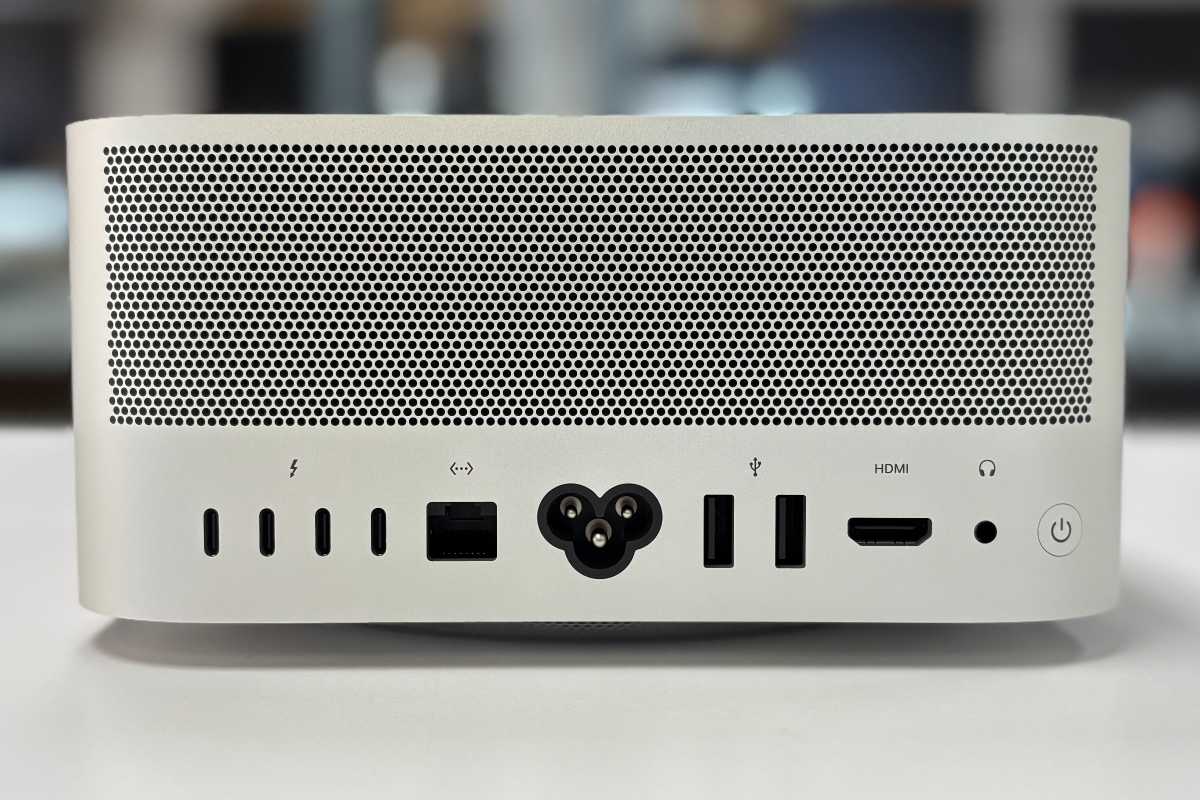
As for new features, expectations include improved AI and graphics performance, faster SSDs, higher base storage configurations, and possible price increases. We don’t expect any major design changes, however. The current Mac mini received a significant redesign in October 2024, shrinking the chassis to just 5 by 5 inches. For more details, see our Mac mini M5 rumors guide.
Mac Studio
Fall 2026 update expected
The current Mac Studio comes in two configurations: one with the M4 Max and one with the M3 Ultra. The M3 Ultra is faster than the M4 Max, but how much more powerful would an M4 Ultra – or even an M5 Ultra – be? Hopefully, we won’t have to wait long to find out.
Apple is expected to release a new Mac Studio with an M5-series chip in 2026. The launch had been anticipated for WWDC, but now appears to have been pushed further into the future, possibly due to global RAM shortages. Read more here: M5 Mac Studio rumors.
iMac
Possible 2026 update
The current M4 iMac was released in October 2024, so an M5 update might seems timely and could be released alongside other potential M5 Mac updates.
The current iMac design was introduced in 2021 and is not expected to change soon. It is still considered fresh, and its components are not outdated. However, there are calls for Apple to introduce a larger screened iMac, something that has been missed since Apple discontinued the 27-inch model. Many feel that the 24-inch screen is too small. Read about the larger iMac rumors.
Touchscreen MacBook Pro M6
Possible late 2026 introduction
Foundry
There are rumors that the M6 MacBook Pro will get a redesign including a thinner body and a notch-free OLED touchscreen, read the rumors about the M6 MacBook Pro with a touch screen.
Upcoming Apple Watches in 2026
Like clockwork, expect a new Apple Watch in September.
Mahmoud Itani / Foundry
Apple updated all the Apple Watches in September 2025. Launching the Apple Watch Series 11 a new Apple Watch Ultra and a new Apple Watch SE. In 2026 the Apple Watch Series 12 and a new Apple Watch Ultra 4 are expected.
With the Apple Watch rather than hardware changes the real interest tends to be the health and fitness related features. The following capabilities are expected in future iterations:
Non-invasive blood glucose monitoring: This has been a long-rumored feature for the Apple Watch, but it is still considered to be a few years away with the technology unlikely to be ready for a 2026 release.
AI-Powered Health and Fitness Coach: Apple has long been rumored to be working on a sophisticated AI coach. Recent reports from early 2026 suggest this project was “scaled back” to allow individual AI-driven features to ship sooner rather than waiting for a complete overhaul.
Health+ Service Overhaul: There are ongoing rumors regarding a new service tier called “Health+” that would expand upon Fitness+. This service might integrate new AI-powered health features into a single subscription, potentially bundled with hardware purchases.
Daily Readiness and Stress Tracking: Unlike competitors such as the Oura Ring 4 or Garmin, the Apple Watch currently lacks a “daily readiness” score or native stress tracking. Experts suggest these are obvious areas for future software or hardware updates.
Other new features could include Touch ID integration and microLED displays reaching 4,000 nits brightness. A thinner case, magnetic bands, and enhanced AI capabilities could also be on the cards.
Apple Watch Ultra 4
September 2026 update possible
Rumors indicate that the Ultra 4 could have a fingerprint scanner. There may be new sensors coming, but details are sparse.
Apple Watch Series 12
September 2026 update likely
A chip update is likely, but beyond that little is known.
Upcoming Apple Home devices
Mahmoud Itani / Foundry
Apple is expected to significantly expand its smart home ecosystem in 2026 with four major product categories including new devices beyond traditional Apple TV and HomePods.
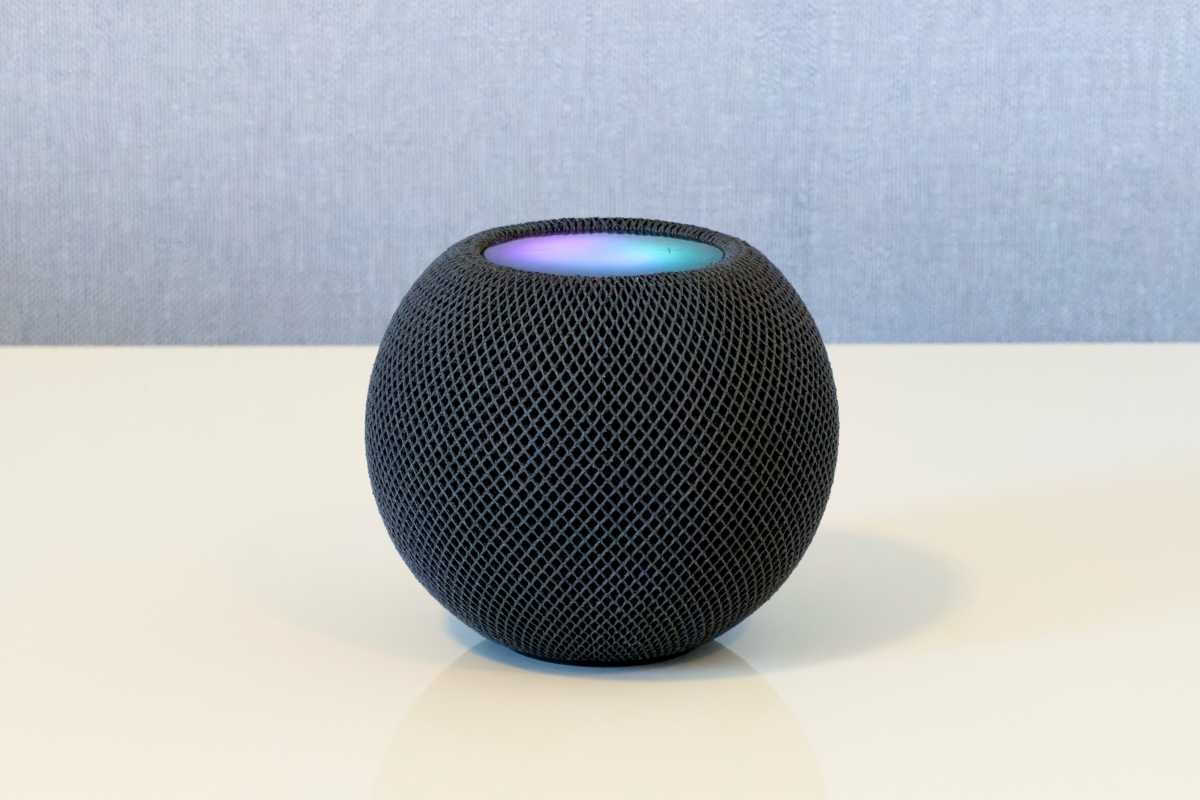
Key rumored products include a HomeKit security camera with audio monitoring, a HomePad smart hub with 7-inch touchscreen, updated HomePod mini 2, and next-generation Apple TV 4K with A17 Pro chip.
This strategic push aims to help Apple catch up with competitors like Amazon and Google in the smart home market.
We expect Apple’s major push into the smart home market to start around March or April 2026. This initiative will be heavily reliant on a significantly improved Siri, powered by a new large language model, reportedly based on Google’s Gemini AI.
New and updated products are said to include:
New Smart Hub
Possible 2026 introduction
Multiple reports have suggested Apple will launch a smart home hub. Apple is said to be working on a number of HomeHub related products including a device said to mount a camera on a robot arm that can follow you around!
New Smart Display
Possible 2026 introduction
Also rumored is an iPad like smart display that allow you to control your home devices via HomeOS software. This may come with both a speaker base and a wall mount.
HomePod Touch
Possible 2026 introduction
A new HomePod smart speaker with a screen is said to be coming. Read more here: New HomePod rumors.
HomePod mini 2
Probable 2026 introduction
Foundry
A new HomePod mini is also said to be on the way.
Apple TV
Probable 2026 update
Apple TV leaks indicate a rumoured Apple TV is on Apple’s roadmap and that the update will bring Apple Intelligence to the set top box.
Upcoming Vision devices, AR and spatial computing
Apple Smart Glasses
Possible 2026 introduction, 2027 launch
Unlike the bulky Vision Pro headset, the upcoming smart glasses from Apple are expected to follow a form factor similar to the Ray-Ban Meta glasses. This will be Apple’s first product built specifically for “Visual Intelligence.” It will likely handle tasks such as live translations, music playback, phone calls, and turn-by-turn directions. Apple could provide a first glimpse or “preview” of the glasses by the end of 2026.
Vision Pro
Possible 2027 update
Prior to 2026, Apple’s spatial computing strategy has focused on the high-end market, but reports indicate a more affordable version of the headset is in development. Apple has reportedly paused work on a successor to the high-end Vision Pro and will instead release a cheaper Vision Pro.
What Apple launched in 2025
Here’s a quick look at what Apple released in 2025:
February2025: iPhone 16E – the replacement for the iPhone SE and iPhone 14 brought Apple Intelligence support to the entry-level iPhone.
I recently wrote a couple of articles about the attacks PC makers have made against the MacBook Neo. In both those articles, I responded to criticism from Dell and Microsoft, with the major point being that, in the end, you’re still using Windows, which has so many problems that it makes the argument against Microsoft’s platform very easy to make.
However, I have to admit that while Windows is filled with bloatware and performance issues, I have to give Microsoft credit for at least trying to do something substantial and game-changing. Even though you may be sick of hearing it, AI is the future, and Microsoft has attempted to make its Copilot agent the core of Windows. It hasn’t quite worked out, but at least Microsoft is trying.
Meanwhile, Google held its own developers conference recently, and it showed off so many AI-based features with its Gemini technology that it was hard to keep track of them all. Many of these features will be available in Chromebooks that compete in the same market as the MacBook Neo.
My thinking before the WWDC keynote on Monday was that Windows has Copilot, Google has Gemini, and Apple has… scattered features such as Image Playground and Writing Tools. [Insert sad trombone sound here.] While macOS is head and shoulders its competitors in usability, I couldn’t help but feel like macOS was still in danger of being left behind. Sure, Microsoft had to reassess and scale back its Copilot integration, but they’re clearly doing something to show that Windows is progressing with the times.
It’s hard to say that about macOS. We got a glorified makeover last year and an Apple Intelligence false start two years ago.
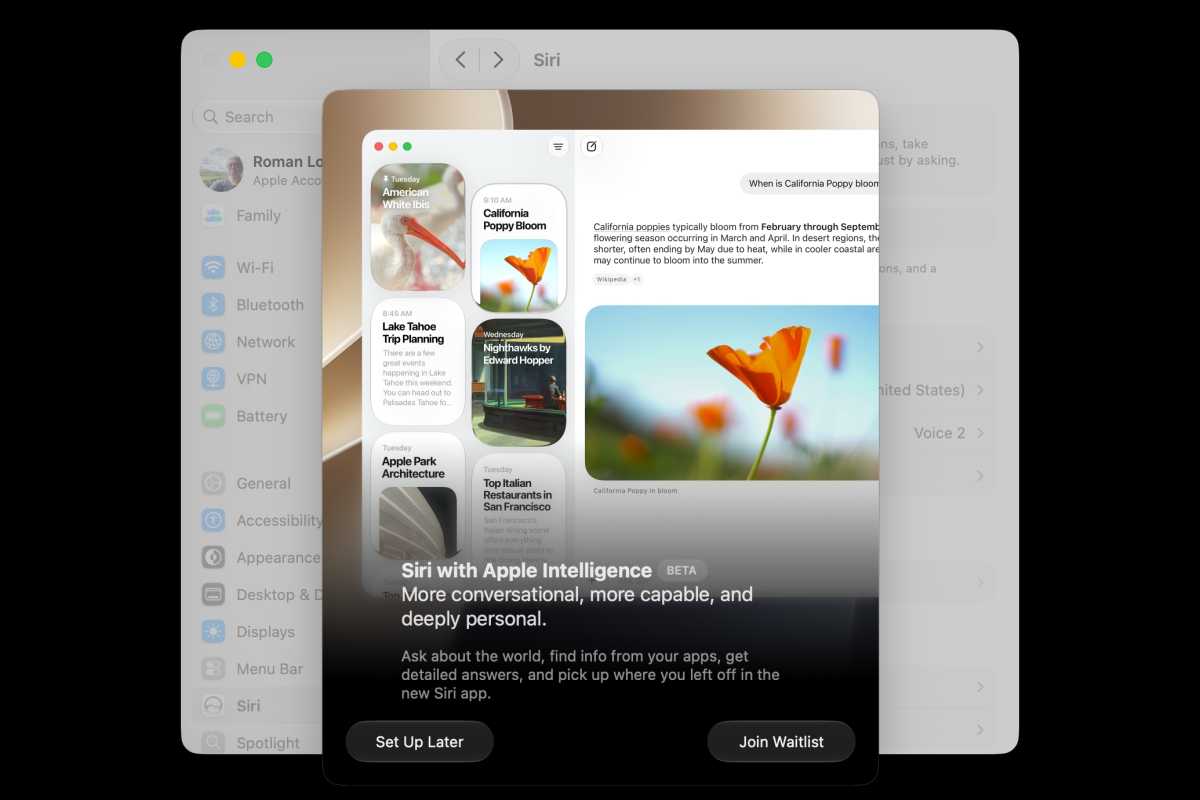
The Siri AI features in the first developer beta of macOS Golden Gate are not yet available.
Foiundry
So I felt that at this year’s WWDC, Apple had something to prove. Based on what was shown in the keynote, it looks like macOS Golden Gate will be the start of a new era of modernization that macOS sorely needs. Siri AI will unlock new levels of user productivity, free users from monotonous tasks, and allow users to try things they’d won’t before. Sure, it would’ve been nice if Apple didn’t have to turn to Google as a starting point, but Apple Foundation Models are still private and steeped in Apple training.
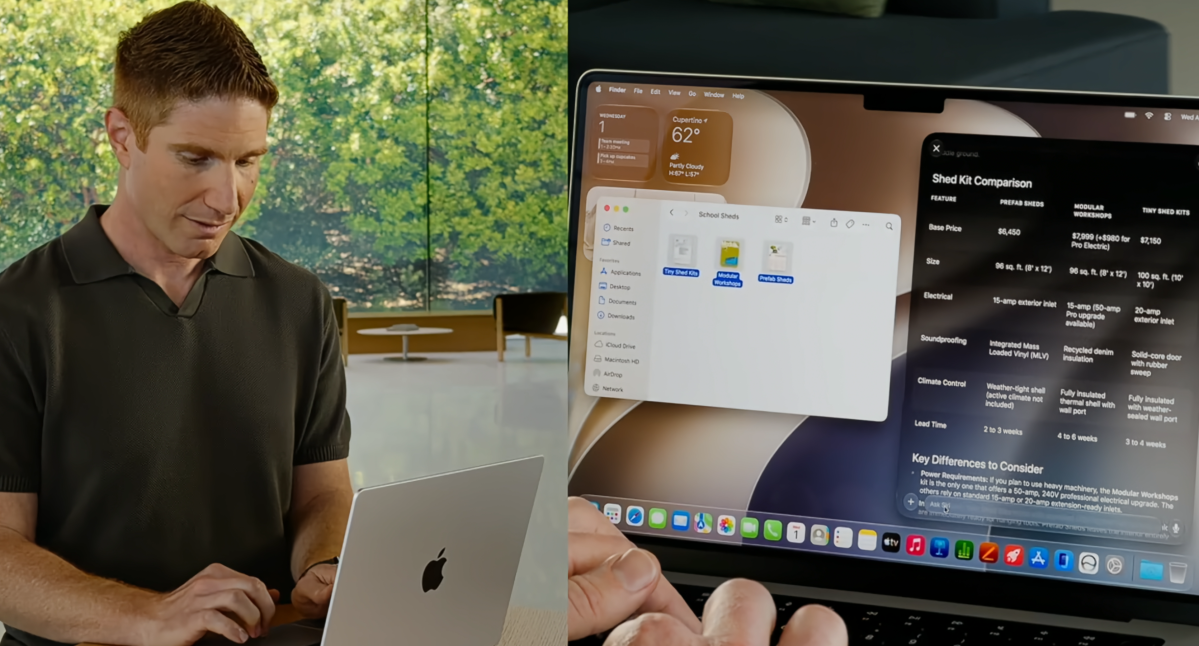
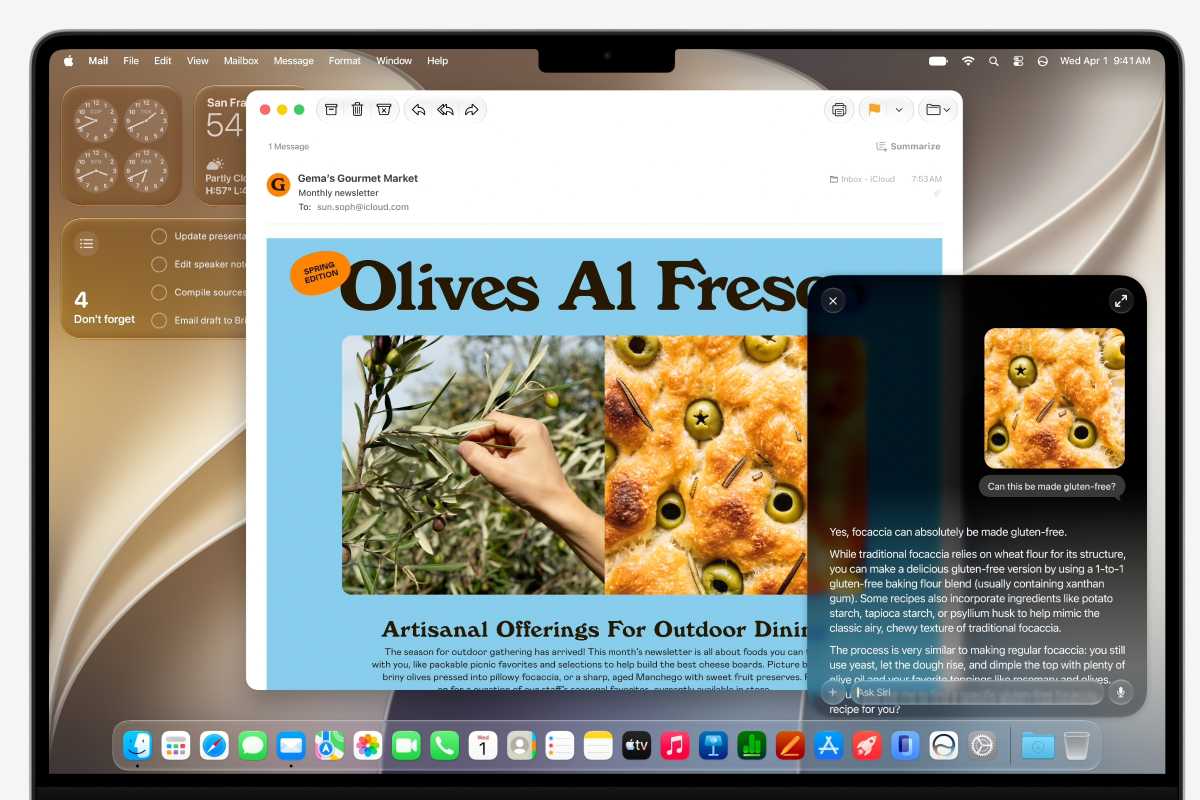
And there are flourishes all over macOS 27 that make the entire system more modern. For example, Apple is integrating Siri into the Spotlight search bar for all-over access. You can type any question into the search to start a conversation with Siri, kind of like an iMessage chat, but also extend it to documents and projects with system-wide context menus. As you work, the new Siri will recognize names, places, and messages, give writing suggestions, and help discover things that would normally take hours using Safari. The demo by OS system experience director Justin Titi was impressive and appeared to open up the Mac to a whole new world of possibilities.
While I’m excited by the possibilities with macOS Golden Gate, I’ll need to temper my enthusiasm. You can thank the WWDC24 false start for that. Also, as of the very first developer beta that was released on Monday, the new Siri AI features are not yet available–developers have to join a waitlist before they can get access. As of now, it’s very much a “wait until I see it” situation, but I’m optimistic.
Apple took to the virtual stage yesterday for its annual WWDC keynote and, while it did not go so far as to apologize for anything (please, that would be uncouth), it almost might as well have.
Take Liquid Glass. Please. Apple didn’t so much walk back Liquid Glass as it did slide back Liquid Glass by providing a slider that goes from “All your layers are one incomprehensible jumble that we call Liquid Glass Ultra, and we think you’re gonna hate it” to “Oh, thank god, I can see things again”.
With macOS Golden Gate on the horizon, Tahoe may be the first release of macOS that will never make it onto the Macalope’s primary machine.
In a bit of a surprise, Apple spent a good chunk of the early keynote discussing new and greatly needed improvements for parental controls. While they definitely raise concern about potential abuse by parents who are not supportive of kids just being who they are, they attempt to address the needs of parents trying to protect children from overtly sexual, violent or hateful content who have been struggling with iOS’s existing parental controls for years.
Thus, it was a bit unusual for a keynote in the Year of our Lord 2026 to get almost 30 minutes in with barely a mention of AI. The first real mention was in the context of parental controls as one of the things parents might be concerned about their kids having access to. Craig Federighi went so far as to say that it often seems like “some are racing ahead with AI for the sake of AI”.
Truly helpful AI must be centered around you and your needs.
Of course then the company spent the rest of the keynote talking about AI, but it did grease the skids for it and couch it in terms of what AI can do for people without sacrificing their privacy rather than just cheerleading AI itself.
The first demo for Siri AI was, not surprisingly, very similar to Google’s demo at I/O: planning a party.
You may not like or be aware of it, but the big problem people currently have across the globe is, um… party planning.
We’ve had two keynotes in two months about it, so it must be.
If you’d like to receive regular news and updates to your inbox, sign up for our newsletters, including The Macalope and Apple Breakfast, David Price’s weekly, bite-sized roundup of all the latest Apple news and rumors.
Foundry
Yes, whether it’s a get-together with neighbors or a World Cup party with friends, the dark art of sending out an email, planning a menu and… whew… making a cringe-worthy image to highlight the event is what the masses are struggling with?
The Macalope knows it seems like there’d be bigger problems in the world people were trying to solve, but tech companies seem pretty sure it’s party planning. So, there ya go. Fortunately, they are ON IT. Rest assured, they have been WORKING ON THE ISSUE and have some very exciting solutions to the party planning problem.
It’s not that they have this AI technology they’re desperate to sell to people and are just trying to find something, anything, they can do with it. Perish the thought. And Apple’s not showing the same demo with just a different kind of party because it’s using Google’s AI. That’s not it, either. Nope. They’re doing it because none of you dopes know how to make a party happen. Apparently.
The company also showed a number of other AI features coming in its new operating system releases. The ability to reframe photos was a particular standout, and the Macalope feels like he could actually use the Safari extension creator and tab organization features.
Overall, the horny one thinks Apple hit the right tone with its announcement. If you need any proof, just know this: the stock market hated it! Apple shares dropped precipitously and predictably as soon as Siri demos started.
If it wasn’t for the market then it was probably for us.
Indeed, while the keynote may have lacked anything huge and saddled with the baggage of trying to finally deliver the stuff they promised two years ago, it focused on tangible benefits and on fixing what currently isn’t working so well. Calling this a Snow Leopard year is far from an insult, it’s a compliment.
Apple’s WWDC keynotes are usually reminiscent of a painstakingly curated meal at a high-class restaurant. Perhaps a little iPad software as an amuse-bouche, sir? Then, can I recommend the iPhone as your starter, the Mac for the main course, a small dish of Apple Watch to clear the palate, and finally just a soupçon of Vision Pro as dessert. WWDC26, which saw the various OSes crammed together willy-nilly, was more like the anarchy of an all-you-can-eat hotel breakfast.
Partly, this seems to be the result of Apple not having all that much to say about each product in isolation. As in September 2023, when Apple suddenly cared passionately about the environment, the company’s lengthy discussion of the (undoubtedly important) subject of child safety was a giveaway that its commercial priorities didn’t merit as much stage time as usual. But mainly it was because the feature that did need extensive discussion, Siri AI, is integrated across the ecosystem. Siri AI’s alluring promises are relevant to nearly every Apple customer.
Personally, though, I’ll believe it when I see it. We’ve been here before: two years before, to be exact, when Apple Intelligence was unveiled at WWDC24. Apple was adamant that a new contextually aware version of Siri would be ready in time for iOS 18 and the 16-series iPhones, and even made a commercial showing this off. In the end it turned out that building a contextually aware Siri was quite a bit harder than the company expected, and it had to pay compensation to iPhone 16 buyers who felt ripped off.
Did Siri AI look decent in the demos? I suppose it did. As I’ve explained elsewhere, it doesn’t exactly feel like a cutting-edge voice assistant, with what seemed to be distinctly mediocre performance on the speed front without any stand-out features you can’t get from any number of other chatbots. But it looks a lot better than current Siri, and that’s what I wanted.
Apple was keen to emphasise that Siri AI is significantly more accurate than its predecessor. It has the contextual awareness we were promised in 2024, which makes it far more powerful and capable; instead of having to begin from scratch each time you make a query, you can depend on the software keeping in mind the context of previous comments, along with relevant personal data, information, and images onscreen, and the content of your emails and messages. It’s easier to have a conversation with someone who’s well informed.
For the first time, Siri is getting a dedicated app. This means you can easily access previous conversations and the information contained within, and carry on where you left off. Better still, you can start a conversation on your Mac at work and then continue this on your iPhone on the train home. And Apple says the new version of Siri can perform actions in more apps, giving it agentic powers to accomplish multi-step tasks.
As I say, very little of this is new in the wider sense. While Siri AI has access to parts of your iPhone that no other AI agent has, I wouldn’t expect the average AI enthusiast to get excited. But current Siri has set the bar so low that these moderate upgrades are hugely appealing to me. The problem is that at this point, so much is still unsure.
Those demos, for example. How legit are they? Is Siri AI actually that reliable, or did they have to run multiple attempts and take the best? Are we sure that was even live software and not a simulation like in the commercial? One of the biggest negatives of the switch from live to recorded event presentations is that demos become essentially meaningless as a measure of a feature’s real-world experience.
There are political uncertainties, too. Apple says Siri AI won’t initially be available on iPhone or iPad in the EU because of the Digital Markets Act and admitted that “there is currently no timeline” for this to happen. For now, it can only handle English; the company says it “will quickly expand support for more languages,” but again, doesn’t offer a date.
Privacy is central to Apple’s marketing of Siri AI, but that too is a point of uncertainty. We know that some user data will be processed on Google servers, but it isn’t clear exactly how this will be protected. Apple has its own Private Cloud Compute technology but this doesn’t appear to offer good enough performance, so Nvidia’s “confidential computing” feature may have to do the job instead. Does that meet Apple’s privacy standards, or is this simply the most convenient option?
Siri AI will launch to users “later this year” (how much later? Does this mean it may not be part of iOS 27.0?), but it will be classified as a beta, which is often a sign that we should expect suboptimal performance. In the meantime, developers can test out its features, but there’s a waiting list to get in. And so for now, we have to take a great deal on trust, and that’s not easy when you’ve been let down so many times before.
Foundry
Welcome to our weekly Apple Breakfast column, which includes all the Apple news you missed last week in a handy bite-sized roundup. We call it Apple Breakfast because we think it goes great with a Monday morning cup of coffee or tea, but it’s cool if you want to give it a read during lunch or dinner hours too.
You can catch up on all of yesterday’s announcements, along with our reaction as they happened, with our WWDC26 liveblog.
Have your say: AI haters, unite!
I expected pushback after lambasting AI hype in the last Apple Breakfast, but was pleasantly surprised by your supportive messages.
“Thank you for a wonderful pre-WWDC piece!” wrote Garry H. “Agree that the best AI is no AI.” John S., meanwhile, said AI has not been well thought out in its use cases, and expressed a hope that Apple doesn’t follow Microsoft down this path. “Unfortunately,” he added, “the tech companies see a need to recoup the huge investment. If Apple does go down the AI rabbit hole, all I ask is that it gives users an opt-out.”
Michael, finally, wants to make use of AI, “but not until we apply effective guardrails in its access and application, and until we massively rethink environmentally and economically how to power it. Right now, the overlords’ myth of inevitability is driving this false need to force adoption at the expense of… well, everyone and everything.”
In iOS 27 Siri gets a new voice. And it’s good! Check it out. For more short videos, follow us on TikTok and Instagram.
And with that, we’re done for this week’s Apple Breakfast. If you’d like to get regular roundups, sign up for our newsletters, including our new email from The Macalope–an irreverent, humorous take on the latest news and rumors from a half-man, half-mythical Mac beast. You can also follow us on Facebook, Threads, Bluesky, or X for discussion of breaking Apple news stories. See you next Monday, and stay Appley.
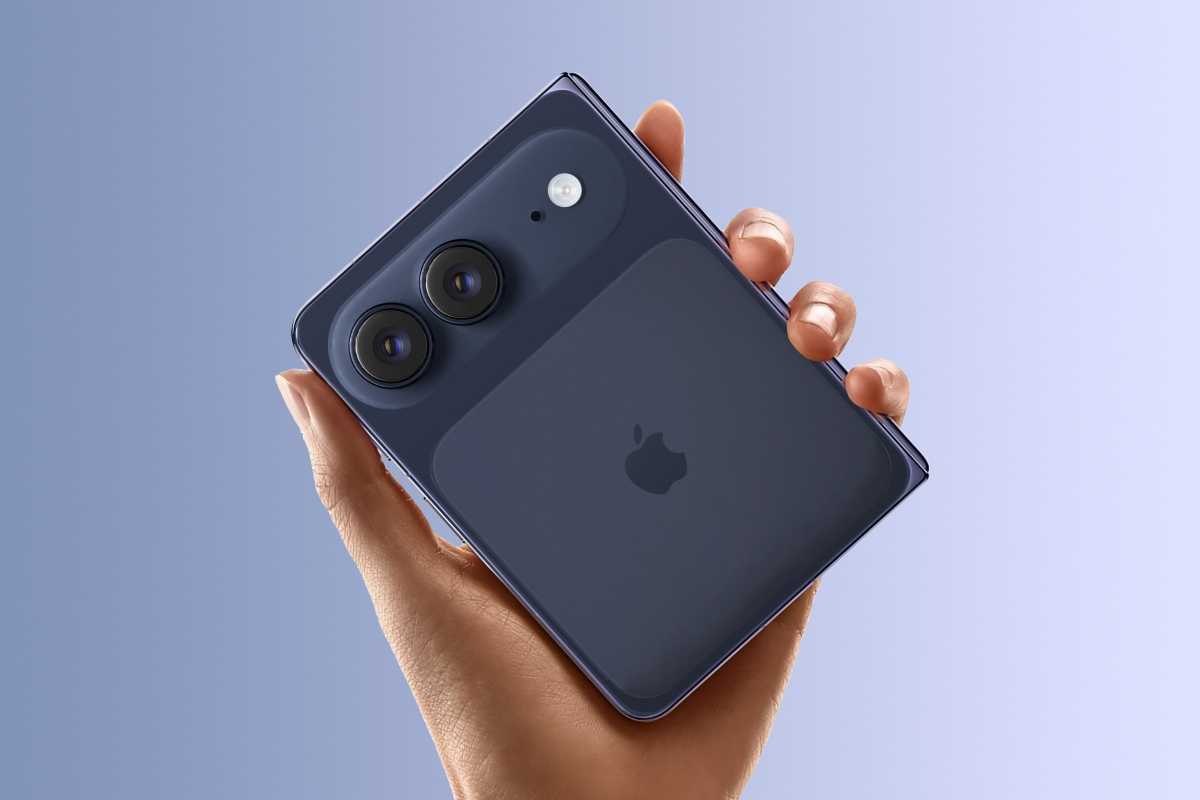
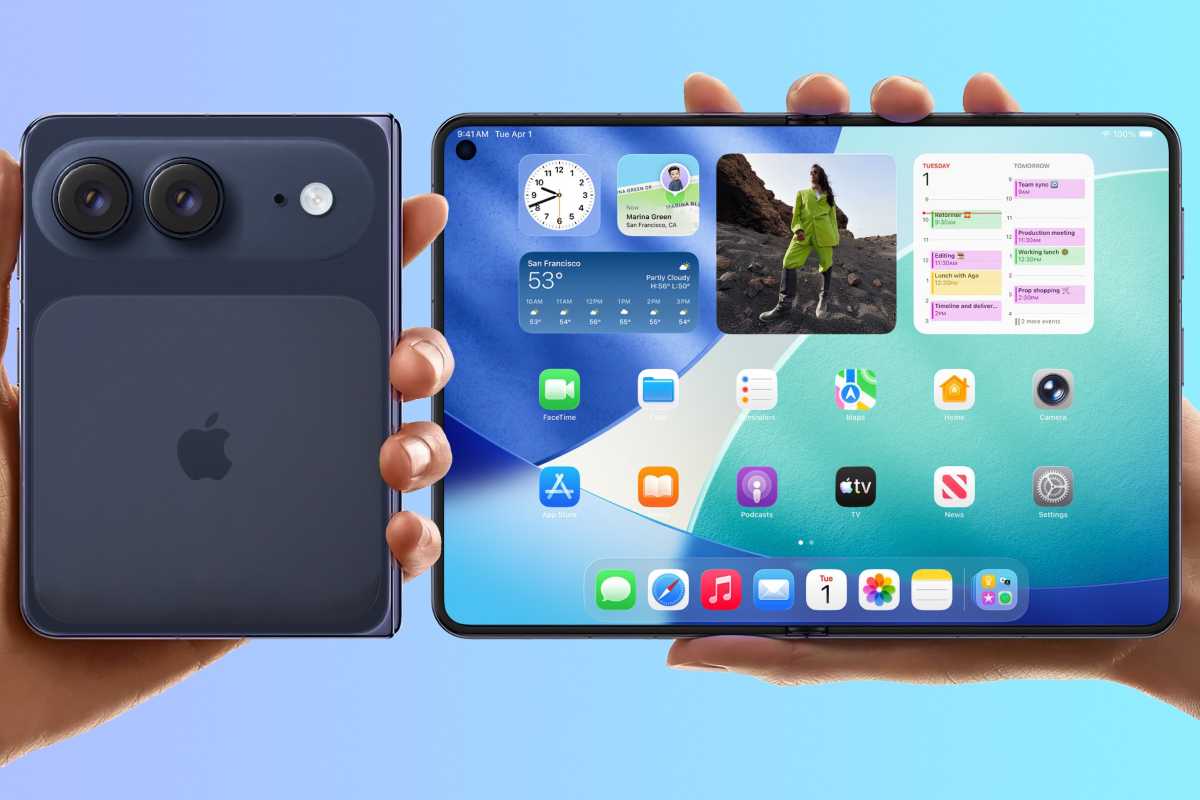
Rumors that Apple is working on a foldable device have been swirling all year, with all of them pointing to the launch of the Phone Ultra later this year. And although Apple has never said a word about it, iOS 27 has just given us a major clue that this new foldable device is indeed coming later this year.
After digging through parts of the iOS 27 code following WWDC 2026, developer Sam Henri Gold discovered new internal references tied to device folding states. Macworld was able to independently confirm the findings, and some of these references are extremely difficult to explain away as anything other than foldable device support.
Specifically, the code includes references to “foldState” and “angleDegrees,” internal status values apparently designed to tell apps whether a device is folded and at what angle. That may not sound particularly exciting at first glance. But here’s the important detail: no current Apple device uses these states.
To add fuel to the fire, Macworld also found internal code suggesting that Apple has been testing a device that features both Dynamic Island and Touch ID – a combination that doesn’t exist in any device today.
Given these references, it’s clear that iOS 27 is ready for a new category of device. One that likely features a foldable display.
Apple left some pretty clear signs that the folding iPhone Ultra is indeed coming soon.
Foundry
Apple is clearly preparing apps for foldable displays
During the Platforms State of the Union session at WWDC, Apple repeatedly encouraged developers to stop designing apps around fixed screen assumptions. Instead, developers were told to ensure apps can resize dynamically and adapt fluidly to different screen configurations.
On its own, that advice sounds fairly generic. Apple has spent years pushing developers toward responsive layouts across the iPhone, iPad, and Mac. But in the context of the newly discovered fold-related APIs, those comments start sounding very specific.
There’s more: with iOS 27 and macOS 27, users can finally resize iPhone Mirroring to any size they want, making an iPhone app the same size as an iPad app on the Mac. It’s almost as if iOS were ready for an iPhone capable of running apps on both screen sizes.
Apple rarely announces entirely new product categories without first quietly preparing its software ecosystem behind the scenes. For example, back in 2014, before the iPhone 6 was announced, Apple encouraged developers to make their apps more flexible when it came to screen sizes. Of course, there were already two different iPhone sizes at the time, but the company was clearly looking ahead to the iPhone 6 and iPhone 6 Plus, and later, the iPhone X.
We also saw similar groundwork years before the Vision Pro launched, with Apple gradually introducing spatial computing frameworks into its developer tools long before the headset was official.
The folding iPhone is rumored to open up to a screen that’s roughly the size of an iPad mini.
Foundry
Apple’s foldable strategy is finally taking shape
Of course, hidden code references don’t guarantee a product launch anytime soon. Apple constantly experiments internally with hardware and features that never see the light of day. And it’s entirely possible that these code references are related to early prototypes.
But taken together, the evidence surrounding iOS 27 feels unusually specific. There are references to folded mode, APIs for detecting display angles, Apple encouraging developers to create resizable interfaces, and internal flags suggesting the existence of a device with a Dynamic Island but without Face ID, which fit rumors of the so-called iPhone Ultra.
And if iOS 27 is already laying the software groundwork, the first folding iPhone may be just around the corner.
ChatGPT, Gemini, and Claude all have two things in common. They each cost $20/month, and the monthly subscription is probably the worst way to get them. ChatOn’s AI Assistant bundles access to major AI models like GPT, Gemini, and Claude into a single app, and right now, it’s only $29.99 for your first year.
All your AI models, one place
ChatOn gives you access to GPT, Gemini, Claude, Sonar, and more without separate accounts or subscriptions. You pick whichever model fits the task, whether that’s Claude for writing, Gemini for research, or GPT for reasoning – all without switching apps. It also comes loaded with over 100 prewritten prompts across multiple categories, so you’re not starting from scratch every time.
There’s a reason ChatOn has over 100 million downloads. Beyond text chat, the app can generate AI images, process PDF, DOC, and EPUB files, perform OCR text extraction, and real-time web search with source links. There’s even an AI keyboard integration that lets you generate text directly inside other apps on your iPhone or Mac.
One account gives you access from unlimited devices across iOS, Android, and web, so your setup travels with you. ChatOn won Best User Experience at the 14th Annual Lovie Awards, and if that doesn’t tell you how users feel about the platform, the high reviews on the App Store speak for themselves. Whether you’re on your MacBook at the office or your iPhone on the go, ChatOn AI keeps your tools synced and ready, no context switching required.
On Monday, June 8, Apple kicked off WWDC with a keynote presentation outlining all of the new features across its family of devices: iOS, iPadOS, macOS, watchOS, tvOS, and visionOS. Check out everything that happened in our chronological recap below.
Watch the WWDC keynote right here
You can watch Apple’s WWDC keynote replay on YouTube below or Apple.com.
WWDC 2026: The highlights
Macworld has full coverage of today’s announcements, including iOS 27 and macOS 27 guides with new features, compatibility, and release dates. Additionally, check out our other stories:
The keynote has concluded. Stay tuned to Macworld for news and analysis of all the announcements today.
21 hours ago, By Michael Simon
Tim Cook says goodbye
Tim Cook concluded the keynote with a “personal note” on his time as CEO and says, “the best is yet to come.” But John Ternus didn’t make an appearance.
21 hours ago, By Michael Simon
Beta schedule
The dev betas will be available today, the public betas in July, and the full version in the fall, as usual.
21 hours ago, By Michael Simon
APIS and tools and frameworks oh my
Craig is outlining the many tools and frameworks that Apple will deliver this week to help developers build products with the new Siri AI and Apple Intelligence features. They’ll learn more about them during the week.
21 hours ago, By Michael Simon
Siri AI not available in the EU
Sorry EUers, Apple won’t be offering Siri AI in your region due to privacy issues. That goes for China too, Apple says. Yikes.
21 hours ago, By Michael Simon
Daily usage limits
Craig mentioned at the end of the Apple Intelligence section that there will be daily usage limits for things like Image Generation that can be lifted with iCloud+ plans. interesting….
21 hours ago, By Michael Simon
Image Playground seems kinda fun now
If you’re into image generation, you might actually want to use Image Playground now. Apple is making it more powerful, more responsive, and more customizable with a slew of new features that create and refine your image. Image Playground is also coming to Photos with Cleanup, Extend, and Reframe, which all use AI to “fix” photos that aren’t quite right. Reframe seems particuarly impressive, letting you move subjects without destroying backgrounds. We’ll see how it works in practice thought.
21 hours ago, By Michael Simon
AI Shortcuts will change the game
Shortcuts is one of those apps that has enormous potential but such a high learning curve that most people probably never use it (raises hand). Using AI, You’ll now be able to make a shortcut just by describing what you want your phone to do. If it works, that’ll be pretty amazing.
22 hours ago, By Michael Simon
Passwords will auto update
Another cool new Apple Intelligence feature: Passwords will now auto-update when you change your password and fix passwords that are compromised without needing to do anything. That’s AI I can get behind.
22 hours ago, By Michael Simon
OMG Safari Notify Me is amazing
If you’re like me and keeps Safari tabs open to remember to buy stuff or check stock for something, Apple’s new AI-infused Safari can notify you when the tab has been updated without needing to constantly refresh. That’s one of the best features of the day tbh.
22 hours ago, By Michael Simon
Siri will only know one language
Craig said the new Siri will be in English “to start” and will “quickly” move to other languages.
22 hours ago, By Michael Simon
Visual Intelligence gets new abilities
Visual Intelligence with Siri can understand more about what’s on your screen and will be able to get contextual answers about the things it sees around you and on your screen. I have to wonder how many of these features will elicit yawns from users. We’ll have to see how it works.
22 hours ago, By Michael Simon
WatchOS was mentioned!
It took almost an hour, but Apple finally mentioned watchOS in the WWDC keynote. It will be getting a new app layout and some Apple Intelligence features including the new Siri.
22 hours ago, By Michael Simon
Siri, Siri, Siri
The Siri section is long as expected, but there’s not a lot here that wasn’t previewed back in 2024. And of course, other chatbots and AI platforms are already doing a lot of this stuff. It remains to be seen whether the deep integration with Apple products will be enough.
22 hours ago, By Michael Simon
Siri does what other chatbots do
Apple is spending a bit of time demoing Siri doesn things that ChatGPT and Gemini already do, like making plans, messaging groups of friends, getting information from the web, create a menu on the iPhone. On the Mac, Siri is integrated into Spotlight, which could be trouble if Apple hasn’t fixed it like it said.
22 hours ago, By Michael Simon
A new voice for Siri!
Siri AI, as Apple is calling it, has a new customizable voice with sliders for pace and expressivity.
Apple
22 hours ago, By Michael Simon
Siri lives in the Dynamic Island now
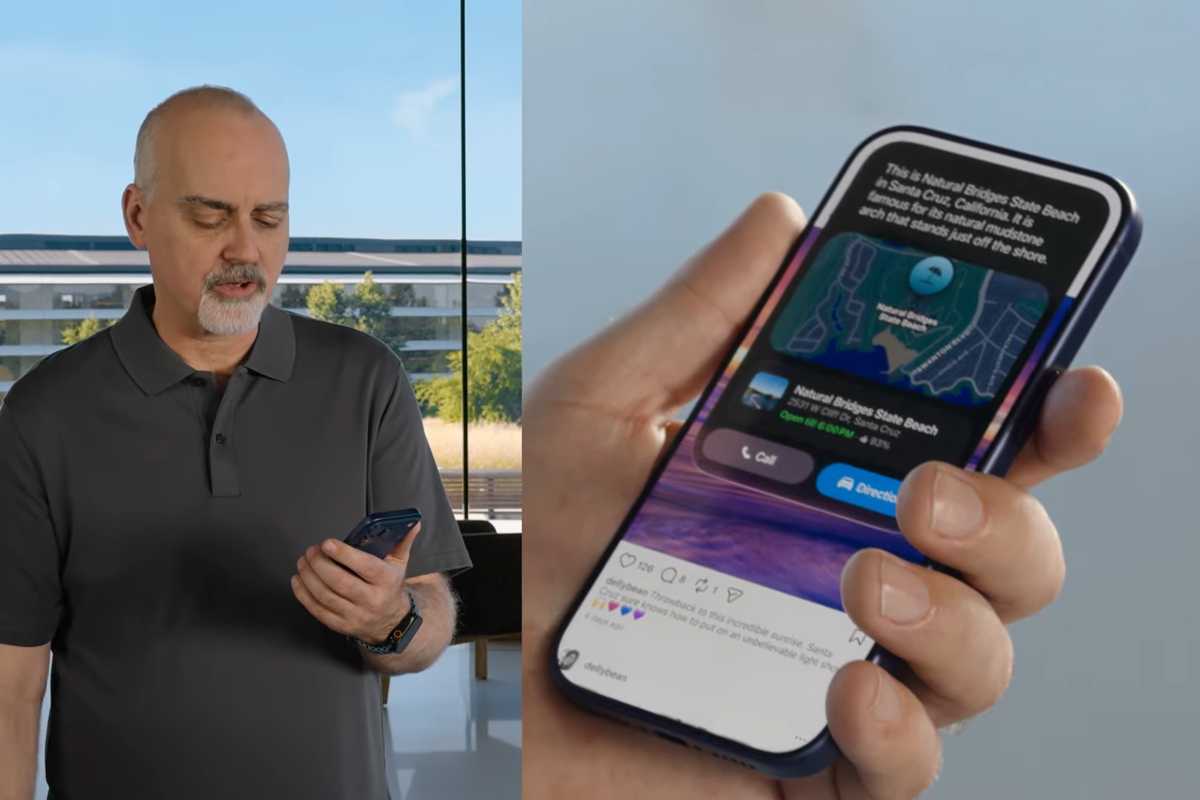
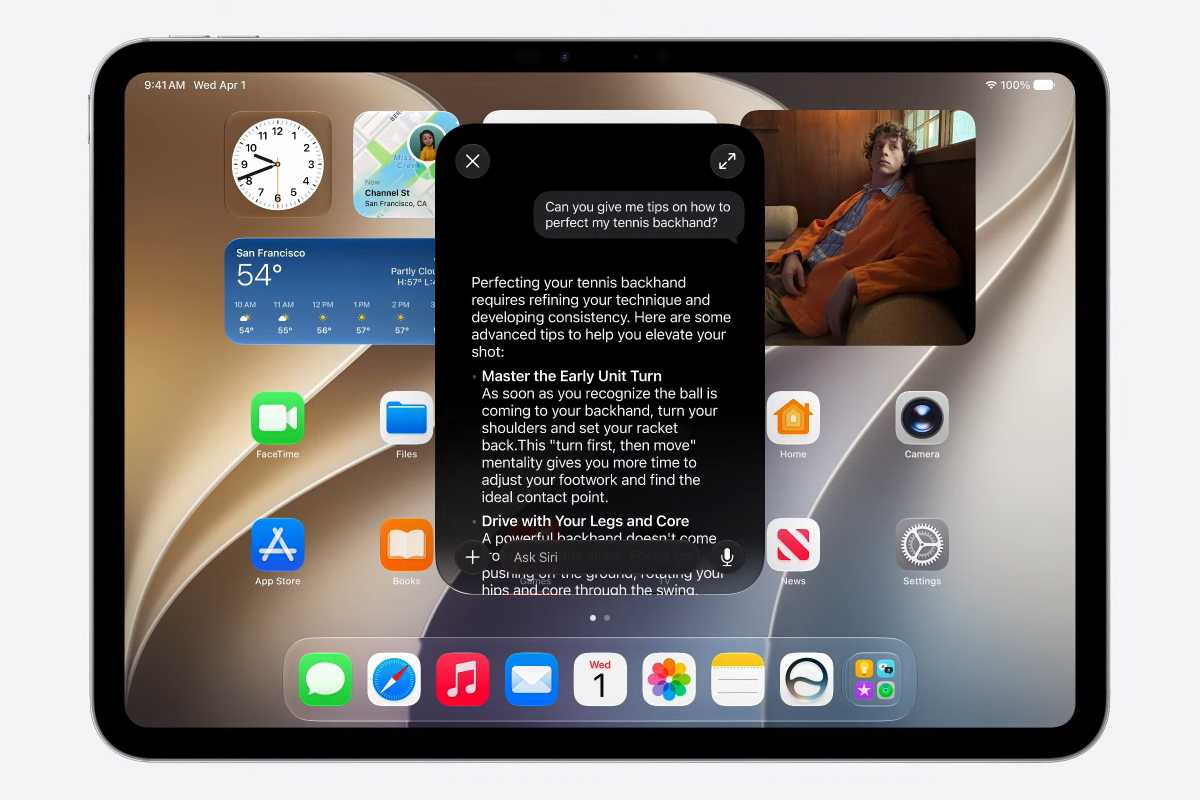
As rumored, Siri has a new home in the Dynamic Island. The border glow is gone, and now when you summon Siri, it will show results in the Dynamic Island, which has a semi-transparent look with a slight glow and a little throwback to the purple waveform.
22 hours ago, By Michael Simon
Privacy is a big theme this year
From a lengthy section on kids to Apple Intelligence, Apple is really leaning into privacy in this year’s show. There isn’t a ton of new stuff yet, but everything is getting smarter and more private at exactly the right time.
22 hours ago, By David Price
"Even higher accuracy" you say, Craig?
Ha! There you go.
22 hours ago, By Michael Simon
Apple Intelligence time!
That section on kids was kinda long, but now we’re onto Apple Intelligence. Craig is describing how the next generation of Apple Intelligence will make our apps smarter and more useful. Apple’s foundation models are at the center with a deep collaboration with Google. State-of-the-art modalities and image generation, and Apple Intelligence has a new system orchestrator to keep things synced and all working together.
22 hours ago, By Michael Simon
Helping kids stay safe
Apple is working with the American Academy of Pediatrics to make child accounts safer, more private, and easier to set up. Apple understands that there’s a whole generation of kids who want iPhones and MacBook Neos, and it’s responding with an “easy-to-use” setup assistant that will help parents limit what their kids can see and do.
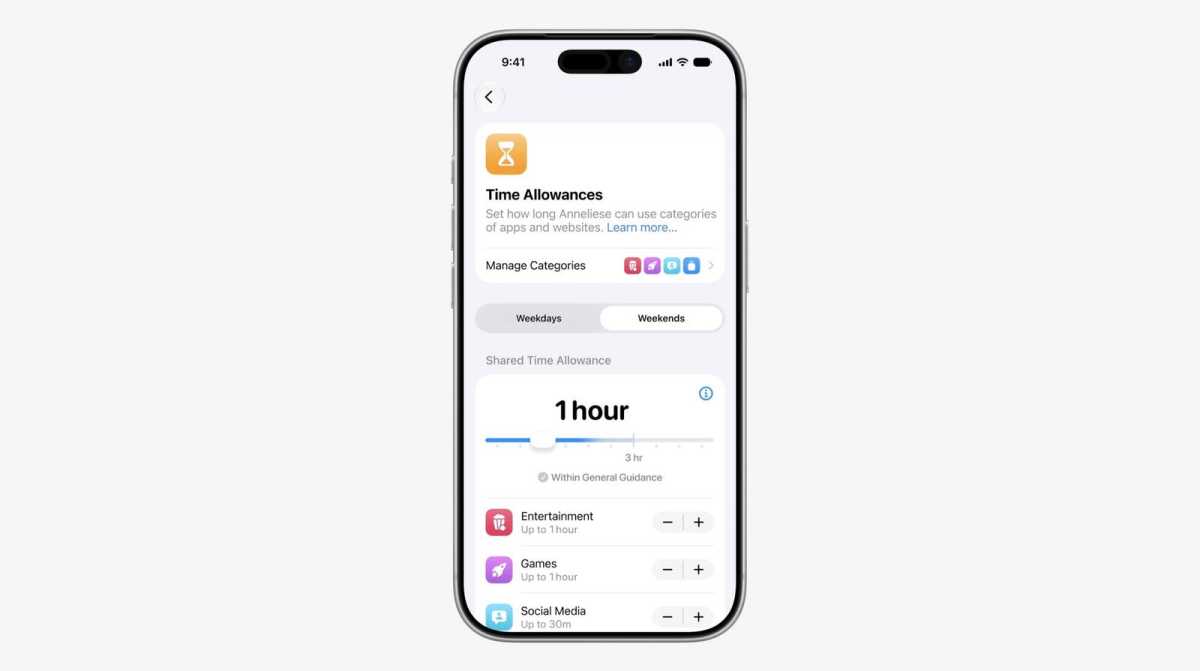
Apple is also beefing up Communication Safety to include gore and violent images and videos. And Screen Time will have Time Allowances for Entertainment, Games, and Social Media apps, with granlular settings. Parents can set apps that aren’t available during school and weekends. This is all clearly designed for MacBook Neo.
22 hours ago, By David Price
Putting a brave face on failure
Early phases of the keynote have focused on performance upgrades and optimizations, and Apple is doing impressive work making fixes for problems sound like voluntary improvements. Tweaks to Liquid Glass are sold as making it “even more clear,” which is a phrasing that might sound hollow to those who’ve complained that it makes onscreen details illegible. And the company insists it’s going to “raise the bar even higher” for performance across its product ecosystem.
Will the new Siri get the same treatment? No doubt we’ll be told that it’s “even more reliable and accurate at responding to simple commands.”
22 hours ago, By Michael Simon
Custom EQ finally!!
Apple is finally giving AirPods users the ability to customize the sound they hear with a new custom EQ in settings. Hallelujah!
22 hours ago, By Michael Simon
Search is improved!!
iOS, iPad, and macOS rebuilt the foundation of search that powers Spotlight, Settings, and Mail. It’s more stable and more efficient, indexed immediately. This is the only thing I wanted and I can’t wait to try it out.
22 hours ago, By Michael Simon
First up: Design
Apple is taking a different approach to WWDC this year. They’re not announcing features for each iOS (just yet), but rather talking about system-wide changes that affect all OSes.
For example, there’s now a Liquid Glass slider as well as a unified menu bar. In macOS, sidebar icons will be clearer and more consistent. App icons will get a new Liquid Glass layer that add depth and refraction.
System optimization is smooth, and “a lot” of things are faster. iPhone and iPad launch up to 30% faster.
22 hours ago, By Michael Simon
macOS Golden Gate!
After a short skit involving a VW bus, Craig announces that the next version of macOS is called Golden Gate.
22 hours ago, By Michael Simon
3 main areas for focus
Craig Federighi says today’s show has three areas of focus: Platform improvements, Trust and safety, Apple Intelligence, and Siri
22 hours ago, By Michael Simon
Tim opens the show for the last time
Tim Cook is giving his usual intro talking about how great Apple’s devices and tools are and praising its developers. Show a pic of the Earth taken from the journey to the moon. Apple Intelligence and Siri starting things off!
22 hours ago, By Michael Simon
Here we go!
The WWDC keynote has started with a glowing Apple logo and landscape shots of Apple Park. Ready Steady Go is played over a montage of people, and Tim Cook comes out. No skit!
23 hours ago, By Michael Simon
Stream is live!
The WWDC keynote stream is live on Apple.com, and the first song I heard is “Everything Will Be Alright” by Collect 200, followed by “Dance With Me” by Grace Ives,. There are a lot of glowy things in the pre-keynote animations.
23 hours ago, By Michael Simon
T-minus 10 minutes!
We’re just a few minutes away from the start of the show, and we expect the stream to go live any minute now. Grab a seat and join us!
23 hours ago, By Michael Simon
Beta site down but store still up
With about 20 minutes to go until the keynote begins, Apple has taken down its Beta Software Program site to add all the new links, but its webstore is still live. That probably means we’re not getting any hardware this year, which isn’t much of a surprise.
Screenshot
Apple
24 hours ago, By Michael Simon
One hour to go!
It’s 9am PT, and we’ve got just one hour until the WWDC keynote kicks off. You can watch it using the embedded YouTube link above or follow along with us right here. So go get your snacks and meet us back here at 10am PT!
24 hours ago, By David Price
How will Apple open the show?
WWDC is Craig Federighi’s opportunity to unfurl his comedic muscles. Last year he opened WWDC with a skit in honor of the F1 movie, driving a racecar around the rooftop of Apple Park and then revealing history’s worst ever case of helmet hair. In 2024 the show began with Apple’s software chief skydiving out of a plane piloted by Phil Schiller. In 2023 and 2022 respectively he played a triple-necked electric guitar and ran around in slow motion like David Hasselhoff in Baywatch. (These, admittedly, were mid-event skits rather than the openers, which in those days were a little more sensible.) The man loves to have fun.
How will Apple open this year’s WWDC? If last year’s pattern holds good we may see something related to the FIFA World Cup, which begins later this week; Apple recently announced a range of features related to the event on Apple Sports. The chances of a soccer-themed opener get higher still if we remember that Apple TV smash hit Ted Lasso, which came to an end back in 2023, is set to return for a fourth season in August.
The smart money, then, is on Craig Federighi appearing in an A.F.C. Richmond kit and kicking a football over Apple Park, before Jason Sudeikis delivers a moving speech about the importance of self-belief and the exciting new features coming this year to watchOS. Over to you, David.
Apple
1 day ago, By Roman Loyola
All in on WWDC
You need to do something with your time as you wait for the WWDC keynote to start, right? So, let’s check out the WWDC predictions and odds on Polymarket. In case you’re not familiar, Polymarket is a marketplace where people bet on stuff to happen. Polymarket calls it buying and selling “shares” on a prediction, but it’s betting like you would on a game.
I don’t encourage you to make bets (or buy/sell shares) on Polymarket, and I’m not offering betting advice. But it’s fun to see where the “action” is, and it’s an indicator of what people are thinking will happen.
95 percent of people are betting on Apple to announce a stand-alone Siri app. 94 percent think Apple will reveal an “AI-charged Siri,” and 91 percent think that Apple will announce “All six OS 27 versions.” These are all as close to “sure thing” bets as you can get.
Just 2 percent think the iPhone 18 will be announced, and 19 percent think Apple with announce a “Foldable iPhone.” Apparently, these people are not familiar with Apple’s annual iPhone event that’s about three months away.
The more entertaining bets are the ones on what Tim Cook and John Ternus will actually say at WWDC. 89 percent believe that Tim will say he’s “Excited” and 73 percent are betting he’ll say “Amazing.” We already know he’s going to say, “Good morning,” so that’s not on the betting board. Interestingly, most of the bets on what Ternus will say are at about 50 percent across the board–48 percent think he’ll say, “Open Source” and 51 percent are betting on Ternus uttering the word “Tool” (Polymarket does not offer betting on whether the context Ternus uses “Tool” is the literal, figurative, or insulting sense.)
1 day ago, By Michael Simon
Goood morning!
Tim Cook has posted on X what is likely his last pre-keynote this morning with the help of some celebrity friends, saying “Good morning”: Jimmy Fallon, Jessica Williams, Brett Goldstein, Harrison Ford, Druski, and others. It’s going to be a bittersweet day for Tim as he hands the reins of Apple to incoming CEO John Ternus, but he’ll still be a large presence at the company, even if he might not be part of Apple events anymore.
I’ve covered a lot of WWDC keynotes, and this one has a strange calmness to it. As they say, it’s a little too quiet. Leakers and fans alike are all acting as if we know everything that’s coming, aren’t expecting any hardware at all, and assume Siri will be a big part of the show. But it feels like Apple has a trick up its sleeve. Maybe Ternus gets to preview the new home hub with Siri? Or a sneak preview of the folding phone? I just have a feeling something bigger than just OS previews is coming.
1 day ago, By Michael Simon
You can buy a Finder Guy pin—but it's not cheap
One of the WWDC developers who visited Apple Park last night has put their Finder Guy pin up on eBay, and it’s generating a lot of attention. With two and a half days left to go, it’s already over $200 with 29 bids and 42 watchers. The same seller is also offering the rest of the items in the swag bag, if you have some extra money burning a hole in your pocket.
1 day ago, By David Price
Last-minute WWDC rumors
With mere hours to go until the keynote starts, expect floods of rumors about the new software features Apple is about to announce. It’s going to get seriously frenetic, and we’ll be with you all the way.
We’ve collected a batch of the most interesting last-minute WWDC rumors, which run the gamut from Finder Guy and changes to Liquid Glass to a cool new Siri concept video. We’re also hearing that Siri is about to evolve “from completely subpar to adequate.” Exciting stuff!
1 day ago, By David Price
WWDC: Who cares?
While playing board games with a friend yesterday–a programmer, someone who is thoroughly plugged into the world of technology–I asked if he was aware of WWDC. He described his awareness as “pretty much zero,” which I found shocking.
Partly this is explained by my friend being more on the Windows and Android side of the fence, but he isn’t by any means anti-Apple; he was soon grilling me for information about when the next iPad Pro will appear and whether he should buy a MacBook Neo. The simple fact is that, whereas iPhone launches have broken through into mainstream awareness, and devices such as iPads and AirPods are culturally significant enough that regular folk are interested in their release cycle, WWDC is strictly for the fans.
Just to confirm this, I checked the Guardian’s U.K. home page and searched for any relevant mentions. At time of writing, “WWDC” doesn’t appear at all, while the word “apple” is confined to a recipe for a tasty salad. That’s what regular people’s priorities are on a rainy Monday, not the latest updates coming to Apple’s software ecosystem.
2 days ago, By Michael Simon
The Craig Federighi Show
Bloomberg’s Mark Gurman reports that Craig Federighi “will take the virtual microphone for the vast majority of the presentation” during Monday’s keynote:
He is the company’s software chief and de facto head of AI, so expect him to be prominent throughout the keynote. We’re also likely to see a range of Federighi lieutenants and other executives working on Apple’s AI and software efforts, including Jeff Norris for visionOS and David Clark for watchOS.
But the real question is: Will he be part of the intro skit?
Apple
2 days ago, By Michael Simon
WWDC feature spotlight: Wallet pass creation
Your iPhone’s Wallet app is already a place for credit cards, loyalty cards, and tickets, but iOS 27 will reportedly make it even more like a real wallet. Rumors say you’ll be able to turn any ticket, pass, or membership card into a digital card that can be stored in Apple Wallet even if it’s not officially supported. So you’ll be able to cram your digital wallet with just as much useless junk as your actual wallet.
2 days ago, By David Price
Ugh, AI
It’s pretty much inevitable that Apple will focus on AI at tomorrow’s WWDC keynote. The usually secretive company explicitly mentioned “AI advancements” in its announcement of the event. That’s never happened before, not even ahead of WWDC 2024 when Apple Intelligence made its debut.
AI is… divisive, shall we say. Personally I can’t stand it. The environmental cost; the effect on critical thinking; the devastating impact on the jobs market; all that dreadful sepia-filter artwork. So the keynote is going to be an ordeal for me. Hopefully Apple will manage to speak to the anti-AI crowd as well as its buzzword-hungry shareholders.
2 days ago, By David Price
The Siri-shaped elephant in the room
Apple will talk about many things tomorrow, but the one that will make the biggest difference to the most customers is Siri. Namely, finding a way to make it a voice assistant we can rely on.
Siri is baked into almost every Apple device, and varies in importance from incidental (on iPad and Mac) to absolutely essential (CarPlay and HomePod). But wherever you use Siri, it’s liable to disappoint by failing to respond, responding when it’s not wanted, misunderstanding commands, and then ploughing ahead with the wrong action. It’s a reallybadvoiceassistant.
The difficult thing will be for Apple to acknowledge the problem. The company has occasionally admitted fault in the past, such as when apologising for the early failings of Apple Maps. But that wasn’t at an event. WWDC is all about hype for the coming year, not admitting that one of the company’s biggest software products isn’t fit for purpose.
So if we get any mea culpas, expect them to be more subtle. New Siri’s accuracy will be praised; Old Siri’s accuracy will be condemned only by implicit comparison. A little humility would be nice, given how long Siri has been in this egregious state, but let’s not be fussy. As long as it gets fixed, we’ll count this one as a win.
2 days ago, By Michael Simon
WWDC feature spotlight: Sharper Writing Tools
Writing Tools was one of the earliest Apple Intelligence features to arrive on the iPhone, but I’m willing to bet most people don’t use it. That might change with iOS 27. According to reports, Writing Tools will be getting a major upgrade to make it more discoverable and functional, with a grammar check.
3 days ago, By Michael Simon
Rock out to WWDC all weekend
While we wait for the big event to kick off on Monday, check out Apple’s official WWDC playlist on Apple Music, including tracks by BTS, sombr, Teddy Swims, and Harry Styles.
3 days ago, By David Price
Tim Cook's last hurrah
Back in April, Tim Cook announced he will step down as Apple CEO on September 1. (He isn’t leaving, by the way. His new duties as chairman of the board are likely to include a certain amount of political wrangling.) This timing means new CEO John Ternus will be in place for the iPhone 18 Pro launch in early September, and Monday’s WWDC26 keynote will be Cook’s swansong: his last Apple event as host and compere.
This will surely be acknowledged in some way. Perhaps Ternus will be invited on stage for a symbolic passing of the torch: a handshake, a hug, a high five. Expect Cook to thank the colleagues and customers who’ve supported him for the past 15 years, much as he did in this letter to the Apple community.
And here’s a trip down memory lane. A video of Cook’s very first event in charge, back in October 2011. “This is my first product launch since being named CEO,” he says. “It is a pleasure to host you today.” The pleasure was all ours, Tim.
3 days ago, By Roman Loyola
WWDC preview podcast: macOS 27 and Mac hardware
A couple of weeks ago, Michael, Jason, and I talked about WWDC and what could happen with macOS 27 and Mac hardware. You can check out that episode of the Macworld Podcast in this YouTube video. Skip to the 12-minute mark if you don’t want to hear us talk about the Ferrari Luce.
4 days ago, By Michael Simon
Apple's first search engine may power Siri
According to Bloomberg’s Mark Gurman, Apple will use “an in-house web search product” to power Siri’s upgraded knowledge base without leaning on Google or ChatGPT. If true, that’s a major step toward replacing Google in Safari, a rumor we’ve been tracking for years.
4 days ago, By Michael Simon
WWDC feature spotlight: New home for Visual Intelligence
As we get ready for the keynote kicking off on Monday at 10am PT, we’re going to spotlight rumored features that we’re excited about. Here’s one that I think people will love: Apple is reportedly moving Visual Intelligence from the Camera Control button to the camera to give it more, ahem, visibility. According to reports, there will be a new “Siri” option in the Camera app that will take you straight into Visual Intelligence to get information about something you see.
Visual Intelligence is an underappreciated feature that works quite well, but I fear most iPhone users don’t even know it exists. Moving it to a place where people will see it every day will be a great way to advertise it. And now that it’ll be using a smarter Siri rather than ChatGPT for most requests, it could be the killer feature of iOS 27.
Foundry
4 days ago, By Michael Simon
WWDC preview: Top 5 most wanted
WWDC is going to be filled with small changes and big features coming to your Apple devices later this year. We’ll be highlighting a few of them throughout the weekend, but to get started, here’s Filipe Esposito with a list of the top 5 things he hopes to see on Monday, including a tease for the folding iPhone. Will it happen? We’ll know in just a few more days.
4 days ago, By Michael Simon
More changes in store for notifications
Mark Gurman’s WWDC preview for Bloomberg doesn’t include much that we haven’t already heard, but we did spot this tidbit: “Notifications across iOS 27 and iPadOS 27 have a new effect for when alerts arrive. They now slide in from the left side of the screen, aligning with the new gesture system: Users swipe down from the left to open the Notification Center because swiping down from the center now opens the Search or Ask AI panel.”
So it sounds like notifications are changing yet again. Someday Apple will settle on a system it likes, but for now, we’ll be summoning Siri more often than we want until our fingers get used to the new system.
4 days ago, By David Price
What exactly is "coming bright up"?
Apple loves a good clue, and the marketing materials for WWDC26 are no exception. Invites feature the tagline “Coming bright up,” while the company’s developer portal uses the phrase “All systems glow.” Nice puns, but what do they mean?
The most likely explanation is that these are references to an upcoming interface redesign. Once iOS 27 is here, Siri is going to look very different, and this will include a glow in the Dynamic Island to indicate that it’s been activated.
If you happen to be in Cupertino and want to stop by the store at Apple Park, there is some special new gear. According to Mr. Macintosh on X, Apple has started selling new rainbow hats and crewnecks, and stainless steel water bottles. Of course, they could be for Pride Month, but we think Apple is just really excited for the show Monday,
5 days ago, By Michael Simon
Google and Nvidia will play a major role in the new Siri
When Apple announces the new Siri next week, you’ll hear a lot about what it can do, how smart it is, how much more capable it is, and how cool the new interface looks. What you might not hear much about is that at least part of it will run on Google servers, which are powered by Nvidia chips. The burning question is: How will Apple play up the privacy angle, and how does Private Cloud Compute fit into all this?
5 days ago, By Michael Simon
iOS 27 already has a game-changing feature
In late May, Apple announced a couple of iOS 27 features early as part of a spotlight on Accessibility. Among them is a huge upgrade to Voice Control, which will use natural language to control all sorts of things on your phone. That’s cool on its own, but it also speaks to a much more capable and contextual Siri that could change everything about how we use and interact with our iPhones.
5 days ago, By Michael Simon
Save $100 on the Apple Watch Series 11
Along with iOS 27, we’ll also get a look at watchOS 27 during Monday’s keynote. If you want to make sure you can get all the latest features, pick up an Apple Watch Series 11 for just $299, a savings of $100 and matching the lowest price we’ve ever seen.
5 days ago, By Michael Simon
Fix the iPhone camera please!
I’m a pretty casual iPhone photo taker, but Filipe Esposito made me realize just how underpowered the iPhone camera is. I don’t hate using it like he does, but I also don’t seek out many features because they’re just too hard to find. Filipe is hopeful that iOS 27 will fix things.
5 days ago, By Michael Simon
Macworld's WWDC Preview podcast: iOS 27 and more!
Roman, Jason, and myself spend an hour talking about what we expect next week from iOS 27, Siri, and Apple Intelligence—plus a few predictions on how Apple will start the show. Join us and send us a comment at podcast@macworld.com with your thoughts.
5 days ago, By Michael Simon
You might hate iOS 27
If there’s one thing we’re sure of next week, it’s that iOS 27 will feature a lot of AI. As AI skeptic Jason Cross explains, there’s a bit of a backlash against AI right now. There are hallucinations, confidently wrong answers, inappropriate images, bias—the list goes on. What kind of AI will iOS 27 bring? And more importantly, will iPhone users embrace the new Siri or turn against it?
6 days ago, By Michael Simon
Will Apple bring any new Macs to the show?
While WWDC is primarily a software show, we’ve gotten our share of Apple hardware announcements at the event, including Vision Pro, HomePod, and the 15-inch MacBook Air. However, much like last year, this year’s show looks to be entirely focused on software. That’s a bummer, but Filipe Esposito explains why there’s still plenty of time for new hardware this year.
5 days ago, By Michael Simon
Welcome to the WWDC 2026 live blog!
Come on in, everyone! We’re starting this year’s live blog a little early this year to make sure you don’t miss a thing. We’ll have full coverage of every leak, rumor, and announcement leading up to the keynote at 10 am on Monday, followed by minute-by-minute reporting of everything announced as it happens. So keep coming back!
Apple has officially unveiled the new features coming to compatible iPhones running iOS 27 later this year, introducing major Apple Intelligence upgrades, changes to Siri, parental controls enhancements and improvements across core iPhone apps.
The first developer beta of iOS 27 is available today. A public beta will be available in July. As usual, the software will then go through several months of testing before its full public release in the fall. Apple typically launches new versions of iOS in September, often around the second week – making Monday, September 14 a likely release date based on past patterns.
iOS 27 will be supported on every iPhone all the way back to iPhone 11, though some Apple Intelligence and Siri related features will only be available on newer iPhones.
This hub contains everything Apple has confirmed will be coming in iOS 27 when it launches later this year, including new features, compatible iPhones, beta release information, Apple Intelligence updates and what’s new for Siri.
What’s New in iOS 27 at a Glance
Siri AI: Apple’s new Siri AI combines personal context, onscreen awareness and web knowledge to deliver more natural conversations, richer answers, app actions and cross-device chat history.
Apple Intelligence across apps: Apple Intelligence expands across Safari, Photos, Messages, Mail, Calendar, Home and Shortcuts, adding smarter suggestions, automation, image generation and context-aware assistance.
Smarter Photos editing: Photos gains Spatial Reframing, Extend and an upgraded Clean Up tool, allowing users to improve composition, expand images and remove distractions more naturally.
Child safety and parental controls: New parental controls include Ask to Browse, Time Allowances, app schedules and enhanced Communication Safety tools designed to give parents more control.
Safari and productivity upgrades: Safari can organise tabs, monitor webpages and build extensions from descriptions, while Passwords, Calendar and Shortcuts gain powerful new AI-powered capabilities.
Siri AI in iOS 27
Apple
Siri AI is the new name for Apple’s Apple Intelligence-powered assistant. Apple says Siri AI is more personal and conversational than the current version of Siri, with the ability to answer open-ended questions, understand personal context from messages, emails, photos and notes, recognise what’s on screen and draw on information from the web to provide up-to-date answers.
Siri AI will also gain a dedicated app that lets users revisit previous conversations, pin important chats and continue conversations across all Apple devices via iCloud syncing. Apple says all cloud processing is designed with privacy and security in mind.
There will also be a new, more natural and expressive Siri voice, alongside controls that allow users to adjust pace and expressiveness to their preferences. The voice customisation feature will require iPhone 17 Pro, iPhone Air, or newer.
New Siri features include:
Personal context and app actions: Siri AI will be able to draw on personal context to help users find information stored across their devices, including old photos, emails, notes and messages. Apple says Siri AI will also be capable of taking actions within apps such as Messages, Music and Reminders, allowing users to do things like edit a recently sent message or add a song to a playlist using natural language.
Onscreen and visual intelligence: On iPhone, Siri AI’s capabilities will extend to the Camera app through a new Siri mode. Users will be able to show Siri what they see through the camera and ask questions or perform actions based on what’s in front of them.
Siri voice, dictation and writing: Apple says Siri AI will feature more natural and expressive voices, with compatible devices offering controls to adjust pace and expressiveness. Dictation will also get a major upgrade, with improved speech recognition, automatic punctuation, capitalisation and formatting, allowing users to speak more naturally while Siri converts their words into text.
Apple Intelligence across apps
As well as Siri AI, the enhanced Apple Intelligence will also power new AI-powered features in Apple’s core apps throughout iOS 27. Safari will organise tabs into topics, monitor webpages for changes and even build extensions from natural-language descriptions. Photos is set to gain a new Spatial Reframing edit tools including and an upgraded Clean Up feature. Messages, Mail and Calendar will be able to understand context, suggest actions and create events from simple descriptions.
New Apple Intelligence features coming in iOS 27 include:
Safari: Apple says Safari will automatically group tabs into topics to make related pages easier to find. Safari will also be able to monitor webpages with a Notify Me feature being alerting users to changes such as price drops or restocks. A Describe an Extension feature lets users create custom Safari extensions by describing what they want.
Apple
Photos: Apple says the the Photos app in iOS 27 will allow users to improve compositions, expand images, straighten horizons and remove larger distractions while preserving the original scene where possible. The Photos app will gain Spatial Reframing, a tool that can improve composition after a photo is taken. An Extend option will fill missing areas when straightening a horizon or changing aspect ratio. And an improved Clean Up will more effectively remove elements from photos.
Apple
Phone: The Phone app will gain Call Context, which will surface relevant information when calling a business. For example, Call Context could surface a flight confirmation code from Mail when the user calls an airline. Apple stated this ability is based on who the user is calling, not what they are saying.
Image Playground: Image Playground will be able to create photorealistic images, according to Apple. Apple says users will be able to modify images by describing changes or by selecting objects to move or resize. Generated images will include a SynthID watermark to identify them as AI-generated.
Passwords: The Passwords app will alert users to weak, duplicated or compromised passwords and offer to update them automatically.
Shortcuts: The Shortcuts app will gain a new ability to ‘Describe a Shortcut’, so users can easily create automations by explaining what they want in natural language. Apple says Shortcuts will then assemble the necessary actions across apps.
Messages and Mail: Messages will be able to suggest useful actions based on conversation context, such as creating a reminder, making a note or finding relevant photos. Mail and Messages will gain smarter replies that can mimic a user’s writing style.
Calendar: In iOS 27 the Calendar app will be able to create or modify events based on a natural-language description. Apple says it will be able to identify contacts, locations and event details as users type.
Home: The Home app will gain Apple Intelligence features for supported HomeKit Secure Video cameras. Apple says it will be able to group related notifications, generate video descriptions and highlight noteworthy clips.
Maps: Flyover will offer sharper detail using aerial imagery and Visual Intelligence models, including improved rendering of architectural details and individual trees.
Podcasts: Video podcasts are to get an update that will make it easier to switch between watching and listening.
Performance and system changes in iOS 27
Alongside the headline AI features, Apple says iOS 27 will include a wide range of under-the-hood improvements designed to make iPhones faster and more responsive.
The company has updated core technologies including display performance, processing efficiency and wireless connectivity.
According to Apple, apps will launch faster in iOS 27, AirDrop and external drive transfers will be quicker, and photos will be added to users’ libraries more rapidly. Apple has also improved network performance and introduced a more powerful system-wide search index to help users find information more quickly.
The company says it has addressed dozens of common user frustrations across iOS, focusing on refinements that improve everyday performance and responsiveness throughout the operating system.
Design and interface changes in iOS 27
Apple
There are also improvements to the iPhone interface coming in iOS 27.
Liquid Glass refinements: Apple says Liquid Glass has been refined for better readability, more uniform refraction and improved contrast. A new slider lets users adjust the look from ultraclear to fully tinted, while updated icons, toolbars, sidebars and window shapes add polish.
Child safety and parental controls
Apple
There are lots of improvements coming to parental controls, including new time allowances for entertainments, games, and social media, and new schedule tools for different times of day or days of the week.
This includes new features like an expansion of the existing “ask to buy” feature for apps to websites. Before a child can view a new website, they’ll have to ask for permission.
Ask to Browse: Ask to Browse will expand the current Ask to Buy fetaure to the web. Apple says children will need to request permission before visiting new websites, and parents can review requests in Messages before approving.
Communication Safety: Communication Safety will continue to help protect children from viewing or sharing nudity in Messages, FaceTime and other apps. Apple says it will also intervene before children see gore or violent content in shared images and videos.
Time Allowances and schedules: Parents will be able to set Time Allowances across categories such as Entertainment, Games and Social Media. Recommendations are based on a child’s age combined with guidance from clinical and child development experts. Schedules let parents choose which apps are available at different times or on different days.
Redesigned Screen Time: Screen Time will get a redesigned interface with an at-a-glance view of average device usage and most-used apps. Apple says parents can quickly limit or extend access in the moment.
Child accounts and family safety: Apple says child accounts remain central to age-appropriate protections. Parents can manage app access, web access, communication permissions and Screen Time settings.
Apple says it is working with the American Academy of Pediatrics to adapt its Family Media Plan.
Accessibility changes coming in iOS 27
Accessibility features will be smarter and more intuitive in iOS 27:
VoiceOver will get richer image descriptions and better understanding of onscreen content.
Live Recognition will let users press the Action button to ask questions about their surroundings and receive detailed responses.
Voice Control will become more intuitive, allowing users to describe onscreen buttons and controls rather than remembering exact labels or numbers.
Accessibility Reader will be able to handle more complex source material and provide summaries and translation.
iOS 27 compatibility
iPhone 11 is supported by iOS 27.
Roman Loyola/IDG
According to Apple, iOS 27 will support iPhones back to iPhone 11, though some Apple Intelligence and Siri AI features will require newer Apple Intelligence-enabled devices.
There was an expectation that the iPhone 11 would miss out on iOS 27 after leaker ‘Instant Digital’, claimed in a Weibo post that the iPhone 11, iPhone 11 Pro and 11 Pro Max (launched in 2019) and the iPhone SE 2 (launched in 2020) would not be able to run iOS 27. Lucky for those iPhone users, that is not the case and the iPhone 11 gets coverage for a while longer.
However, the lifespan of the iPhone 11 is limited, as we explain in our guide to how long Apple supports iPhones, the iPhone 11 Pro and 11 Max have already been relegated to the Vintage iPhone list by Apple.
That leaves us with a compatibility list that looks like this:
The iPhone 15 and older will not be able to take advantage of any Apple Intelligence features, as is currently the case.
iOS 27 release date: When will Apple release iOS 27?
First developer beta: June 8, 2026
First public beta: July 2026
Final version: September 2026
Apple showcased iOS 27 during its WWDC keynote on June 8, 2026.
The official version of iOS 27 will not be available to install on compatible iPhones until later in 2026. Apple usually releases the iOS update during the second week of September, so Monday, September 14, is our guess as to when iOS 27 becomes available to everyone.
You don’t have to wait until then though.
When will the macOS 27 beta be released?
Following the keynote the developer beta of iOS 27 was made available. Apple confirmed it will release the first public beta in July.
FAQ
1.
When is iOS 27 coming out?
Apple hasn’t confirmed exactly when iOS 27 will be available to install, but it usually launches to the general public in September, or at the latest October.
Once iOS 27 launches Apple will likely continue beta development to test new features that weren’t available at launch.
2.
Should I install the iOS 27 beta?
Installing a beta lets you test new features ahead of release, so you may be keen to install the beta on your iPhone, but before you do beware of the risks.
For most users, the recommendation is simple: don’t install the beta. Pre-release software can be unstable. Bugs, performance issues, and app incompatibility are common as Apple uses the beta period to identify and fix problems before the final version launches.
If, despite our warnings, you’re still eager to try the new features, it’s better to wait for the Public Beta and avoid installing it on your primary iPhone.
3.
Which iPhones get iOS 27?
The iPhone 11 and newer get iOS 27. However, the new Siri voices feature requires iPhone 17 Pro or newer.
When I bought my iPhone 16 Pro, it was a major upgrade from the iPhone 12 Pro that had served me well for years. I was excited to get snapping with the new camera system, to enjoy the crisp, high-refresh-rate display, and to zip through apps and tasks as fast as my fingers would carry me. And there was one more thing that caught my eye at the time: It was “Built for Apple Intelligence.”
Because, of course, this was right around the time Apple introduced its Apple Intelligence system to the world. The company promised “AI for the rest of us,” with powerful tools that seemed tailored to how I wanted to use my phone: Siri would understand my personal context, I was told, and it would start delving into my apps and taking actions on my behalf. Finally, after so many years, Siri would be getting the personal assistant glow up it had always craved.
We all know how that turned out.
After delays, class-action lawsuits, and widespread humiliation, WWDC 2026 was meant to be when Apple finally made good on all those promises. It was, we thought, the time when Apple would bring iPhone 16-series users like me the features we’d been promised two years ago.
Except, as it turns out, that’s a load of bull.
Remember when the iPhone 16 Pro was built for Apple Intelligence? Apple doesn’t.
Apple
Apple indefensible
I’m not saying that the features Apple teased in 2024 still aren’t here. On the contrary, if anything they look even better than when Apple initially previewed them. They’re the kind of enticing enhancements that I’ve spent the last two years holding out hope for. That’s not the problem.
The problem is what is available and where it will be present. Because after debuting all these tools and showing off exactly how they’d work, Apple’s Craig Federighi slipped a teensy-weensy caveat into all that hype. It went like this:
“Our most powerful on-device model and the features it enables, like expressive voices and more advanced dictation, will be coming to our most capable iPhone, iPad and Mac systems.”
At the same time, a slide popped up on screen explaining that to get this “most powerful on-device model,” you’d need an iPad with M4 chip or later and 12GB of memory or a Mac with an M3 chip or later and 12GB of memory. Oh, and iPhone users? Yep, you guessed it: you’ll need an iPhone Air or iPhone 17 Pro. Yes, that’s an iPhone 17 Pro, not even an iPhone 17.
In other words, I’m screwed.
My iPhone 16 Pro, which was explicitly sold by Apple as its most advanced AI-capable iPhone, will not work with all of the latest Apple Intelligence features. That is absolutely indefensible.
Apple has only specifically called out two features that are limited to the latest and greatest devices, those being expressive Siri voices and more advanced dictation. But the way Federighi worded it made it sound like these are just examples of the things that require an iPhone 17 Pro. For all I know, there could be more.
For one thing, I wouldn’t be surprised if features like Spatial Reframing are similarly limited. At WWDC, Apple said that some “image generation” tools have daily limits on their usage because they use such powerful AI models. You can bet that will be absent from my iPhone 16 Pro too.
And that’s just the things we know about. Nowhere on Apple’s website does the company expressly itemize all the features that will be the exclusive domain of iPhone 17 Pro users. For now, it’s all just guesswork. That doesn’t lend itself to the idea that the list of gated features is particularly modest. And what about iOS 28? Will my iPhone 16 Pro get any of those features?
My iPhone 16 Pro is a fantastic phone—that can’t run everything iOS 27 and Apple Intelligence have to offer.
Foundry
The old bait and switch
Somehow, Apple has managed to make me super excited and super disappointed about its latest AI efforts in practically the same breath. And given how popular the iPhone 16 series has been, I know I’m far from alone.
To be clear, I didn’t buy my iPhone 16 Pro on the express promise of getting these AI features. I was looking forward to playing around with them, sure, but AI was just one part of my purchasing decision. Yet that doesn’t change the fact that this announcement is still deeply deflating. I’m not about to ditch a perfectly excellent iPhone 16 Pro and shell out on the iPhone 17 Pro or iPhone 18 Pro just for the features Apple is gatekeeping away from me.
Look, I understand that not every phone can work with intensely demanding AI features. That’s common sense. But it doesn’t seem unreasonable to think that Apple started working on many of these features long before the iPhone 16 series was even announced. Why tell people your device is “Built for Apple Intelligence,” as Apple did for the iPhone 16 Pro, when you know that’s not entirely true?
Selling an iPhone as being custom-made for AI, then doing the old switcheroo and blushingly admitting that, oopsie, many of those features won’t be on your device after all, just seems sly and underhanded. Maybe Apple’s ambitions grew, and maybe its models’ requirements expanded, but that doesn’t change the fact that an iPhone promoted as AI-capable is suddenly only partially so.
I’m sure I’ll get plenty of usage out of those AI features that do land on my device. I’ll even forgive Apple for the delays if they turn out to be as impressive as they looked in the WWDC keynote. But it won’t hide the fact that for every AI advancement Apple makes, it seemingly can’t help but take two steps back.
Apple has officially unveiled macOS 27 Golden Gate, the next major update for the Mac, bringing Apple’s next-generation Apple Intelligence platform to compatible devices. The update introduces an all-new Siri AI assistant, major upgrades to apps including Safari, Photos, Messages, Mail and Calendar, as well as expanded child safety features, design refinements and performance improvements throughout the operating system.
Golden Gate continues Apple’s tradition of naming macOS releases after iconic Californian landmarks. Among the headline additions are Siri AI, a completely redesigned version of Siri powered by Apple Intelligence, new AI-powered tools across Apple’s apps, enhanced photo editing capabilities, smarter web browsing in Safari, and new automation features that make it easier to get things done on a Mac.
macOS 27 will be supported on all Macs powered by Apple silicon, marking the end of the road for Intel-based Macs. While Intel models are no longer eligible for the new operating system, Apple is expected to continue providing security updates for those devices for some time.
The first developer beta of macOS 27 is available now, with a public beta scheduled to launch in July. Following several months of testing, Apple is expected to release the finished version to all users this autumn. This hub covers everything Apple has announced for macOS 27 Golden Gate, including new features, compatibility details, beta release information, Apple Intelligence enhancements and the all-new Siri AI experience.
What’s New in macOS 27 Golden Gate at a Glance
Apple
Siri AI: A completely redesigned Siri powered by Apple Intelligence that can understand personal context, answer questions from the web, and take actions across apps.
Visual Intelligence on Mac: Ask questions about anything on your screen, including images, files and text, using a dedicated shortcut.
Safari AI Tools: Automatically groups related tabs, monitors websites for changes such as price drops, and can even generate custom extensions from a description.
Apple Intelligence across apps: Adds AI-powered features to Messages, Mail, Calendar, Photos and Shortcuts to help write, organise, edit and automate tasks.
Child Safety Upgrades: Introduces Ask to Browse, Time Allowances, enhanced Communication Safety and redesigned parental controls to help keep children safe online.
Siri AI: Siri powered macOS 27 features
Foiundry
Apple’s biggest focus in macOS 27 Golden Gate is Siri AI, a completely redesigned version of Siri powered by Apple Intelligence. Rather than functioning as a simple voice assistant, Siri AI is designed to act as a conversational AI assistant that can answer questions, understand personal information, access web knowledge, and perform actions across apps and services.
At a glance: What’s new with Siri AI?
Conversational AI assistant: Siri AI will be far more capable than previous versions of Siri, according to Apple, allowing users to ask open-ended questions, brainstorm ideas, conduct research, and hold natural back-and-forth conversations rather than relying on simple voice commands.
Dedicated Siri app: macOS 27 will offer a standalone Siri app that stores conversations in one place and sync them across Apple devices through iCloud. For example, users could start a conversation on their Mac and continue it later on their iPhone or iPad.
Personal context awareness: Siri will be able to understand information stored across your messages, emails, notes, photos and files. Apple says Siri will be able to locate specific information, find content you’ve saved in the past, and surface relevant details based on your personal data.
Web-powered answers: Unlike previous versions of Siri, Siri AI will be able to access up-to-date information from the web to answer questions on virtually any topic. Apple says it will be able to help with research, interview preparation, learning new subjects and gathering information quickly.
App actions and automation: Siri AI will be able to take action across apps including Messages, Music, Reminders and more. Users will be able to edit messages, manage playlists, create reminders and perform other tasks using natural language rather than navigating menus manually.
Spotlight integration: Siri AI will be built directly into Spotlight Search on macOS. Users will be able to type questions into Spotlight, receive AI-generated answers, and launch Siri-powered searches without opening a separate app or switching to a web browser.
Visual Intelligence on Mac: For the first time, Visual Intelligence is coming to macOS. Users will be able to select content on screen and ask Siri questions about images, files, documents and text, allowing the assistant to understand and respond to onscreen content.
Integrated Writing Tools: Siri AI will generate text from scratch, rewrite drafts, summarise content and refine existing writing. Apple says it will even adapt its tone, wording and punctuation to match how users typically communicate with individual contacts.
Improved dictation: Apple says it will significantly upgrade systemwide dictation with better speech recognition. Dictation will automatically add punctuation, capitalisation and formatting while improving accuracy, making it easier to turn spoken words into polished text.
Custom Siri voices: Users will be able to personalise Siri by selecting a voice and adjusting its pace and expressiveness. Apple says this allows Siri to sound more natural and better suited to individual preferences, although the feature requires newer Apple silicon hardware.
Availability: Apple says Siri AI will enter beta later this year and initially support English. It requires Apple Intelligence-compatible hardware.
Apple Intelligence across macOS 27
As well as powering Siri, the enhanced Apple Intelligence will power some other systemwide features in macOS 27.
Systemwide Proofreading: Apple Intelligence will provide automatic proofreading and improved spelling and grammar suggestions throughout the operating system.
Intelligent File and Folder Naming: In macOS 27 names for files and folders will be automatically suggested based on their contents.
Privacy: Apple emphasised that the new AI architecture maintains privacy protections. Apple claims Apple Intelligence continues to use on-device processing whenever possible and relies on Private Cloud Compute when additional processing power is required. Personal data processed through Private Cloud Compute is not stored or made accessible to Apple, and the system remains open to independent verification by security researchers.
Safari features coming in macOS 27
Notify Me in Safari
Apple
Safari is set to gain several Apple Intelligence-powered features in macOS 27, including the ability to automatically organise tabs into topics, monitor webpages for changes such as price drops and restocks with Notify Me, and generate custom browser extensions from a text description.
Automatic Tab Topics: Safari will be able to automatically group related tabs into topics. Apple says that by continually organizing tabs as users browse, Safari will help keep research and projects organized.
Notify Me: Safari will be able to monitor web pages for changes. For example, users will be able to ask Safari to watch for product restocks, price changes, or other updates and receive notifications when those changes occur.
Describe an Extension: Users will be able to create custom Safari extensions simply by describing what they want. Apple says Safari can generate the extension directly from a text description and add it to the toolbar.
Messages and Mail features coming in macOS 27
Messages and Mail are to gain deeper Apple Intelligence integration in macOS 27. For example, Mail and Messages are will offer smarter Smart Reply suggestions that can reflect a user’s personal writing style.
One-Tap Suggestions in Messages: Messages will suggest actions based on conversation context. Apple says users will be able to quickly create reminders, notes, or perform other tasks directly from a conversation.
Smarter Photo Suggestions: Messages will identify and surface relevant photos based on keywords, people, and locations mentioned in chats.
Personalized Smart Reply: Both Messages and Mail will be able to mimic a user’s writing style depending on the recipient for a ‘Smart Reply’.
More Relevant Search in Mail: Mail will introduce a new search ranking system designed to surface the most relevant results first.
Photos features coming in macOS 27
A new suite of AI-powered editing tools are coming to Photos in macOS 27 that should make it easier to transform and improve photos without needing advanced editing skills.
Spatial Reframing: It will be possible to intelligently reframe images, recomposing images after they’ve been taken.
Extend Tool: A new Extend tool will expand photos beyond their original boundaries.
Enhanced Clean Up: The updated Clean Up tool will be able to remove larger unwanted objects from images more effectively than it can presently.
Design and Interface Changes in macOS 27
Apple
macOS Golden Gate will feature several UI tweaks that address some of the criticisms of macOS 26’s Liquid Glass. For example, macOS 27 will offer improved readability and stronger contrast than Liquid Glass does currently.
Changes include:
Improved readability with more refined Liquid Glass effects throughout macOS.
Better contrast to make interface elements easier to distinguish.
More consistent refraction effects across windows, menus and controls.
Updated toolbars with a cleaner, more unified design.
Edge-to-edge sidebars that extend fully to the edge of windows rather than appearing to float.
Refreshed menu bar icons with a more polished appearance.
Background bars behind window controls to make icon clusters stand out more clearly.
More consistent rounded window corners throughout the operating system.
Liquid Glass app icons that add greater depth and a more three-dimensional look.
Customisable Liquid Glass appearance, allowing users to adjust the effect from ultra-clear to fully tinted
Performance Improvements in macOS 27
Apple says macOS 27 delivers performance improvements throughout the operating system, including:
Faster AirDrop transfers
Faster network file browsing
Faster Safari start page loading
macOS 27 will also add support for higher-resolution ultrawide displays, including 5K at 120Hz. Display arrangements will also be remembered more reliably when reconnecting monitors.
macOS 27 Compatible Macs
The MacBook Neo and other Macs in Apple’s current lineup will all be compatible with macOS 27.
Foundry
Apple confirmed that macOS 27 Golden Gate is compatible with:
MacBook Neo (A18 Pro, 2026)
MacBook Air (Apple silicon, 2020 and later)
MacBook Pro (Apple silicon, 2020 and later)
iMac (Apple silicon, 2021 and later)
Mac mini (Apple silicon, 2020 and later)
Mac Studio (2022 and later)
Mac Pro (Apple silicon, 2023 and later)
All those Macs will be able to support Apple Intelligence, but some Siri AI features require M3 with at least 12GB of unified memory or later.
macOS 27 release date: When will macOS 27 be available?
First developer beta: June 8, 2026
First public beta: July 2026
Final version: September 2026
Apple debut macOS 27 in a keynote at WWDC26. The official version of macOS 27 will not be available until later in 2026. In recent years, Apple has released macOS at the same time as iOS. The iOS release has been happening during the second week of September, so Monday, September 14, is our guess as to when macOS 27 becomes available to everyone.
When will the macOS 27 beta be released?
Apple
However, it isn’t necessary to wait until the fall to try out the new features in macOS 27. Apple released the first developer beta at WWDC. Apple confirmed it will release the first public beta in July.
The beta cycle includes several iterations as Apple refines the software. Here’s how you can participate in the beta program.
We have an Apple WWDC event blog if you want to read expert commentary and our immediate reactions and what the WWDC news means to you.
FAQ
1.
When is macOS 27 coming out
Apple hasn’t confirmed exactly when macOS 27 will be available to install, but it usually launches to the general public in September, or at the latest October.
Once macOS 27 launches Apple will likely continue beta development to test new features that weren’t available at launch.
2.
Should I install the macOS 27 beta?
Whether you should install the macOS 27 beta depends on your needs, technical expertise, and tolerance for bugs and instability. Beta software can introduce crashes, data loss, app compatibility problems, excessive battery drain, reduced performance, and other unexpected issues.
For most users, the recommendation is simple: don’t install it. If you’re eager to try the new features, it’s better to wait for the Public Beta and avoid installing it on your primary Mac.
Developers are a different case. The Developer Beta is available now through Apple’s Developer Program, allowing app creators to test their software against new APIs, frameworks, and system features before the public release. If you’re not a developer, think carefully before installing the Developer Beta, as it is typically less stable and more prone to bugs than later beta releases.
Regardless of which beta you choose, make sure you have a complete backup of your Mac before upgrading.
3.
Which Macs get macOS 27
All M-series Macs will get macOS 27, and the MacBook Neo.
Certain Siri features will only be available for M3 Macs and newer.
4.
Should Intel Mac owners upgrade now?
Intel Mac owners should upgrade to Apple Silicon as soon as possible. The transition away from Intel hardware has reached a critical turning point, with software support rapidly vanishing and a new generation of affordable entry-level hardware making the switch more accessible than ever.
Apple has confirmed that macOS 27 will not support any Intel-based Macs. While a small number of Intel models may receive security patches for older versions of macOS until September 2028, they are already excluded from modern flagship features.
Those with Intel Macs also miss out on many features, including Apple Intelligence.
5.
What does the end of Rosetta support mean?
macOS 27 will end support for Rosetta 2, Apple’s translation technology that allows Intel-based Mac apps to run on Apple Silicon Macs.
The end of Rosetta 2 support marks the final stage of Apple’s transition away from Intel-based architecture, effectively terminating the ability of M-series Macs to run older software designed for Intel processors. Rosetta 2 has served as a “translator” or “transition layer” since 2020, allowing Apple silicon to execute x86_64 instructions.
The move further accelerates Apple’s transition away from Intel-era software. As of the macOS 26.4 update, users are already seeing Rosetta 2 warnings.
It’s taken a long time to reach this point. Those with long memories will recall that Apple promised an updated version of its Siri voice assistant at WWDC 2024. This would bring deep contextual awareness, we were told, and the ability to search emails, messages, and other personal data to improve accuracy and enable rich, natural conversations. There was even a series of ads showing off the feature and explicitly tying it to the iPhone 16 Pro.
Unfortunately the project stumbled right from the start and carried on stumbling for the following two years. An initial plan to launch New Siri as part of iOS 18 was quickly shelved in favor of iOS 18.4, then iOS 26, then iOS 26.4. Anyone who bought an iPhone 16 Pro with the feature in mind was headed for disappointment (and some compensation, on the bright side).
Now the new Siri has been announced again at another WWDC, this time rebranded as Siri AI and tied to the launch of the OS 27 software updates. Assuming nothing else goes wrong, it should finally hit Apple devices in the fall. The problem is that the world has moved on, and even at its own launch event, new Siri didn’t feel very new.
The part that struck me first was how slow it seems to be. These were stage-managed demos, presumably run in absolutely optimal conditions and with the option of a rerun if anything falls over or hits a snag. (We’ll be generous and assume they were genuine demos and not mocked-up simulations like in those Bella Ramsey commercials.) But even in these favourable conditions, there was a noticeable delay before Siri AI answered each command. The presenters would often have time to make an additional comment while waiting for Siri to think, shown by a spinning circle in the Dynamic Island.
I went through Mike Rockwell’s initial demo with a stopwatch, measuring from when Siri started showing a loading icon to when it returned the result. (You’ll also need to factor in the time to speak or type the command, as well as for Siri to register this and switch to thinking mode, but I was again feeling generous.) The quickest was 3.71 seconds, and the slowest 8.31 seconds. When Rockwell’s colleague Justin Titi started showing off more complex tasks the delays got longer still, stretching in one case to 10.43 seconds.
That may not sound like long, but bear in mind that this is supposed to be an action you run repeatedly, and it’s scarcely the conversational mode we were promised. (Imagine talking to a friend and having to sit through a 10-second pause after each of your comments.) It also doesn’t compare well to rival products. In my experiments, ChatGPT was repeatedly able to answer complex analytical questions in less than 2 seconds, peaking at 2.6 seconds when I added multiple additional parameters. And remember that this is comparing ChatGPT in the real world to Siri AI in lab conditions.
On functionality, too, Siri AI hardly feels new. Basically, everything we saw from it has been done before. Access to broad world knowledge? That’s standard. Integrated across the platform? That’s what Google announced last month. Ability to revisit past conversations? Gemini does that. As well as search your emails and messages, tell you where a photo was taken, and agentically organise a party.
Which makes sense, given that Siri AI was built on Google’s foundation after Apple couldn’t finish the job itself. If you’ve used Gemini, it’s unlikely you’ll find anything novel here. But the same applies in most cases to ChatGPT or any other modern LLM. About the only thing you might feel is unique to Apple’s offering is its privacy promises, and there’s still a bit of a question mark over that because of the server situation.
Apple
The positives
What we will say, however, is that New Siri feels like a big improvement on Old Siri, and that’s something. The following features might not be new across the industry, but they are new for Apple.
Better accuracy: This will need to be tested, and it was grating to hear Apple use the phrase “even higher accuracy,” as if Old Siri was remotely close to acceptable in this regard. But a specific reference to improved accuracy is exciting for those of us who’ve been tearing our hair out trying to get Siri to do what it’s told.
A dedicated app: For the first time you’ll find a Siri app on your iOS 27 iPhone. Open this app to view past conversations and the information Siri surfaced in response to those queries. A particularly nice part of this is that it’s device-agnostic: the same conversation history will be viewable on your iPhone, iPad, Mac, and so on. (Apple assures us that the syncing is done privately with iCloud.)
Contextual awareness: This is the big one. In the demos Siri AI knew what was on the screen, what it had been asked before, personal contextual information, and (when prompted) the contents of the user’s emails and messages. This means you can use commands like “Where was this taken?” while looking at a photo, or ask Siri what recipe a particular relative sent you recently. This is a huge step forward in power.
Writing tools in more places: Apple says its customers can use Siri AI to compose or edit text “virtually anywhere they type.” Describe what you’re looking for and Siri will deliver a draft for you to check out. Slightly creepily, the technology can mimic your writing style (on a per-recipient basis) when composing in Mail and Messages.
Customisable, more expressive Siri voices: If you have access to the top-tier version of Siri AI (you’ll need an iPhone Air, iPhone 17 Pro/17 Pro Max, iPad M4 or later with 12GB of memory, Mac M3 or later with 12GB, or Apple Vision Pro M5) then you’ll be able to customise Siri AI’s voice using two sliders. One will adjust speed, the other expressiveness. Quite a fun idea.
At its WWDC26 opening keynote, Apple today previewed macOS 27, focusing on design refinements, Siri AI, and other relatively minor upgrades. Despite the update’s somewhat lackluster nature, Safari on the Mac is still getting a few useful AI tools that I can’t wait to use.
While it expectedly doesn’t offer a comprehensive agentic browsing experience, some of the fresh additions subtly rely on agentic AI capabilities to execute specific tasks, including one that will save me from needing to obsessively refresh tabs when I’m ready to buy the iPhone 18.
Spread the word, Notify Me is a game-changer
Notify Me, as its name suggests, is a new tool that allows you to build custom alerts in Safari on macOS 27. For example, if you’re anticipating a certain discount, you could ask Safari to check a specific product’s price every morning and notify you when it drops. This will spare me from needing to routinely monitor and refresh webpages with Command-R and eliminate the risk of missing out on timely updates.
Essentially, Safari will visit the desired webpage on your behalf depending on the frequency you’ve set in your instructions. The AI agent will scan the site’s components and check if any of the changes match your command. If so, the Safari app will send you a push notification prompting you to check the website and take action if necessary.
It’s a safe agentic AI approach that does not execute any sensitive actions on your behalf, like completing purchases or filling online forms in the background. It merely simplifies what would otherwise be a very redundant workflow.
Safari in macOS 27 will send you a notification when a webpage you’re monitoring has an update.
Apple
Other Safari features in macOS 27
Another neat Safari feature coming with macOS 27 is a custom extension builder that can accommodate your specific needs across the different websites you frequent. While the App Store offers a ton of third-party extensions, they don’t always fit niche workflows. With the new builder, you should be able to alter webpages as needed and have them react in a way that makes sense to you.
Safari 27 is also getting AI-powered tab sorting support. The feature will analyze the topics of your open webpages and group them accordingly. This is particularly helpful when you’re researching multiple subjects simultaneously, as it’ll keep the relevant tabs in a single spot. You could then optionally save the automatic assortments as permanent tab groups that you can revisit later—beyond your current browsing session.
Agentic AI browsing extends beyond Safari’s Notify Me tool on macOS 27. With this release, the Passwords app can automatically visit select websites and change a password if it’s weak or compromised. Passwords can already detect weak or compromised passwords. With the latest update, it’ll take it one step further by visiting the affected service’s password-changing webpage and going through the flow autonomously. It’ll basically insert the old password it already has (if prompted), generate a new, stronger one, submit it on the website, and save it in the Passwords app. This ensures that your passwords remain secure at all times—without you having to take action.
macOS 27 is now available as a beta to those enrolled in Apple’s Developer program, with general availability to follow this fall.
Apple has just unveiled iOS 27, the next major update for the iPhone, at WWDC 2026. This year, there isn’t much to get excited about in terms of new features, nor is there a new interface following last year’s major update that introduced Liquid Glass. It’s a lot of refinements, AI, and optimizations to make your iPhone feel faster.
At the same time, Apple announced a long-awaited change: a complete overhaul of Siri. Apple is rebuilding its assistant experience around context, conversation, and awareness. And for the first time in a very long time, Siri actually feels useful again.
Apple has spent years falling behind competitors in the AI race. While companies like OpenAI and Google turned their assistants into genuinely helpful tools, Siri often felt stuck in the past. But iOS 27’s main purpose is to make Siri useful again. And it appears to have delivered.
iOS 27 introduces Siri AI
The biggest news here is that Siri is no longer just a voice assistant that responds to isolated commands. It now understands context across your apps and even your ongoing conversations. And honestly, it’s the first Apple Intelligence feature that instantly made me rethink how I’ll use my iPhone every day.
Apple’s redesigned Siri experience in iOS 27 is centered around natural interaction. You can now seamlessly switch between voice and text conversations, continue previous requests, and even access your Siri history across devices through iCloud sync.
Apple introduced many new capabilities for the new Siri in iOS 27, including a new app and Dynamic Island integration.
Apple
Before iOS 27, Siri felt very outdated. You could only ask it a few commands, and it often misunderstood you. And then the interaction ended. There was no natural conversation.
Now, Siri behaves much more like a modern AI assistant. You can ask a follow-up question naturally without repeating yourself. You can start typing a request on your iPhone and continue it later on your iPad or Mac. It remembers the context of your conversation instead of forgetting everything with every new interaction.
Siri also gets its own app in iOS 27, which is a huge addition for people who just don’t want to talk to their phone all the time. Now you can interact with Siri just like you would with any other popular AI chatbot.
But the biggest improvement to Siri in iOS 27 is certainly its on-screen awareness capability.
Aware and alert
Apple also introduced on-screen awareness for Siri, a feature that genuinely feels transformative. According to Apple, Siri can now understand what’s currently on your screen and respond accordingly. If someone texts you an address, you can ask Siri to save it to a contact. If you’re looking at an event, you can ask Siri to add it to your calendar. If you’re reading an article, you can ask follow-up questions about what’s being displayed.
Many of these things were unveiled by Apple two years ago but weren’t delivered. Now, with Siri AI, it seems the company is finally keeping its promise.
And unlike some AI demos we’ve seen over the past year, Apple’s implementation actually feels grounded in real-world usage. In many ways, the new Siri AI feels like the beginning of a new interface layer for the iPhone.
Once again, the new Siri aims to make using our devices a much more personal and natural experience. Instead of having to search for lost files in your old emails or folders, you can just ask Siri. And when you can’t talk, you can simply swipe down from the Dynamic Island to type to Siri.
The new Siri app lets you chat with Siri and reference prior conversations.
Apple
More new features coming with iOS 27
Of course, iOS 27 isn’t just about Siri. For instance, there are many other new Apple Intelligence features coming with the update.
In the Photos app, users will be able to expand and even reframe their photos using AI. When writing a text, the enhanced Writing Tools will now automatically provide you with suggestions for rephrasing it. And you can even take pictures of your food to see how many calories it has.
Image Playground has also been completely revamped with better language models, which are capable of generating more natural-looking images. Thanks to this, users can even create their own wallpapers using Image Playground on iOS 27.
Apple also spent a good deal of time talking about performance. The company focused on making iOS 27 faster and more reliable, especially on older devices. And for those who had complaints about Liquid Glass, not only has the interface been refined, but there’s now a slider that lets you adjust the intensity of the effect.
Overall, iOS 27 doesn’t seem like a major update. But lack of transformative features hides the fact that Apple has finally released a new version of Siri that actually works and feels modern. And I can’t wait to get my hands on it.
iOS 27 is currently available only as a developer beta for the next several weeks. A public beta will be available next month, while the official release is expected this fall.
Any Apple Watch fan watching Monday’s WWDC keynote had to be disappointed. For one, Craig Federighi barely mentioned the platform, with the first mention of anything new coming nearly an hour into the event. But they might have missed something far worse: watchOS 27 drops support for 10 models.
You read that right: The upcoming watchOS 27 update, which includes Siri AI, a new tap gesture to select a widget in the Smart Stack, and design refinements all throughout the system, is only compatible with the following models, according to Apple.com:
Apple Watch SE 3
Apple Watch Series 9
Apple Watch Series 10
Apple Watch Series 11
Apple Watch Ultra 2
Apple Watch Ultra 3
We’ve been able to confirm that the Apple Watch Series 9 is supported by watchOS 27 despite being initially absent from the list on Apple’s website. Still, watchOS 27 only models released from 2023-2025 and cuts off numerous models that were able to run watchOS 26, including:
Apple Watch SE (2nd gen)
Apple Watch Series 6
Apple Watch Series 7
Apple Watch Series 8
Apple Watch Ultra
It’s not clear what the reasoning behind the move is, but it appears to be related to the S9 chip, which was introduced with the Apple Watch Series 9 and Apple Watch Ultra 2. All of the watches on this list have the S9 or S10 chip, which at the time delivered a new 4-core Neural Engine that can process machine learning tasks up to twice as fast as the S8.
Even so, there will be a lot of Apple Watch users upset that their devices are suddenly running outdated software. But don’t worry, Apple will be happy to sell them a new Apple Watch Series 12 in just a couple of months.
Update June 9:We have confirmed that watchOS 27 supports Apple Watch Series 9.
The Mac Studio, originally released in 2022, has become Apple’s premier desktop for professional users, effectively replacing the now-discontinued Mac Pro for the vast majority of workflows.
Designed for high-end workloads, the Mac Studio has emerged as a popular choice for serious AI and machine learning tasks. This is largely due to its high unified memory capacity and specialised silicon architecture, which address one of the primary bottlenecks in AI workloads: memory capacity and memory bandwidth.
If you are considering buying a Mac Studio, you may be wondering whether an update is imminent. The current lineup features M4 Max and M3 Ultra chips, introduced in March 2025. A new generation with M5 Max and M5 Ultra chips is widely expected in 2026, although the launch timing remains uncertain. For some time, an update at WWDC in June had been anticipated, but more recent reports suggest supply constraints affecting high-memory Apple silicon systems could push the launch to later in 2026, possibly around October.
This article tracks the latest reports and rumours surrounding the next Mac Studio, including its potential release date, specifications, and pricing.
2026 Mac Studio M5 Release Date: Will there be a new Mac Studio?
No WWDC release
For much of the past year, expectations have been that Apple would unveil a new Mac Studio powered by M5 Max and M5 Ultra chips at WWDC 2026. In January 2026, Bloomberg’s Mark Gurman reported that Apple was targeting the first half of 2026 for the next-generation systems, making a WWDC debut seem plausible. The event is a natural venue for launching a workstation aimed at developers and creative professionals, and Apple previously used WWDC 2023 to introduce Mac Studio models powered by the M2 Max and M2 Ultra. However, there was no new Mac Studio at WWDC.
The failure of Apple to update the Mac Studio at WWDC was no surprise. More recent reports had indicated the launch may now slip to later in the year, with October 2026 increasingly viewed as the more likely timeframe.
The delay appears to be tied to ongoing supply constraints in the global DRAM market. Surging demand for AI infrastructure – particularly from hyperscalers operating large-scale data centres – has placed significant pressure on high-capacity memory supply.
According to Gurman, reporting in April 2026, “supply chain snags” are affecting production of Apple’s next-generation professional Macs, potentially pushing the Mac Studio launch into October 2026.
These constraints are already affecting the current Mac Studio lineup. In March 2026, Apple removed the 512GB unified memory upgrade option for the M3 Ultra Mac Studio and increased the price of the 256GB option by $400, likely reflecting rising DRAM costs.
As of May 2026, the 2025 Mac Studio can only be configured with 36GB, 64GB or 96GB of unified memory, with the former 128GB and 256GB upgrade options no longer available. Availability has also been impacted, with delivery estimates ranging from six to ten weeks depending on configuration.
2026 Mac Studio: Processor
M5 Max and M5 Ultra chips expected
Apple
The Mac Studio ships with Apple’s M-series Max and Ultra chips. The 2025 Mac Studio launched with the expected M4 Max, but the highest-end configuration unexpectedly used an M3 Ultra rather than a newer M4 Ultra. While the M3 Ultra still outperforms the M4 Max in heavily multithreaded and graphics-intensive workloads, it is based on an older generation of Apple silicon.
Apple never publicly explained why an M4 Ultra was not released. Some industry analysts speculated that manufacturing complexity and yield issues at TSMC may have contributed to Apple skipping an Ultra-tier M4 chip. However, the most widely accepted explanation is architectural. Previous Ultra chips, including the M1 Ultra and M2 Ultra, were created by linking two Max-class dies together using Apple’s UltraFusion packaging technology. Reports suggest the M4 Max lacked the high-bandwidth die-to-die interconnect required for this approach, preventing Apple from combining two M4 Max dies into a single Ultra processor.
However, this situation is not expected to continue with the M5 generation. Apple’s M5 Max, built on an advanced 3nm process, introduces a revised architecture that allows multiple dies to function as a single SoC. This new “Fusion Architecture” is designed to improve scalability, memory bandwidth and AI performance and, crucially, should make future Ultra variants easier to produce.
Apple has also shifted its high-end desktop strategy away from the Mac Pro, which was discontinued in early 2026. With the Mac Studio now effectively serving as Apple’s flagship professional desktop, it has become the company’s primary platform for future Ultra-class chips.
As a result, the next Mac Studio is widely expected to feature both the M5 Max and M5 Ultra.
M5 Max
The M5 Max currently features:
CPU: Up to an 18-core CPU optimized for professional multithreaded workloads.
GPU: Up to a 40-core GPU with improved AI and graphics acceleration.
Neural processing: Expanded machine-learning hardware integrated across the GPU and media engines.
Memory bandwidth: Significantly higher bandwidth than the M4 generation, improving AI, 3D rendering and video-editing performance.
The Mac Studio version of the M5 Max is also expected to deliver higher sustained performance than the MacBook Pro thanks to its larger thermal envelope.
M5 Ultra
If Apple maintains its current scaling approach of combining two M5 Max dies into a single processor package, the M5 Ultra could offer:
CPU: Up to 36 CPU cores.
GPU: Up to 80 GPU cores.
Unified memory: Support for significantly larger memory pools and much higher bandwidth than the M5 Max.
The M5 Ultra, offering the best desktop workstation performance, will be suited to GPU-intensive workflows such as 3D rendering, AI model development, scientific computing and advanced video production.
2026 Mac Studio: Other specs
Thomas Bergbold
Bigger SSD expected as standard
The introduction of the M5 Max in the 2026 MacBook Pro lineup provides some insight as to what to expect from the next Mac Studio beyond raw processor performance.
Unified memory and bandwidth
Memory configuration is expected to become an increasingly important part of the next Mac Studio story due to ongoing DRAM supply constraints affecting the broader industry.
Current expectations suggest:
M5 Max: To continue to start with 36GB of unified memory.
M5 Ultra: To begin at 96GB of unified memory.
Apple may continue to cap maximum memory at 256GB on Ultra configurations, although availability could remain limited depending on supply conditions.
However, recent changes to the existing Mac Studio lineup indicate Apple may simplify or reduce high-end memory configurations. In May 2026, Apple removed some higher-capacity memory upgrade options from the M3 Ultra Mac Studio and increased pricing for remaining high-memory configurations, likely due to rising DRAM costs driven by AI server demand.
Bandwidth improvements are also expected. The M5 architecture already delivers significantly faster memory throughput than previous generations, and the Mac Studio variants should scale even further. Higher-end configurations could potentially exceed 600GB/s of memory bandwidth, greatly benefiting workloads involving large datasets, complex simulations and AI inference.
Storage
Storage configurations are also expected to shift upward.
Industry expectations increasingly point to Apple raising the baseline SSD capacity across the Mac Studio lineup:
M5 Max: Expected to start with 1TB of storage rather than 512GB.
M5 Ultra: May begin at 2TB instead of 1TB.
This would align the Mac Studio more closely with Apple’s positioning as a professional workstation system, while also offsetting growing application sizes and AI-related storage demands.
Maximum capacities are likely to remain unchanged:
M5 Max: Up to 8TB.
M5 Ultra: Up to 16TB.
The M5 generation is also expected to deliver faster SSD performance overall, particularly for large-file transfers and sustained professional workloads.
Connectivity
The next Mac Studio is expected to support Apple’s latest connectivity standards, including:
Thunderbolt 5 with bandwidth up to 120Gbps in boosted modes.
Wi-Fi 7 support.
Bluetooth 6.
Apple’s newer networking hardware for improved wireless efficiency and lower latency.
2026 Mac Studio: Design & Ports
No major external redesign is currently expected.
Foundry
The Mac Studio was first introduced in 2022, and Apple is expected to retain the same overall design for the next generation. No credible reports have suggested a major redesign, and the company’s recent desktop hardware – including the M4 Mac mini – indicates Apple remains committed to its compact aluminium desktop aesthetic.
That design has proven particularly effective for professional workflows. Despite its relatively small footprint, the Mac Studio is built around a substantial cooling system that allows it to sustain demanding workloads such as AI inference, 3D rendering and high-resolution video editing without the excessive fan noise often associated with traditional workstations. This makes it especially well suited to sound-sensitive studio environments and rack-based deployments.
The Mac Studio also stands out for its extensive port selection, avoiding the heavy reliance on adapters common with many modern Apple devices. Front-facing ports and the SDXC card slot provide convenient access for photographers, videographers and developers frequently connecting storage devices and peripherals.
The port offerings are also expected to remain the same. The Mac Studio has:
M5 Max: 2 front USB-C ports (supporting USB 3 at 10Gbps)
M5 Ultra: 2 front Thunderbolt 5 ports
Front SDXC Card slot
Rear 3.5mm audio jack
4 rear Thunderbolt 5 ports
2 rear USB-A ports
HDMI port
10Gb ethernet port
The Mac Studio is expected to continue supporting up to eight external displays. Thunderbolt 5 support provides up to 80Gbps bandwidth, or up to 120Gbps for display-heavy workloads, making the system particularly well suited to advanced production, AI and multi-monitor workflows.
2026 Mac Studio: Price
The Mac Studio currently starts at $1,999 / £2,099, but there are strong indications that Apple could raise prices when it updates its desktop lineup later this year due to supply chain pressures and rising component costs.
One sign that the Mac Studio’s price could increase is Apple’s recent move to raise the entry cost of its high-end Macs. In March 2026, Apple removed lower-capacity storage tiers from the MacBook Pro lineup, pushing the starting price of the M5 Max model to $3,599 because it now ships with a 2TB SSD by default.
If Apple follows the same strategy with the Mac Studio, it may raise the base price while simultaneously increasing the starting RAM and storage configurations to soften the perception of the price increase.
For example, if Apple increases the entry-level SSD from 512GB to 1TB – a likely change – the base price could rise by roughly $200 / £200, although the U.K. increase may be smaller to keep regional pricing more closely aligned.
Several broader factors could also contribute to higher prices:
RAM shortage and component costs: A global surge in demand for AI hardware has created significant pressure on memory supply, leading to higher RAM prices across the industry.
Supply chain constraints: During a 2026 earnings call, Apple CEO Tim Cook said the company is seeing “less flexibility in the supply chain than normal,” adding that wholesale memory pricing is “increasing significantly.”
For reference, the current 2025 Mac Studio base configurations are priced as follows on Apple’s website:
Historically, Apple has shown a willingness to raise starting prices when transitioning between generations. The Mac Pro, for example, increased from $5,999 to $6,999 when Apple Silicon replaced Intel processors.
However, Apple has also positioned the Mac Studio as a relatively affordable high-performance desktop for creative professionals. Since its introduction, the machine has started at $1,999, helping maintain a clear price gap below the $3,199-plus MacBook Pro lineup.
Should you buy a Mac Studio now or wait?
Whether you should buy a Mac Studio now depends on how urgently you need the performance versus whether you are willing to wait for the next generation of Apple silicon.
The Mac Studio was last updated in March 2025 with the introduction of the M4 Max and M3 Ultra chips. Since then, Apple has released the MacBook Pro with the M5 Max. According to our testing, the M5 Max now surpasses the M3 Ultra in CPU performance, although the M3 Ultra still maintains an advantage in certain graphics-intensive workloads thanks to its significantly higher GPU core count.
If you need a high-end workstation immediately, the Mac Studio remains Apple’s most powerful desktop Mac. However, availability has become increasingly limited due to ongoing component shortages. As of May 2026, delivery estimates for some configurations stretch to as long as 10 weeks, meaning orders placed now may not arrive until July 2026.
At the same time, an M5 refresh now appears increasingly likely for October 2026. The next-generation Mac Studio is expected to deliver a substantial performance improvement, particularly with the anticipated M5 Ultra chip, which could represent a significant leap over the current M3 Ultra. For more information see: Should you buy a Mac Studio now or wait?
As a result, buyers who can wait a few more months may be better off holding off for the next generation.
While some early 2026 reports pointed to a spring launch, ongoing supply-chain issues appear to have pushed the timeline back, with an October 2026 release for the Mac Studio with M5 Max and M5 Ultra chips now looking more likely.
2.
Will the M5 Mac Studio have an M5 Ultra chip?
Yes. Industry reports and expert predictions strongly suggest the new Mac Studio will feature an M5 Ultra chip.
3.
Will RAM shortages make the M5 Mac Studio more expensive?
The global RAM shortage has lead to increased costs for memory components. While it is difficult to predict exactly how this will impact the final retail price of future Mac Studio models, such as those featuring the M5 chip, the shortage has created significant upward pressure on production costs.
While Apple has a history of maintaining consistent pricing across product generations, the current supply chain environment presents unique challenges.
Rather than raise prices in relation to the RAM shortages, Apple may instead withdraw the entry-level model, as it has with the Mac mini.
4.
Could Apple redesign the Mac Studio chassis for the M5 generation?
It’s not expected that Apple will alter the external design of the Mac Studio. The current design has a number of benefits including:
A tall aluminium chassis allowing for a much larger cooling system than a Mac mini or MacBook Pro.
A small footprint that means multiple units can be deployed side-by-side on shelves or mounted in custom rack trays. This is attractive for AI labs, CI infrastructure, edge inference clusters, and build farms.
The front-facing I/O is also appreciated by those who need to attach high-speed external storage, networking, and accelerator peripherals.
5.
How well will the new Mac Studio handle AI workloads?
The new Mac Studio is expected to be one of the most capable desktop systems for local AI workloads, particularly with the upcoming M5 Ultra chip. Apple’s unified memory architecture allows the CPU and GPU to share a large pool of high-bandwidth memory, making the system especially effective for running large language models locally. Combined with faster GPU-based AI accelerators, improved memory bandwidth, quiet cooling, and support for up to 256GB of unified memory, the M5 Mac Studio could become one of the most powerful compact AI workstations available.
The Mac Studio is already widely regarded as a premier workstation for artificial intelligence, with recent developments further enhancing its suitability for complex AI clusters and high-performance machine learning workloads. In November 2025, Apple introduced enhancements to macOS Tahoe 26.2 specifically aimed at AI developers using Mac Studio systems. One of the most significant additions was support for creating AI clusters over Thunderbolt 5, simplifying deployment by eliminating the need for RDMA Ethernet cards or optical networking modules.
The Mac Studio’s hardware design is also particularly well suited to demanding AI workflows. Its compact yet thermally efficient chassis enables sustained high performance during tasks such as LLM inference, model training, and multimodal processing, while maintaining significantly quieter operation than traditional workstation or server hardware.
Apple is expected to launch an M5 and M5 Pro Mac mini in 2026, but ongoing supply shortages and high AI-driven demand could delay the release until later in the year.
The next Mac mini is expected to focus heavily on AI and graphics performance, with improved M5 chips, faster SSDs and higher baseline storage, while keeping the compact 5-by-5-inch design introduced in 2024.
Prices may increase compared to the current generation after Apple discontinued the $599 base model, potentially meaning the next Mac mini will start at $699–$799 depending on storage and configuration.
The Mac mini remains one of Apple’s most compelling Macs, combining strong performance, a compact design, and an attractive starting price. Following its major redesign in late 2024, the desktop became smaller, faster, and more versatile than ever, featuring a dramatically reduced 5-by-5-inch footprint alongside Apple’s M4 and M4 Pro chips.
If you’re considering buying a Mac mini, you may be wondering whether a new model is on the horizon, what upgrades a 2026 refresh could bring, and whether Apple will maintain its appealing entry-level pricing. While the M5 chip debuted in October 2025 and the M5 Pro arrived in the MacBook Pro lineup in March 2026, the Mac mini has yet to receive an update based on Apple’s latest silicon.
Some observers hoped Apple would introduce an updated Mac mini with M5 and M5 Pro chips at WWDC on June 8, but the event came and went without an announcement. That outcome wasn’t particularly surprising. Reports have pointed to ongoing supply-chain challenges, including component shortages and fluctuating availability of existing models, which may be contributing to delays in Apple’s refresh plans.
Below, we break down everything we expect from the 2026 Mac mini, including potential performance improvements, new configuration options, pricing expectations, and other key changes.
New 2026 Mac mini release date: Will update the M5 Mac mini soon?
No WWDC release
Bloomberg’s Mark Gurman previously reported that Apple is developing Mac mini models powered by M5 and M5 Pro chips. While the updated machines remain on Apple’s roadmap, his original expectation of a launch in the first half of 2026 has since shifted to later in the year.
The apparent delay may be linked to ongoing supply constraints affecting the current Mac mini lineup. Demand has remained strong, while shortages of key components have limited availability in several markets.
Apple has acknowledged broader manufacturing challenges affecting its M-series chips and memory supply, with CEO Tim Cook indicating in a financial results call that these constraints are likely to continue for several months.
The current Mac mini lineup has already felt the impact. Apple discontinued the entry-level 256GB model, effectively increasing the starting price, while some higher-memory variants have become difficult to find or have disappeared from sale entirely. Shipping estimates for remaining models have also lengthened significantly in many regions.
At the same time, the Mac mini’s popularity has continued to grow, particularly among developers and enthusiasts running local AI workloads. Its compact design, unified memory architecture, and relatively affordable price have made it an attractive platform for local LLM development, further contributing to inventory shortages.
While supply constraints may simply reflect wider industry challenges, dwindling stock levels have historically preceded hardware refreshes. With Apple having already rolled out M5, M5 Pro, and M5 Max chips across much of its Mac lineup in 2026, the Mac mini remains one of the few models yet to receive the latest generation of Apple silicon.
Despite the uncertainty surrounding its release date, a Mac mini refresh featuring M5 and M5 Pro chips still appears likely before the end of 2026.
2026 Mac mini M5 processor: M5 and M5 Pro chips explained
The new Mac mini will ship M5 and M5 Pro chips
The new M5 chip may make its way into the Mac mini.
Apple
The M5 and M5 Pro are part of Apple’s latest generation of silicon, powering the current lineup of iPad Pro, MacBook Air and MacBook Pro models. While the standard M5 chip focuses on balancing efficiency with a significant leap in AI and graphics performance for general users, the M5 Pro introduces a new “Fusion Architecture” that combines two dies to scale performance for professional workloads.
Apple’s M5 chip: Debuted in October 2025. It represents a significant shift in Apple silicon by prioritizing graphics performance and on-device artificial intelligence. While it maintains the 3-nanometer architecture of its predecessor, it introduces a new GPU design that incorporates dedicated hardware for AI tasks.
AI and Graphics: The M5 introduces a “Neural Accelerator” in each GPU core, which Apple claims provides “up to 3.5x the AI performance vs iPad Pro with M4”.
Memory: It supports up to 153GB/s of unified memory bandwidth, a nearly 30% increase over the M4.
Apple’s M5 Pro chip: Released in March 2026 in the MacBook Pro, the M5 Pro is a high-end chip designed for demanding professional tasks like software development and 4K video editing. It introduced a new “Fusion Architecture” combining two dies with high bandwidth and low latency into one SoC, offering improved multithreaded performance and AI capabilities.
Core Configuration: The M5 Pro starts with a 15-core CPU (5 “super cores” and 10 performance cores) and a 16-core GPU. It can be configured up to an 18-core CPU and 20-core GPU (with 6 super cores and 12 performance cores).
Advanced Connectivity: Unlike the standard M5, the M5 Pro supports Thunderbolt 5, enabling much higher data transfer speeds and expanded display support.
Memory and Bandwidth: It features a significantly higher memory bandwidth of 307Gbps and supports larger amounts of unified memory than the base chip.
Graphics: GPU performance appears noticeably improved over the M4 generation, although results vary depending on workload and chip tier. Our benchmarks of the M5 Pro and M5 Max suggest graphics gains ranging from roughly 10% to 30%, with larger improvements in AI-assisted compute tasks.
AI and machine learning: Apple is positioning the M5 family heavily around on-device AI performance. New neural acceleration features could significantly improve local AI workloads such as image generation and large language model inference compared to previous-generation Macs.
Storage speeds: Apple says some M5 Pro and M5 Max systems can deliver up to twice the SSD performance of earlier models, although real-world results will vary depending on storage configuration.
CPU performance: CPU improvements appear more iterative than transformational. Early benchmarks suggest around 10–15% faster single-core performance compared to equivalent M4 systems, alongside somewhat larger multi-core gains in higher-end configurations.
Why the next Mac mini could be a huge AI upgrade
The next Mac mini could become one of Apple’s biggest AI upgrades yet thanks to the M5 chip’s expected focus on machine learning and neural processing. In recent releases, Apple has been seen to be prioritizing AI performance improvements far more heavily than raw CPU gains, with faster local image generation, improved large language model performance, and better support for on-device AI tools. That could make the next Mac mini especially appealing to developers, creators, and power users experimenting with AI workloads without relying on cloud services.
M5-powered Mac mini specs: Will the new Mac mini have better specs and configurations?
Faster 512GB SSD as standard
Wi-Fi 7 (802.11be) and Bluetooth 6 possible
Simon Jary / Foundry
Apple is not expected to redesign the Mac mini again in 2026, so the M5 models will likely keep the compact 5-by-5-inch chassis introduced with the M4 generation. Most of the expected changes focus on connectivity, storage, and memory.
Apple increased the base memory of the Mac mini to 16GB with the M4 generation in late 2024, and that will almost certainly continue with the M5 models as AI features and multitasking demand more RAM. The standard M5 Mac mini is expected to start with 16GB of unified memory, while the M5 Pro model could start at 24GB and offer higher-end configurations beyond that, depending on ongoing global memory shortages.
Storage is also expected to improve. Apple discontinued the 256GB Mac mini in May 2026, making 512GB SSD the new entry-level configuration. That strongly suggests the M5 Mac mini will start with a faster 512GB SSD as standard. Higher-end configurations are likely to continue offering up to 4TB storage on the standard model and up to 8TB on the Pro version.
Connectivity upgrades are also likely. The current M4 Mac mini supports Thunderbolt 4, while the M4 Pro already includes Thunderbolt 5. The M5 Mac mini is expected to keep Thunderbolt 4, while the M5 Pro model will likely continue to offer Thunderbolt 5 for faster external storage and display support.
Wireless connectivity could also receive a major upgrade. Apple added Wi-Fi 7 and Bluetooth 6 to several Macs in early 2026, making those technologies likely additions to the next Mac mini lineup.
At a glance: Expected specs
16GB unified memory standard
512GB SSD standard
Up to 4TB SSD (M5) / 8TB SSD (M5 Pro)
Thunderbolt 4 (M5)
Thunderbolt 5 (M5 Pro)
Wi-Fi 7 (802.11be)
Bluetooth 6
2026 Mac mini M5 design: Are any design changes expected to the Mac mini
No design changes expected.
Expect the ports to remain the same on the new Mac mini.
Foundry
The M4 Mac mini underwent a significant physical redesign in October 2024, shrinking to a 5-by-5-inch enclosure. This design will be in place for several years to come. The M5 update is anticipated to focus on internal performance enhancements with no changes to the physical chassis.
No reports indicate that Apple will offer new colors – so a Space Gray Mac mini is unlikely.
New 2026 Mac mini M5: Ports
The port offerings are also expected to remain the same as the M4 Mac mini:
2 front USB-C ports (supporting USB 3 at 10Gbps)
Front 3.5mm audio jack
3 rear Thunderbolt ports
HDMI port
Gigabit ethernet port (10Gb ethernet option available)
Apple’s Mac mini M5 price: Will the price of the Mac mini increase?
Price likely to increase compared to M4 generation.
Recent changes to the Mac mini lineup suggest Apple may be shifting its pricing strategy, effectively increasing the cost of entry for buyers. In May 2026, Apple removed the most affordable 256GB version of the M4 Mac mini from its online store, leaving the 512GB configuration as the new base model.
Before that change, the 2024 Mac mini lineup started at:
With the $599 model now discontinued, the effective starting price of the Mac mini has risen to $799. That marks a notable change for a product long known for its affordability. When the Mac mini launched in 2005, it started at $499, and for nearly two decades Apple kept the entry price relatively close to that figure.
Pricing for the upcoming M5 Mac mini has not been confirmed, but Apple’s recent moves suggest the next generation could launch with a higher starting price. One possibility is that Apple simply carries over the current strategy, making a 512GB SSD the standard entry-level configuration and pricing the M5 Mac mini at $799. Another possibility is a more modest increase, similar to Apple’s recent MacBook pricing strategy, where entry-level prices rose alongside larger base storage capacities. In that scenario, the next Mac mini could start around $699/£699 with 512GB of storage.
There are several reasons prices could increase further, including rising component costs, global memory shortages, and potential tariffs. Apple is also expected to begin assembling some Mac mini models at a Foxconn facility in Texas later in 2026 while continuing production in Asia. U.S. manufacturing could help Apple avoid certain tariffs, although domestic production may also increase costs in other areas.
At the same time, Apple may choose to keep pricing stable to preserve the Mac mini’s reputation as its most affordable desktop Mac. The launch of the $599 MacBook Neo also changes the equation slightly, since the Mac mini is no longer Apple’s only low-cost Mac option. In some respects, the MacBook Neo may offer better overall value because it includes a built-in display, keyboard, and battery.
Should you wait to buy the Mac mini?
If you need a Mac mini immediately, there may be little choice but to buy one now – although availability remains limited. Current delivery estimates range from three to four weeks for standard configurations, while models with higher RAM capacities can take up to 10–12 weeks to ship.
Under normal circumstances, we would also suggest looking for discounts on existing models or considering Apple Certified Refurbished options. Unfortunately, ongoing supply shortages mean that stock is currently limited across both new and refurbished Mac mini configurations.
The Mac mini’s current supply constraints and unusually high demand could significantly affect the launch timing and availability of new models. Limited manufacturing capacity for Apple’s advanced M-series chips, combined with global RAM shortages, may restrict Apple’s ability to produce enough next-generation Mac minis at launch, potentially delaying the release until supply stabilizes. At the same time, strong demand from AI developers and businesses using the Mac mini as a compact AI server is rapidly depleting existing inventory, complicating Apple’s transition between generations. While dwindling stock levels can sometimes indicate that a refresh is imminent, the broader component shortages affecting the industry could just as easily reduce launch availability or delay the M5 Mac mini altogether.
Global supply constraints
As of May 2026, the Mac mini is facing significant supply shortages, with low stock at retailers and some configurations disappearing from Apple’s online store. The main issue is limited manufacturing capacity for Apple’s advanced M-series chips, which Tim Cook recently described as the primary bottleneck. A wider global memory shortage has added further pressure, particularly for higher-RAM models, as AI data centers compete for the same components. Rising production costs have also pushed Apple to discontinue the $599 base model, steering buyers toward more expensive configurations.
High demand due to popularity of Mac mini for AI
At the same time, demand for the Mac mini has surged because of its growing popularity as a compact AI server. Developers and companies are increasingly using it to run local AI agents and large language models (LLMs), leading to temporary sell-outs at major retailers. The Mac mini has long been popular as Apple’s most affordable and versatile desktop, but its combination of Apple silicon, unified memory architecture, compact size, and energy efficiency has made it especially attractive for AI workloads and 24/7 local AI setups.
The Mac mini’s unified memory architecture allows the CPU and GPU to share the same memory pool, improving performance for AI tasks compared to traditional PCs with separate RAM and VRAM. Combined with its small footprint and relatively low starting price, it offers an accessible entry point for AI development. However, there are trade-offs: memory and storage cannot be upgraded after purchase, higher RAM configurations are recommended for serious AI work, and users must supply their own monitor and peripherals. Some analysts also believe the limited availability could indicate Apple is preparing updated hardware, although supply issues may have delayed the expected M5 Mac mini launch until later in 2026.
The iPhone 18 Pro and Pro Max are expected to launch in September 2026 featuring several cutting-edge hardware advancements, including the debut of Apple’s C2 modem, and a shift to a 2nm manufacturing process for the A20 Pro chip.
Other key rumored upgrades include a smaller Dynamic Island with under-display Face ID components and camera improvements that may include variable aperture on the Pro Max and enhanced sensors.
Alongside the iPhone 18 Pro and Pro Max Apple is said to be planning to launch the ultra-premium folding iPhone. However, in a change to the usual schedule, the company is expected to shift the launch of the iPhone 18 spring 2027 to keep the spotlight on the Pro series during its traditional September debut.
Here’s a quick summary of what all the rumors and leaks say to expect from the iPhone 18 Pro and Pro Max in 2026.
Update April 20, 2026: A Macworld source has revealed that there will be a new Dark Cherry color for the 2026 iPhone Pro, see more below.
What are the biggest upgrades for iPhone 18 Pro & Pro Max
Pro models launching first in September 2026, base models delayed to spring 2027
Smaller Dynamic Island likely, with some Face ID components under the display
Possible variable aperture camera (Pro Max only)
New A20 chip (2nm) for performance and efficiency gains
Apple’s own C2 modem expected across the lineup
Potential satellite internet support, for web browsing and so on, not just emergency use
How is iPhone 18 Pro/Max different from iPhone 17 Pro/Max?
Split release schedule (Pro first, base later)
Smaller or modified Dynamic Island
Possible under-display Face ID components
New modem (shift away from Qualcomm)
Camera experimentation (rumored variable aperture on Pro Max)
iPhone 18 Pro/Max vs iPhone 17 Pro/Max
Feature
iPhone 18 Pro/Max rumors
Likelihood
iPhone 17 Pro/Max
Launch date
September 2026
Very likely
September 2025
Dynamic Island
Smaller design
Credible rumor
No change since 2022 iPhone 14 Pro
Face ID
Under-display
Credible rumor
No change since 2022 iPhone 14 Pro
Modem
C2 modem
Credible rumor
Qualcomm modem
Camera
Improved aperture technology for rear. 24MP selfie cameras
Possible
All three rear cameras are 48MP, optical-quality 8x zoom. 18MP front camera.
Comparing iPhone 18 Pro rumors to current iPhone 17 Pro
When will the iPhone 18 Pro/Max launch?
Apple has not announced when the iPhone 18 lineup will launch, but based on its usual schedule, the company is expected to unveil new iPhones in September 2026.
However, multiple reports suggest Apple could significantly change its release strategy that year. Rather than launching the entire iPhone 18 lineup at once, Apple is reportedly planning to release only its premium models in September 2026: the iPhone 18 Pro, iPhone 18 Pro Max, a new foldable iPhone, and potentially an updated iPhone Air.
According to these reports, the standard iPhone 18 and iPhone 18e would follow in spring 2027. If accurate, this would mark the biggest change to Apple’s iPhone launch schedule since the lineup expanded beyond a single annual release.
A staggered rollout would allow Apple to focus attention on its highest-end devices during the holiday shopping season while giving the company a second major iPhone launch window in the first half of 2027. It would also mean that every new iPhone introduced in September 2026 would likely start at $999 or more.
As always, Apple has not confirmed these plans, and the release schedule could change before launch.
iPhone 18 Pro/Max
September 2026
iPhone Fold
September 2026
iPhone Air (2nd gen)
Spring 2027
iPhone 18
Spring 2027
iPhone 18e
Spring 2027
The anticipated launch dates for the 2026-2027 iPhones
What will the iPhone 18 Pro/Max look like and what are the color choices?
The design of the iPhone 18 Pro and Pro Max is said to resemble the iPhone 17 Pro and Pro Max, but some changes are predicted.
One possible change, shared by a Weibo leaker in September 2025, is a “slightly transparent” ceramic shield section on the back of Pro models, though details are unclear.
Macworld contributor Filipe Esposito reported that a trusted source had revealed one of the new colorways for the iPhone 18 Pro to be Dark Cherry, replacing the iPhone 17 Pro’s Cosmic Orange option.
Other shades are said to include: Light Blue, Dark Gray, and Silver. There was also a coffee shade rumored (via Digital Chat Station).
As with the iPhone 17 Pro, there will be no black option, according to Instant Digital.
Screen sizes are expected to remain at 6.3 and 6.9 inches. The Pro models will also retain the wider three-camera raised plateau.
Most likely: Design changes will be minimal, with the biggest visible differences limited to colors and subtle refinements.
What’s new with the iPhone 18 Pro/Max camera?
Eugen Wegmann
Apple may introduce variable aperture technology to the 48MP main camera on the iPhone 18 Pro and Pro Max (potentially only the Pro Max), allowing mechanical control over light intake and depth of field. This has long been a perk limited to high-end professional cameras.
If the rumor (from Digital Chat Station on Weibo) is true, iPhone users will be able to mechanically control how much light reaches the sensor for the first time, allowing more control over depth of field and sharpness. This could elevate portrait shots by improving the applied depth of field effect, as well as minimizing overexposure.
Improved telephoto apertures on the Pro models should also result in better low-light performance.
For some time (since January 2025) Samsung has been said to be working on a new three-layer stacked camera sensor called ‘PD-TR-Logic,’ and this could appear in the iPhone 18 series. This image sensor is expected to enhance the camera’s responsiveness, while also offering advantages such as reduced photo noise, improved dynamic range.
The front-facing camera may also get an upgrade beyond the rumored changes to the housing (as discussed elsewhere the selfie camera may be housed in a smaller hole-punch cut out, reducing the size of the Dynamic Island). The iPhone 17 generation features 18MP sensors for the selfie camera, but this may increase to 24MP in the next generation, according to leaker WhyLab on Weibo.
More megapixels would lead to improved video calls and better low-light performance.
Most likely: Incremental improvements, with a new variable aperture feature on the Pro Max.
Will the iPhone 18 Pro/Max Dynamic Island or front camera change?
Britta O’Boyle
Apple hasn’t changed the Dynamic Island since the iPhone 14 Pro, but the iPhone 18 Pro may introduce some adjustments.
Some reports suggest Face ID components could move under the display, shrinking the Dynamic Island.
A report in December 2025 from Weibo account “Smart Pikachu” claimed that Apple is testing an under-display “micro-transparent glass panel” for some Face ID sensors. This should enable a smaller Dynamic Island for iPhone 18 Pro.
The ever-reliable Mark Gurman at Bloomberg also reported that Apple will “shrink” the Dynamic Island on the iPhone 18 models, so there’s strong evidence that some of the several sensors and emitters required for Face ID will be under the display or combined.
There have been conflicting claims that the position of the front-facing camera may also change:
In December 2025 The Information claimed Apple will put the Face ID sensors under the display, and move the front camera to the upper left corner in a punch-hole design. This would make the iPhone 18 Pro/ Max the first iPhones with a front camera in the corner.
Most likely: A smaller Dynamic Island with some components of Face ID under the glass. Smaller pill cut out for camera, remaining in central position.
Will the iPhone 18 Pro/Max display change?
Stephan Wiesend
Screen sizes should be consistent with the 6.3 and 6.9-inch displays on the current models, but reports suggest a massive jump in brightness from the current 1600 nits HDR and 3,000 nits peak. https://www.macworld.com/article/3039085/the-iphone-18-is-expected-to-get-a-much-brighter-screen.html
According to Weibo leaker, Instant Digital, Chinese supplier BOE has revealed that Apple is targeting unprecedentedly high brightness requirements for the display. The Elec corroborated this, claiming BOE is struggling with iPhone OLED production so panel orders have been shifted to Samsung Display.
Most likely: An increase in brightness is expected, but there are no details yet on the extent of the improvement.
How powerful will the A20 chip in the iPhone 18 Pro/Max be?
The iPhone 18 series is expected to use a new A20 chip, built on TSMC’s N2 (2nm) process. This will represent a major architectural shift for Apple’s smartphone silicon, primarily due to the transition to a more advanced manufacturing process.
This move to a smaller process allows for more transistors in the same space, which is projected to deliver up to 15% faster performance and 30% better power efficiency compared to the A19 chip.
The iPhone 18 Pro and Pro Max models will utilize an A20 Pro variant to further differentiate their capabilities. This increased power is expected to support advanced features.
The A20 is rumored to use a new process called Wafer-Level Multi-Chip Module (WMCM) packaging to incorporate the RAM into the SoC’s package. It’s not clear what the benefit will be, but more tightly integrated RAM can mean more memory bandwidth and lower RAM latency, or better power efficiency.
Most likely: A typical Apple leap in efficiency and speed, with behind-the-scenes gains rather than dramatic user-visible changes.
Will connectivity improve (5G, Wi-Fi, satellite) with iPhone 18 Pro/Max?
iPhone 18 Pro models are rumored to feature the second generation of Apple’s in-house 5G modem, the C2 chip.
The C2 modem, which hasn’t yet launched, is expected to replace Qualcomm across Apple’s lineup. This should improve:
Efficiency
Performance
mmWave support
There are also reports that the new iPhone will gain full satellite internet support, expanding beyond emergency use. In October 2025, The Information claimed that Apple is gearing up to support 5G networks that are served from satellites.
While the iPhone has offered satellite connectivity for emergency situations for years, if this rumor is true it would allow the iPhone 18 models to have full internet access via satellite, not just emergency services.
As of April 2026, it looks like Apple is teaming up with Amazon to provide this service. Early in April, Amazon announced that it has acquired Globalstar, who was the provider of iPhone and Apple Watch satellite connectivity. So now iPhones and Apple Watches will now fall under Amazon Leo, Amazon’s satellite internet network.
The Wi-Fi/Bluetooth chip (N1) will likely remain unchanged. Apple debuted its local networking chip in the iPhone 17 line – the N1 supports Wi-Fi 7, Bluetooth 6, and Thread networking. We haven’t heard anything about an N2, and honestly, one probably isn’t needed so soon. Could Apple have an “N1X” surprise in store the way it did with the C1X? It’s possible, but so far the rumor mill expects Apple to build the iPhone 18 line with the same N1 chip as found in the iPhone 17.
Most likely: A meaningful upgrade in connectivity, especially if satellite internet expands.
How much will the iPhone 18 Pro/Max cost?
Pricing may remain the same as the current generation as no major pricing changes are currently rumored for the new iPhone 18 series.
However, the introduction of a folding iPhone could dramatically change the pricing structure, as it will reportedly have a starting price of $1,999 or more.
Current pricing is as follows:
iPhone
iPhone
Capacity
iPhone 17 Pro Max
From $1,199
256GB – 2TB
iPhone 17 Pro
From $1,099
256GB – 2TB
iPhone Air
From $999
256GB – 1TB
iPhone 17
From $799
256GB – 512GB
iPhone 17e
From $599
256GB – 512GB
FAQ
1.
When is the iPhone 18 Pro expected to launch?
September 2026.
2.
Will the iPhone 18 Pro have under-display Face ID?
It’s said that by putting some of the Face ID technology under the display Apple will be able to shrink the size of the Dynamic Island.
3.
What chip will power the iPhone 18 Pro?
Apple is expected to use the A20 chip in the iPhone 18 Pro.
4.
Is Apple changing its iPhone release schedule in 2026?
Apple is said to be planning to launch the Pro iPhone models, including a foldable iPhone in September 2026. The iPhone 18 and iPhone 18e may not arrive until spring 2027.
5.
What camera upgrades are rumored for the iPhone 18 Pro Max?
Apple is rumored to be focusing on advanced lens technology and sensor improvements for the iPhone 18 Pro and Pro Max. One prominent rumor is the introduction of a variable-aperture system in the Pro Max.
Anker’s Nano 20,000mAh slim power bank is down to $30 from its usual $55 at Woot, which puts it among the cheaper ways to grab a high-capacity battery with a built-in cable right now. If you want to get two, that’ll cost you $25 or just $25 each.
The 20,000mAh capacity is one of the best things about this power bank because that means it’s got enough juice to recharge your iPhone about 3-4 times over. On a flight, a road trip, or a packed day of errands, that’s the kind of cushion that means you’re not hunting for a wall socket every few hours.
The built-in USB-C cable is super convenient because it simply means there’s no separate cord to forget, tangle, or dig out of your bag. Of course, if you really want to and you know you’ll have to charge multiple devices at once, there are two extra ports available, a USB-C and a USB-A. Broad USB-C compatibility means it works with most modern phones, tablets, and accessories without issue.
30W output handles phones and tablets just fine, but it won’t do much for laptops. If you’re looking for a power bank that can also charge a MacBook, you’ll have to look towards other models, of course. Anker has plenty of laptop power banks that deliver at least 65W of power, but they’re typically a bit pricier. This 25,000mAh model with 165W total output is on sale for $120 at Amazon right now.
At $29.99, the Anker Nano power bank is an easy recommendation for travelers, commuters, or anyone who wants dependable backup power with one less cable to pack.